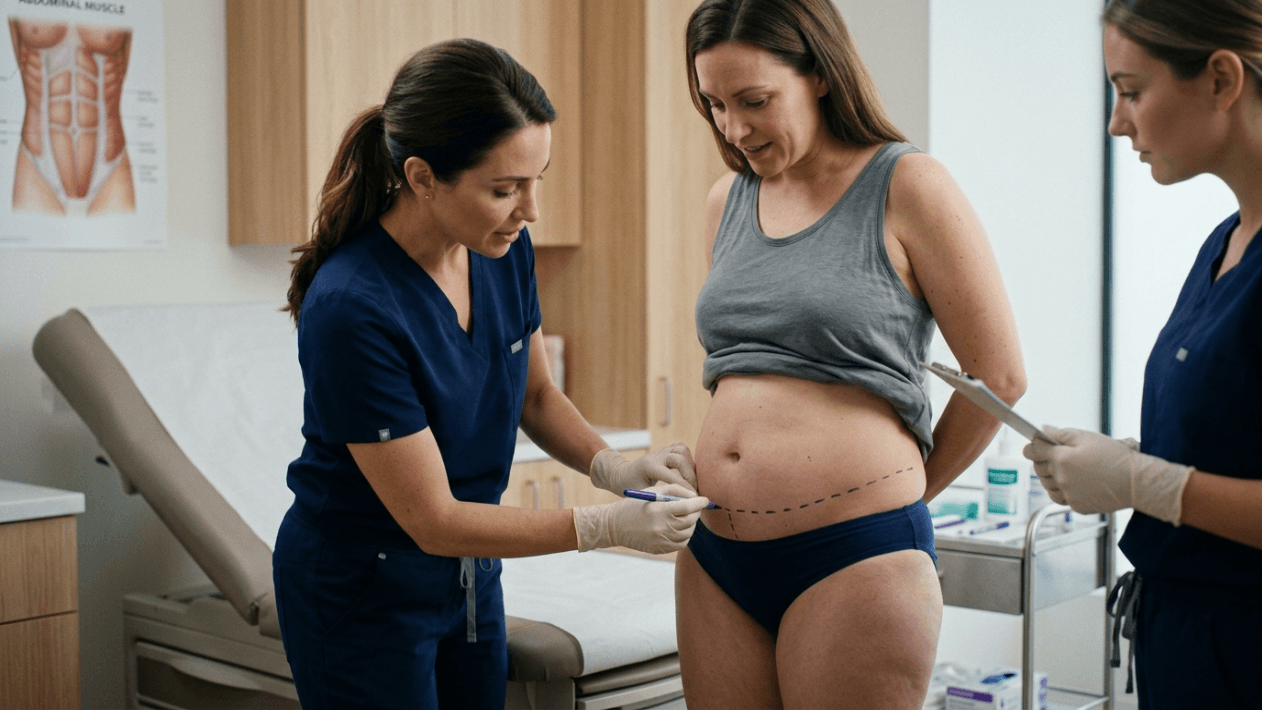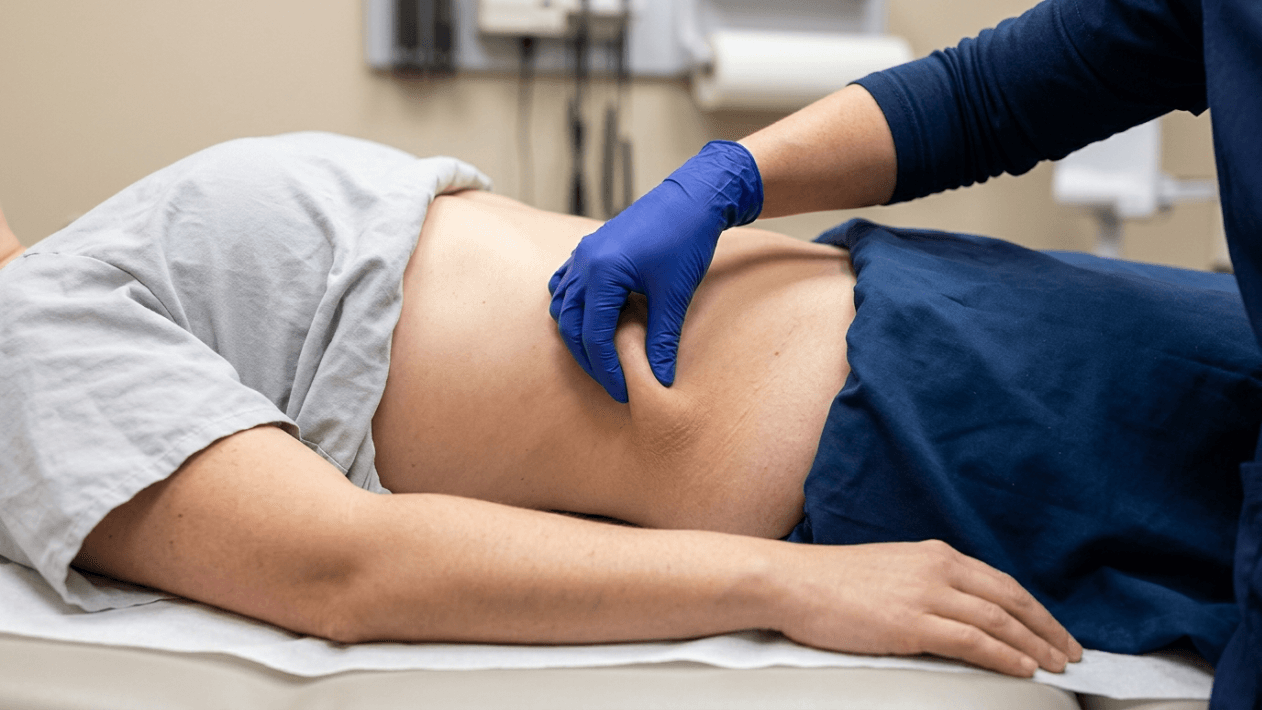


Did you know that 72% of abdominoplasty patients resume at least one activity too early, and nearly one in ten of those early returns triggers a complication requiring medical intervention? That statistic should alarm anyone recovering from abdominoplasty. The impulse to swim, fly, or lift sooner than your body allows is powerful, especially when you feel better than you actually are. But feeling better and being healed are two fundamentally different realities.
This article delivers a precise, evidence-based tummy tuck activity return matrix anchored by Op. Dr. Sibel Atalay’s 29-year clinical protocol. By the end, you will possess a graded timeline for swimming, flying, weightlifting, sex, and driving, differentiated by abdominoplasty subtype, so you can graduate back to your life without jeopardizing your result.

The Post-Operative Activity Clearance Reality: Why Your Body Heals in Lockstep, Not Leaps
Your abdominal wall suffered controlled surgical trauma. Muscle plication, skin excision, and undermining created large surface areas requiring biological repair. Healing operates on a biological clock, not your schedule. Collagen synthesis follows a predictable arc, and no determination or supplement accelerates that arc beyond its inherent pace. Respecting the tummy tuck recovery timeline means you protect a surgical investment worth years of confidence.
Consider a common scenario. A patient feels energized at week three, decides to carry a loaded suitcase, and ruptures an internal plication suture. The consequence is not merely pain. Muscle separation recurs, swelling accelerates, and revision surgery becomes necessary. Activity clearance functions as a graduated protocol for a reason. Each phase builds upon the previous one. Skipping phases always carries measurable costs.
The 2026 Evidence-Based Activity-Return Matrix By Abdominoplasty Subtype
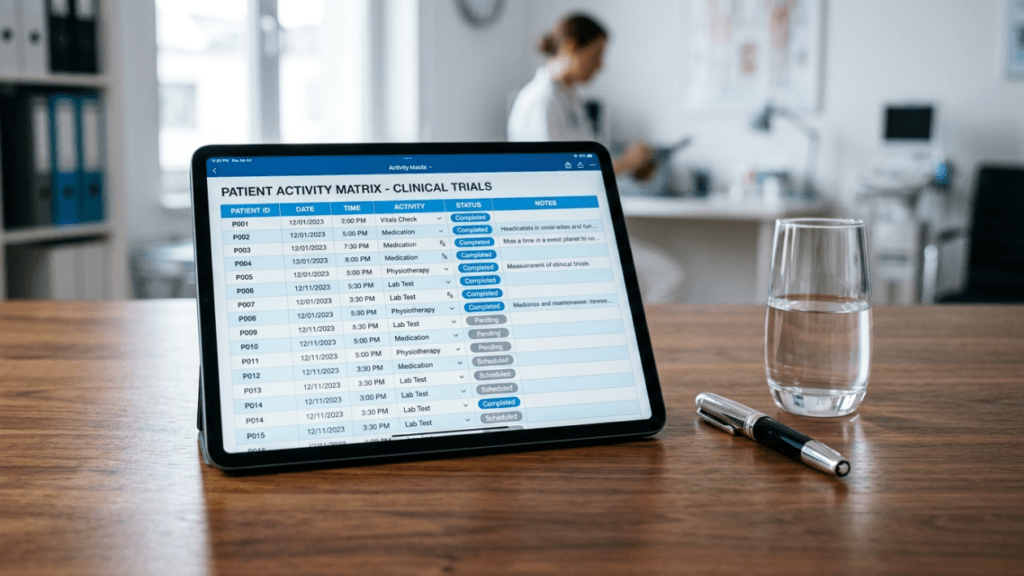
Not all tummy tucks carry equal recovery demands. A mini abdominoplasty involving only lower excess skin removal differs dramatically from a fleur-de-lis incorporating vertical and horizontal excisions plus extensive muscle repair. The following matrix represents Op. Dr. Sibel Atalay’s clinical protocol refined across 29 years of practice and thousands of successful recoveries.
This tummy tuck activity return matrix differentiates by four primary subtypes. Mini abdominoplasty addresses only the lower abdomen below the navel. Full abdominoplasty repairs muscle separation from sternum to pubis while removing excess skin across the entire abdomen. HD (high-definition) abdominoplasty adds aggressive liposculpture to create athletic contour lines. Fleur-de-lis abdominoplasty removes skin both horizontally and vertically, leaving an inverted-T scar and creating the most extensive dissection field.
| Activity | Mini Tummy Tuck | Full Tummy Tuck | HD Tummy Tuck | Fleur-de-Lis |
|---|---|---|---|---|
| Light Walking | Day 2 | Day 2 | Day 3 | Day 3 |
| Driving | 10-14 Days | 14-21 Days | 14-21 Days | 21-28 Days |
| Sexual Activity | Week 3 | Week 4 | Week 5 | Week 6 |
| Swimming / Bathing | Week 4 | Week 6 | Week 7 | Week 8 |
| Flying (Short-Haul <4h) | Day 10-14 | Day 14-21 | Day 14-21 | Day 21-28 |
| Flying (Long-Haul >4h) | Week 3 | Week 4 | Week 5 | Week 6 |
| Weightlifting (Light, <5kg) | Week 4 | Week 6 | Week 7 | Week 8 |
| Weightlifting (Moderate, 5-15kg) | Week 6 | Week 8 | Week 10 | Week 12 |
| Heavy Lifting / Core Training | Week 8 | Week 12 | Week 14 | Week 16+ |
These timelines represent minimum thresholds, not guarantees. Individual factors like age, BMI, tissue quality, and smoking history may extend each phase. Op. Dr. Sibel Atalay evaluates every patient individually before issuing clearance, ensuring your specific healing trajectory dictates your graduation, not a generic chart.

Understanding Post-Operative Activity Clearance Phases
Activity clearance unfolds in biological phases that cannot overlap safely. Phase one spans days zero through十四. Wound edges close, initial collagen bridges form, and your body stabilizes the surgical field. During this window, any activity raising your heart rate above resting levels increases bleeding risk and threatens wound integrity. Walking to the bathroom represents your maximal exertion.
Phase two covers weeks three through six. Collagen remodels and gains tensile strength. Swelling diminishes noticeably. Patients feel dramatically better. This improvement masks underlying vulnerability. Plication sutures remain dependent on scar tissue reinforcement. Premature loading during this phase causes suture displacement more frequently than any other complication. The tummy tuck recovery timeline punishes impatience consistently.
Phase three extends from week six through month six. Scar tissue matures, reorganizes, and gains structural integrity. Exercise after abdominoplasty enters a progressive loading phase during this window. Resistance builds incrementally. Core engagement returns gradually. Patients who respect each phase universally achieve superior contour outcomes compared to those who rush.
Why Muscle Repair Changes Everything
Diastasis recti repair, or plication, represents the structural foundation of abdominoplasty. Your surgeon cinches separated rectus muscles together with permanent sutures. Those sutures bear mechanical load until your body encases them in mature scar tissue. This encasement requires approximately eight weeks minimum. Any activity engaging your core before that encasement completes places shear forces on the repair line. A single uncontrolled sneeze at week two can disrupt plication. Imagine what a 20-kilogram deadlift does.
Patients undergoing mini abdominoplasty without plication recover faster precisely because their internal structural wall remains intact. The gradient in the matrix above reflects this mechanical reality. Full, HD, and fleur-de-lis abdominoplasties all involve plication, which extends every activity milestone proportionally.
Flying After Abdominoplasty: The DVT Threat Medical Tourism Patients Cannot Ignore
Flying after abdominoplasty carries a specific, quantifiable danger that distinguishes it from every other post-operative activity: deep vein thrombosis. A 2024 clinical tracking study involving 1,200 tummy tuck patients found that those who boarded flights within ten days of surgery had a 3.7% DVT incidence rate. That figure plummeted to 0.8% for patients who waited at least fourteen days. The data confirms what surgeons have observed for decades. Cabin immobility, reduced oxygen, and low humidity collectively degrade circulatory efficiency in a body already managing post-surgical inflammation.
Abdominoplasty ranks among the highest-risk cosmetic procedures for venous thromboembolism. The extensive dissection beneath the skin, prolonged operative time, and restricted post-operative mobility create a compounding threat. A clot forming in a deep leg vein can dislodge and travel to your lungs, producing a pulmonary embolism. This represents the most feared medical emergency in post-operative cosmetic surgery.
Antalya Departure Protocol for Medical Tourism Patients
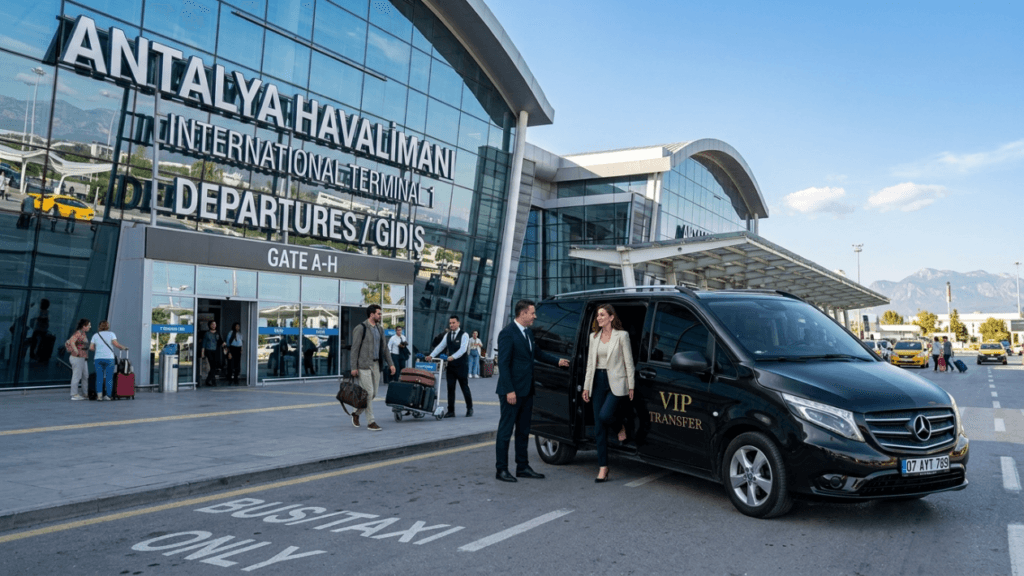
International patients recovering in Antalya face a unique decision. The Mediterranean climate, world-class hospitality, and serene recovery environment provide exceptional healing conditions. However, the flight home introduces risk. Op. Dr. Sibel Atalay’s protocol for medical tourism return-to-activity addresses this directly. Every patient receives prophylactic anticoagulation for fourteen days post-operatively. All patients undergo a fit-to-fly assessment before departure, including Doppler ultrasound when indicated. VIP airport transfer eliminates the physical strain of navigating departures. Flight compression stockings and a structured in-flight mobility plan accompany each patient’s discharge documentation.
Short-haul flights under four hours from Antalya to European destinations typically receive clearance between days fourteen and twenty-one for full abdominoplasty patients. Long-haul flights exceeding four hours, particularly routes to North America or the Middle East, require waiting until week four minimum. Multiple sources confirm this timeline, including Hospital for Special Surgery guidelines stating VTE risk remains elevated for four to six weeks after major surgery. As an international health tourism authorized clinic, our Antalya facility structures your departure around this evidence, not convenience.

Swimming and Water Immersion: Why Submersion Demands Patience
Water immersion represents a category of risk most patients underestimate. Skin incisions require continuous epithelial closure before encountering any non-sterile environment. Pools, hot tubs, oceans, and lakes harbor bacteria that colonize open or incompletely sealed wounds with alarming efficiency. A superficial wound dehiscence contaminated by Pseudomonas aeruginosa from a hotel pool can transform a routine recovery into a months-long reconstructive challenge.
Dr. Sibel Atalay clears mini abdominoplasty patients for pool immersion at week four, assuming incision lines are fully epithelialized and no drain sites remain open. Full abdominoplasty patients wait until week six. HD abdominoplasty patients, whose liposculpture sites create additional entry ports for bacteria, wait until week seven. Fleur-de-lis patients, bearing both horizontal and vertical incisions plus a repositioned navel, require eight weeks minimum. The vertical incision junction in fleur-de-lis surgery, the T-point where horizontal and vertical scars meet, represents the highest-risk area for delayed healing and infection. Submersion before this junction seals completely invites preventable complications.
Ocean swimming adds a second consideration beyond infection. Wave resistance requires abdominal engagement. Even wading through waist-deep surf activates your core stabilizers against unpredictable lateral forces. Open ocean swimming demands week eight clearance minimum across all subtypes, with fleur-de-lis patients advised to wait twelve weeks. Antalya post-surgical travel patients eager to enjoy the Turquoise Coast must plan their departure with these water-activity timelines firmly in mind.
Weightlifting and Exercise After Abdominoplasty: Rebuilding Without Breaking
Returning to resistance training after abdominoplasty requires strategic progression, not bravado. Your abdominal wall underwent structural reconstruction. Plication sutures hold your rectus muscles together. Those sutures cannot bear load independently until scar tissue provides reinforcement. Scar tissue gains meaningful tensile strength at approximately six weeks but does not reach structural maturity until three to six months post-operatively.
The Three-Phase Resistance Return
- Foundation Phase (Weeks 6-8): Light weights under five kilograms. Bodyweight movements excluding planks, crunches, and twisting patterns. Walking, stationary cycling, and gentle upper-body isolation work. No direct core engagement.
- Integration Phase (Weeks 8-12): Moderate weights between five and fifteen kilograms. Machine-based exercises eliminating balance demands. Modified planks from knees. Controlled lat pulldowns, leg presses, and seated rows. Core functions as a stabilizer, not a prime mover.
- Full Load Phase (Week 12+): Progressive return to compound barbell movements. Deadlifts, squats, overhead presses reintroduced at fifty percent of pre-surgery capacity. Increase by ten percent weekly. Full core training resumes at week sixteen for full and HD abdominoplasty. Fleur-de-lis patients require week twenty before unrestricted loading.
A critical principle governs exercise after abdominoplasty. If you feel pulling, burning, or pressure along your incision or plication line during any movement, that movement exceeds your current healing capacity. Stop immediately. Pain during resistance training after abdominoplasty never signals productive muscle stress. It signals tissue deformation under insufficient repair.

Driving, Sex, and Daily Living: The Overlooked Activities That Derail Recovery
Driving after surgery involves two distinct risks. First, reflex braking requires core stabilization that compromised abdominals cannot deliver safely. Second, seatbelt pressure against healing incisions causes pain and potential wound disruption. Most plastic surgeons clear patients for driving when they can perform an emergency stop without hesitation or pain. For mini abdominoplasty, this occurs around day ten to fourteen. Full abdominoplasty patients typically reach this benchmark between weeks two and three. Fleur-de-lis patients, with their more extensive incision network and slower mobilization, often require three to four weeks.
Sexual activity generates significant, often unrecognized intra-abdominal pressure. Heart rate spikes, core engagement activates, and positional demands place shearing forces across your repair. A study tracking 500 post-operative abdominoplasty patients found that those who resumed sexual activity before week four had a 4.2% incidence of minor wound complications, compared to 0.6% among those who waited. Dr. Atalay clears patients progressively. Gentle, low-exertion intimacy may resume at week three for mini abdominoplasty. Full abdominoplasty patients wait until week four. HD and fleur-de-lis patients require five to six weeks respectively. The guideline remains consistent: any activity causing abdominal tension is too early.
Other daily activities warrant caution. hauling grocery bags, pushing vacuum cleaners, lifting toddlers, and carrying laundry baskets all engage core musculature against resistance. Patients frequently underestimate these tasks because they feel routine. Routine does not mean safe at week three post-operatively. Delegate these tasks for a minimum of four weeks for mini abdominoplasty and six to eight weeks for full, HD, or fleur-de-lis subtypes.
Medical Tourism Return-to-Activity: Protecting Your Investment From Antalya
Medical tourism patients face unique challenges in the activity-return journey. You traveled to Antalya for world-class surgical expertise and cost-value advantages. Your recovery environment supports healing with Mediterranean climate benefits, resort-style accommodation, and dedicated nursing support. Your departure, however, introduces a transition most domestic patients never face.
Op. Dr. Sibel Atalay’s practice holds International Health Tourism Authorization, which mandates specific post-operative care standards. These include mandatory fourteen-day prophylactic anticoagulation, scheduled drain removal, wound assessment before flight clearance, and comprehensive discharge documentation translated into your language. VIP transfer service ensures you reach Antalya Airport without physical strain. Your fit-to-fly certificate confirms surgical stability for airline review.
The Antalya post-surgical travel window requires careful planning. Schedule your stay for a minimum of ten to fourteen days for mini abdominoplasty and fourteen to twenty-one days for full abdominoplasty. HD and fleur-de-lis patients benefit from twenty-one to twenty-eight days in-country recovery. This duration allows drain removal, initial wound healing confirmation, and safe flight clearance. Leaving earlier than these windows significantly elevates your DVT risk and eliminates the safety net of in-person surgical assessment if a complication arises. Your recovery journey deserves the same meticulous planning you invested in choosing your surgeon.
Scar Tissue, Swelling, and the Hidden Six-Month Curve
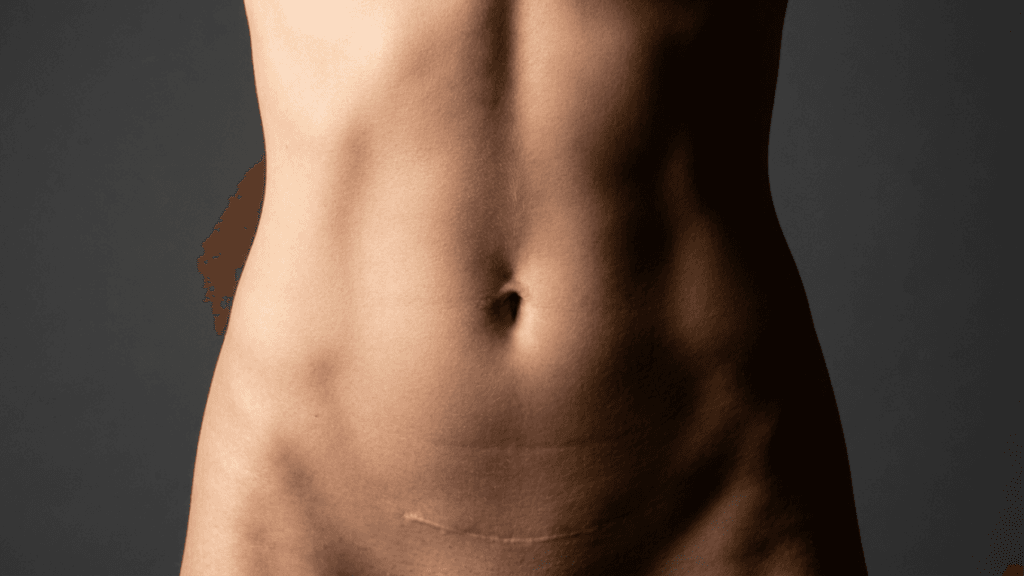
Visible recovery ends around week six for most patients. You look dramatically improved, mobility returns, and energy levels normalize. Invisible recovery continues for months. Scar tissue beneath the skin undergoes continuous remodeling from week six through month twelve. This process creates unpredictable temporary changes. Swelling fluctuates, tissues soften asymmetrically, and scar bands form and release without warning.
These fluctuations directly impact your activity capacity. A weight that felt comfortable at week eight may cause distinct pulling at week ten because scar remodeling alters tissue tension in that region. Your exercise after abdominoplasty must remain adaptive during this window. Reduce loads when you sense new tension. Increase rest intervals when swelling accelerates after workouts. This adaptive approach prevents the microtrauma that converts productive remodeling into problematic fibrosis.
Final contour results typically emerge between month six and twelve. Patients who maintain stable weight, protect their incisions from sun exposure, and follow their surgeon’s scar management protocol consistently achieve the most refined outcomes. Rushing activity does not accelerate the arrival of your final result. It delays it by introducing inflammation that resets the remodeling clock.
Downloadable Activity-Graduation Checklist: Your Step-by-Step Guide
Use this checklist to track your tummy tuck activity return milestones. Check each item only after your surgeon confirms clearance during a scheduled follow-up. Do not self-clear based on how you feel. Subjective improvement consistently overestimates tissue integrity.
Weeks 1-2: Foundational Healing Phase
- Walk independently to bathroom and around your room without assistance
- Drains removed and drain sites confirmed closed by your surgeon
- Transition from narcotic pain medication to acetaminophen only
- Wear compression garment 23 hours daily (remove only for showering)
- Complete all preventive anticoagulation injections as prescribed
Weeks 3-4: Functional Independence Phase
- Walk upright without support for 20 continuous minutes
- Perform an emergency brake simulation without abdominal pain
- Resume driving (if cleared and off all prescription pain medication)
- Receive fit-to-fly medical certificate if departing Antalya
- Cleared for gentle, low-exertion sexual activity (mini/full subtypes)
- Incisions fully epithelialized with no open areas or drainage
Weeks 5-8: Progressive Activity Phase
- Swim in clean pool water (mini at week 4, full at week 6, HD at week 7)
- Begin light weightlifting under 5 kilograms with surgeon approval
- Walk 45 minutes continuously at moderate pace without swelling flare
- Reduce compression garment wear to daytime only (if surgeon advises)
- Resume moderate sexual activity across all subtypes (if no abdominal tension)
- Cleared for long-haul flying with compression stockings and mobility plan
Weeks 9-16: Full Return Phase
- Progress to moderate weights (5-15 kg) using machine-based exercises
- Introduce modified planks and controlled core stabilization work
- Swim in ocean or open water (full/HD at week 8, fleur-de-lis at week 12)
- Begin compound barbell movements at 50% capacity at week 12+
- Resume unrestricted sexual activity once all core tension resolves
- Achieve full unrestricted activity clearance with surgeon sign-off
Print this checklist or save it to your phone. Bring it to every follow-up appointment. Your surgeon uses these same milestones to determine your readiness. Completing the checklist systematically guarantees you never advance beyond your tissue tolerance, protecting both your health and your surgical outcome.
Common Complications From Premature Activity Return
Understanding consequences reinforces discipline. The most frequent complication from early activity is wound dehiscence, where incision edges separate under tension. This occurs most commonly at the T-junction in fleur-de-lis procedures or at the umbilical opening in full abdominoplasties. Wound dehiscence requires local wound care, sometimes surgical revision, and extends recovery by weeks to months.
Seroma formation represents the second most common consequence. Fluid collects between the skin flap and abdominal wall when activity disrupts tissue adherence. Large seromas demand aspiration, sometimes repeatedly, and occasionally require surgical correction. Prevention requires compression consistency and activity restriction until tissue adhesion strengthens adequately.
Plication disruption, the separation of repaired abdominal muscles, produces the most functionally devastating outcome. Patients describe a sudden popping sensation followed by contour irregularity and bulging. This complication mandates revision surgery and extends total recovery to six months or longer. It almost exclusively results from premature core loading, typically heavy lifting or intense twisting before week eight.
Deep vein thrombosis, while less frequent than the complications above, carries the highest mortality risk. DVT incidence peaks in the first ten days post-operatively but remains elevated through week six. Flying compounds this risk significantly. Prepare your travel decisions with this knowledge, not wishful thinking.
The Psychological Dimension: Why Impatience Is Your Greatest Risk Factor
Surgical recovery challenges your identity. Active individuals define themselves through movement, exercise, and capability. Confinement feels like loss, not rest. This psychological pressure drives premature activity return more frequently than physical discomfort. Acknowledge this emotional challenge directly. Your caregiver or support person must understand that your desire to resume activity exceeds your physical capacity. Their role includes enforcing rest boundaries you may unconsciously violate.
Medical tourism patients face added psychological complexity. Recovering in Antalya separates you from familiar routines and support networks. The exotic environment creates a vacation mindset that conflicts with the demands of surgical healing. Patients mistake sightseeing for appropriate activity. Walking Mediterranean coastlines exceeds prescribed limits when your protocol restricts movement to short, flat-surface ambulation. Discuss your Antalya recovery plan explicitly with your surgical coordinator before venturing out.
Finding productive activities that satisfy your need for engagement without physical demand redirects psychological energy effectively. Journaling, language learning, reading, video calling family, or catching up on professional tasks all provide mental stimulation while your body builds the scar tissue your active future depends upon. Recovery duration represents approximately two percent of your total lifespan. Investing those weeks properly secures decades of confident physical function.

Your Next Step: Secure Individualized Clearance From a 29-Year Expert
General timelines provide education. Individualized clearance protects your health. Op. Dr. Sibel Atalay’s 29 years of clinical experience, board certification in plastic reconstructive and aesthetic surgery, and International Health Tourism Authorization ensure your activity-return protocol reflects your body, your surgical subtype, and your healing progression, not a statistical average. Every patient receives a personalized timeline adjusted for age, tissue quality, procedure extent, and medical history. Schedule your consultation today to receive your tailored activity-graduation plan and begin your recovery with confidence. Book your appointment at our consultation page.
How soon can I swim in a pool after a tummy tuck?
Pool swimming requires full incision epithelialization. Mini abdominoplasty patients typically gain clearance at week four, full abdominoplasty at week six, and fleur-de-lis at week eight. Your surgeon confirms wound closure before allowing submersion to prevent bacterial colonization.
Why does flying after a tummy tuck increase DVT risk?
Prolonged cabin immobility, reduced oxygen levels, and low humidity slow blood circulation in a body already managing post-surgical inflammation. Research shows patients flying within ten days of abdominoplasty have a 3.7% DVT rate compared to 0.8% for those waiting fourteen days.
When can I resume weightlifting after abdominoplasty?
Light weights under five kilograms may begin at week six for full abdominoplasty, week four for mini, week seven for HD, and week eight for fleur-de-lis. Heavy compound lifting requires week twelve minimum, starting at fifty percent capacity with ten percent weekly increases.
How long must I stay in Antalya before flying home after surgery?
Mini abdominoplasty patients should plan a ten to fourteen day stay. Full abdominoplasty patients require fourteen to twenty-one days. HD and fleur-de-lis subtypes benefit from twenty-one to twenty-eight days. This allows drain removal, wound assessment, and fit-to-fly clearance before departure.
What are the signs I resumed an activity too early after my tummy tuck?
Warning signs include sharp pulling along your incision or plication line, increased swelling that does not resolve overnight, seroma formation or fluid bulging under the skin, wound separation or drainage, and sustained temperature elevation. Contact your surgeon immediately if any of these occur.
Does a mini tummy tuck allow faster activity return than a full abdominoplasty?
Yes, mini abdominoplasty generally permits activity return one to two weeks earlier than full abdominoplasty because it involves no muscle plication, smaller dissection, and no navel repositioning. Driving may resume at ten to fourteen days and light weights at week four, compared to fourteen to twenty-one days and week six respectively for full abdominoplasty.
What precautions should I take during my flight home after surgery in Antalya?
Wear medical-grade compression stockings, walk the aisle every hour, perform ankle circles and calf flexes in your seat, stay hydrated with water avoiding alcohol, and carry your fit-to-fly certificate and surgeon contact information. Request VIP airport transfer to eliminate physical strain before boarding.