
What happens when your body survives two separate assaults on its structural integrity—massive weight loss followed by pregnancy—and conventional surgical wisdom treats only one? Over 67,000 women in the United States alone undergo bariatric surgery each year, and a significant proportion go on to have children afterward. Yet almost every mommy makeover resource assumes a single skin-laxity etiology: pregnancy. The post-bariatric mommy makeover addresses a reality most surgeons overlook—two distinct skin-stretching events that leave redundant tissue pulling in opposing vector directions, requiring a fundamentally different reconstructive playbook.
By the end of this guide, you will understand exactly why a standard mommy makeover fails the dual-transformation patient, how Op. Dr. Sibel Atalay in Antalya structures a staged safety-first surgical strategy for combined pregnancy and weight loss skin laxity, and what scar architecture solves multi-vector tissue excess. You will also gain a clear procedural roadmap—from initial consultation through each staged procedure—so you can make informed decisions about your own transformation journey with confidence.
Why Standard Mommy Makeover Protocols Fail the Post-Bariatric Mother
The term mommy makeover emerged to describe a surgical combination addressing post-pregnancy changes: breast deflation, abdominal skin loosening, and muscle separation. But this model assumes the skin stretched once—from nine months of gestational expansion. A mother who has also lost 50, 80, or 120 kilograms carries tissue that has been stretched, partially retracted, then stretched again. The resulting combined pregnancy and weight loss skin laxity behaves nothing like pregnancy-only changes.
Two Laxity Etiologies, One Body
Massive weight loss creates a particular deformity pattern. The skin envelope becomes globally redundant—excess exists not just vertically but horizontally. An abdominal panniculectomy after weight loss and pregnancy must account for skin that hangs over the pubic region, folds at the flanks, and droops onto the upper thighs. Pregnancy, by contrast, creates primarily vertical lower-abdominal redundancy with diastasis recti. When both forces act on the same abdominal wall, a standard horizontal-incision tummy tuck removes only one dimension of excess. The woman awakens with a flat vertical profile but lateral skin rolls and persistent mons ptosis that no single-direction excision can resolve.
According to Dr. Jaime Schwartz MD FACS, skin does not always keep up after massive weight loss. He notes that many patients notice an apron of hanging skin in the lower abdominal area, lax skin on the upper arms, and sagging breasts—patterns that are common after massive weight loss. For the dual-etiology patient, these patterns are compounded by pregnancy-induced stretching, demanding surgical plans that address anatomy far beyond any standard combination procedure.

The Dual-Transformation Surgical Strategy Defined
A post-bariatric mommy makeover is not a standard mommy makeover with extra incisions. It is a distinct surgical paradigm that accounts for impaired tissue elasticity from two separate stretching events, nutritional deficiencies from bariatric absorption changes, and the cumulative cardiovascular stress of prolonged anesthesia. The 2026 strategy developed at Dr. Sibel Atalay International Clinic integrates three core pillars: combined skin excess management, anesthesia safety staging, and multi-vector scar architecture.
Pillar One: Combined Skin Excess Management
The post-bariatric mother presents three signature anatomical challenges that a conventional mommy makeover never addresses together: breast deflation combined with severe ptosis, an abdominal panniculus requiring both horizontal and vertical excision, and mons pubis ptosis that causes chronic hygiene difficulty and garment discomfort.
Post-Bariatric Breast Deflation
Weight loss strips the breast of both fat volume and glandular tissue. Pregnancy then stretches the already-thin skin envelope without restoring volume. The result is a breast that sits lower on the chest wall than a pregnancy-only ptotic breast, with thinner dermis that resists holding implant weight. A post-bariatric mommy makeover must deliver both upper-pole volume restoration and a lifting procedure structured to accommodate fragile tissue. This often requires a fleur-de-lis with breast lift pattern—a vertical and periareolar approach that removes skin in two directions while securing the nipple-areola complex on a robust dermal pedicle.
The Abdominal Apron and Fleur-de-Lis Decision
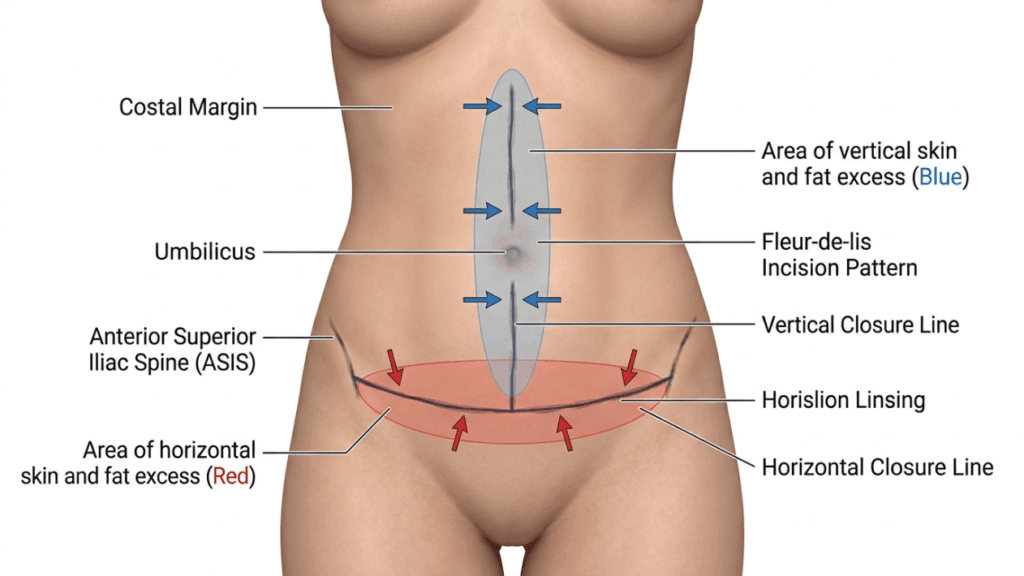
An extended abdominoplasty post-bariatric patient often requires a fleur-de-lis technique because horizontal skin excess persists even after a standard transverse excision. The fleur-de-lis adds a vertical midline component that removes tissue from the xiphoid to the pubis, flattening lateral rolls that a horizontal-only scar ignores. For the dual-transformation mother, this vertical component also corrects the epigastric fullness that pregnancy created but weight loss failed to resolve.
Mons Ptosis Correction
Mons pubis descent is one of the most under-treated deformities in massive weight loss body contouring. The mons becomes a soft-tissue pendulum that drapes over the pubic bone, folding against the abdominal incision and trapping moisture. Correction requires a separate monsplasty—a wedge resection anchored to the pubic symphysis with permanent sutures and superficial fascia that restores pelvic contour and a normal anatomical angle.
Staging Combined Procedures: Why Duration Under Anesthesia Demands a New Safety Calculus
A typical mommy makeover—breast surgery plus tummy tuck plus liposuction—averages four to five hours under general anesthesia. Add the extra tissue work required for an abdominal panniculectomy after weight loss and pregnancy, a fleur-de-lis closure, monsplasty, and revision-caliber breast reconstruction, and operative time easily exceeds seven hours. For patients with residual nutritional deficits from bariatric surgery, prolonged anesthesia brings wound-healing and thromboembolic risks that standard mommy makeover protocols were never designed to manage.
As Dr. Schwartz emphasizes, patients who have undergone bariatric surgery must confirm solid nutrition with their care team, ensuring that protein, vitamins, and minerals support healing before any body contouring. This principle becomes even more critical when the contouring plan involves prolonged anesthesia and multiple surgical sites.
| Parameter | Standard Mommy Makeover | 2026 Dual-Transformation Strategy |
|---|---|---|
| Typical Anesthesia Duration | 4–5 hours | 6–8 hours (or split into two stages) |
| Abdominal Incision Pattern | Transverse only | Fleur-de-lis (transverse + vertical) |
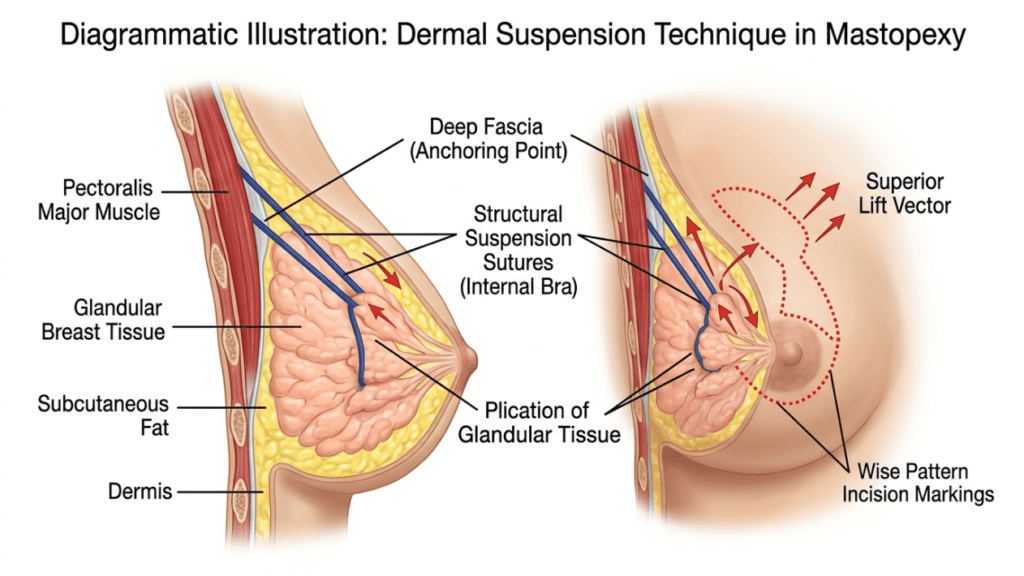
| Breast Technique | Augmentation or standard lift | Extended mastopexy with dermal suspension |
| Mons Addressed | Rarely | Mandatory monsplasty with fascial anchor |
| Nutritional Pre-Clearance | Standard labs | Bariatric-specific panel (albumin, iron, B12, zinc) |
| DVT Prophylaxis | SCDs + early ambulation | Chemoprophylaxis + SCDs + 48-hour monitored stay |
| Staging Strategy | Single-stage preferred | Stage 1: Abdomen + Mons; Stage 2: Breasts + Liposuction (4–6 weeks later) |
The Safety Argument for Staging Combined Procedures
Staging combined procedures means dividing the operative work into two shorter sessions rather than one marathon operation. Stage one focuses on the abdomen—the highest-risk area for wound complications in the post-bariatric population—and addresses the fleur-de-lis with breast lift, diastasis repair, and monsplasty. Stage two, performed four to six weeks later, handles breast reconstruction and liposuction of the flanks or thighs once the abdominal incisions have established initial healing and the patient’s hemoglobin has recovered.
This approach reduces each anesthesia session to under five hours, radically lowering pulmonary embolism and wound dehiscence rates. Research on post-bariatric body contouring patients demonstrates that combined procedures exceeding six hours are associated with significantly higher complication rates when abdominal flap weight exceeds two kilograms or when patients present with preoperative anemia. Staging is not a convenience—it is a survival strategy for Antalya massive weight loss surgery patients who need extensive tissue removal.
Bariatric-Specific Nutritional Optimization
Gastric bypass and sleeve gastrectomy alter absorption of protein, iron, vitamin B12, and zinc—the exact micronutrients wound healing demands. A standard pre-operative lab panel misses these deficits. Op. Dr. Sibel Atalay requires a bariatric-specific nutritional panel at least six weeks before surgery. If albumin falls below 3.5 g/dL or iron stores are depleted, the procedure date shifts until supplementation restores adequate tissue-building reserves. This discipline is what separates a comprehensive post-bariatric mommy makeover from a standard cosmetic combination performed on an unprepared patient.
Scar Architecture for Multi-Vector Laxity: Engineering the Dual-Transformation Closure
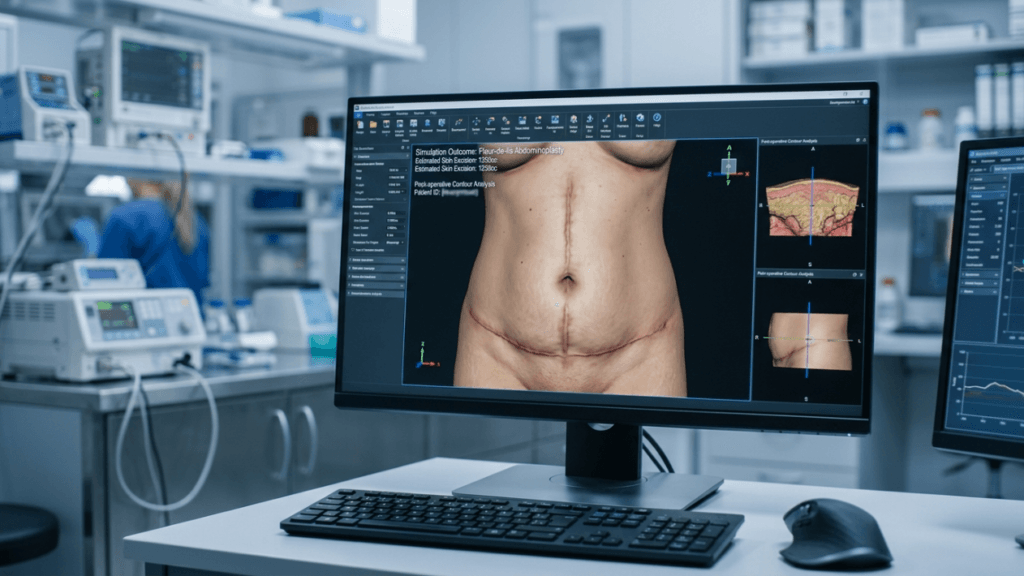
Scar placement in a standard abdominoplasty follows a simple rule: hide the transverse scar beneath the bikini line. Multi-vector laxity shatters this rule. When skin excess runs both horizontally and vertically, a single transverse scar leaves the patient with lateral dog-ears, epigastric skin overhang, and a thickened pubic scar under tension. The post-bariatric mommy makeover demands scar architecture that accommodates tissue resection along two perpendicular axes.
The Fleur-de-Lis with Extended Transverse Component
The fleur-de-lis abdominoplasty combines a low transverse incision with a vertical midline excision from xiphoid to pubis, creating a T-shaped or inverted-Y closure. For the dual-etiology patient, Op. Dr. Sibel Atalay extends the transverse limbs around toward the flanks—not merely to the anterior axillary line but to the posterior axillary line when circumferential excess exists. This extended abdominoplasty post-bariatric patient approach allows lateral truncal skin tightening that a standard fleur-de-lis still misses.
Critical technique details matter. The vertical limb must end at least two centimeters above the umbilicus to avoid a three-scar intersection at the navel—the most vulnerable point for wound breakdown. Progressive tension sutures anchor the advancing abdominal flap in layers, distributing tension across the deep fascia rather than concentrating it at the skin edge where it causes widening. These architectural decisions define whether a scar matures into a thin pale line or a hypertrophic ridge.
Breast Lift Scar Patterns in Deflated Tissue
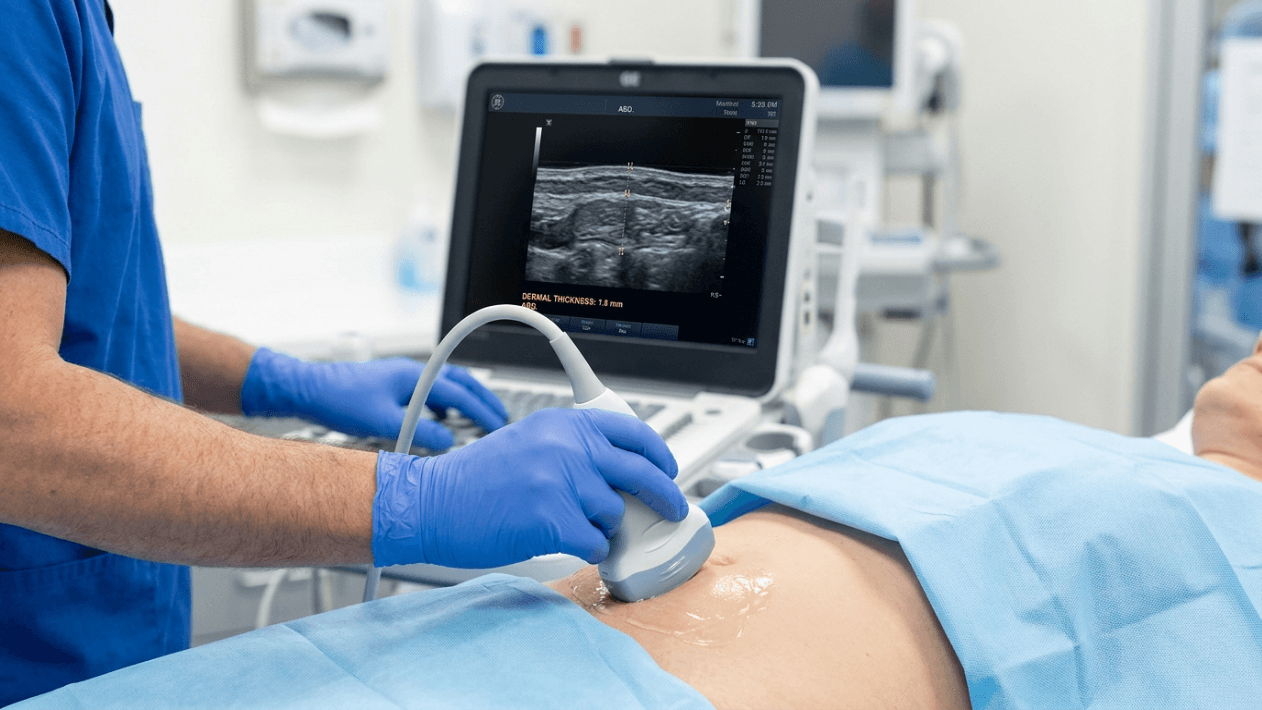
Post-bariatric breast deflation presents a paradox: the breast needs maximum skin removal for tightening, yet the remaining skin envelope is too thin to tolerate a long peripheral scar under tension. A wise-pattern mastopexy produces the strongest lift but places three scar lines in thin, deflated tissue. Op. Dr. Sibel Atalay selects the pattern based on dermal thickness measured during consultation. When the derail thickness is below 1.5 millimeters on ultrasound assessment, a technique modifying the standard wise pattern—with deep dermal suspension sutures to the pectoral fascia—carries the load, allowing the visible skin scar to rest without tension. This suspension-lift hybrid prevents periareolar scar widening, the most common aesthetic complaint after mastopexy in massive weight loss body contouring.

Antalya as the Strategic Destination for Massive Weight Loss Surgery
Choosing where to undergo a post-bariatric mommy makeover is as consequential as choosing which procedures to include. Antalya delivers three advantages that few destinations worldwide can match simultaneously: JCI-accredited surgical facilities at a fraction of Western European pricing, a Mediterranean climate that accelerates comfortable early ambulation during recovery, and an established international health tourism infrastructure that coordinates airport transfers, accommodation, and bilingual clinical follow-up.
For patients traveling from the United Kingdom, Germany, or the Netherlands, Antalya massive weight loss surgery packages at Dr. Sibel Atalay International Clinic include pre-operative teleconsultation, bariatric-specific nutritional lab coordination, and post-operative follow-up extending to twelve months. The clinic’s International Health Tourism Authorization Certificate guarantees regulatory compliance, and all surgical materials carry FDA and CE approvals verifiable through the certificates registry.
Why Op. Dr. Sibel Atalay’s Dual Expertise Matters
A post-bariatric mommy makeover sits at the intersection of aesthetic and reconstructive surgery. The abdominal repair is reconstructive—addressing functional panniculitis, diastasis-related back pain, and intertrigo beneath skin folds. The breast surgery is aesthetic—restoring confidence and body proportion. Op. Dr. Sibel Atalay’s training in both reconstructive and aesthetic surgery at Erciyes University, combined with twenty-nine years of clinical practice, gives her the dual perspective this procedure demands. She understands when a flap is viable and when delayed excision is the safer path. She recognizes that a beautiful scar is useless if the tissue beneath it necroses from excessive tension.
Assessing Tissue Viability in Dual-Etiology Laxity
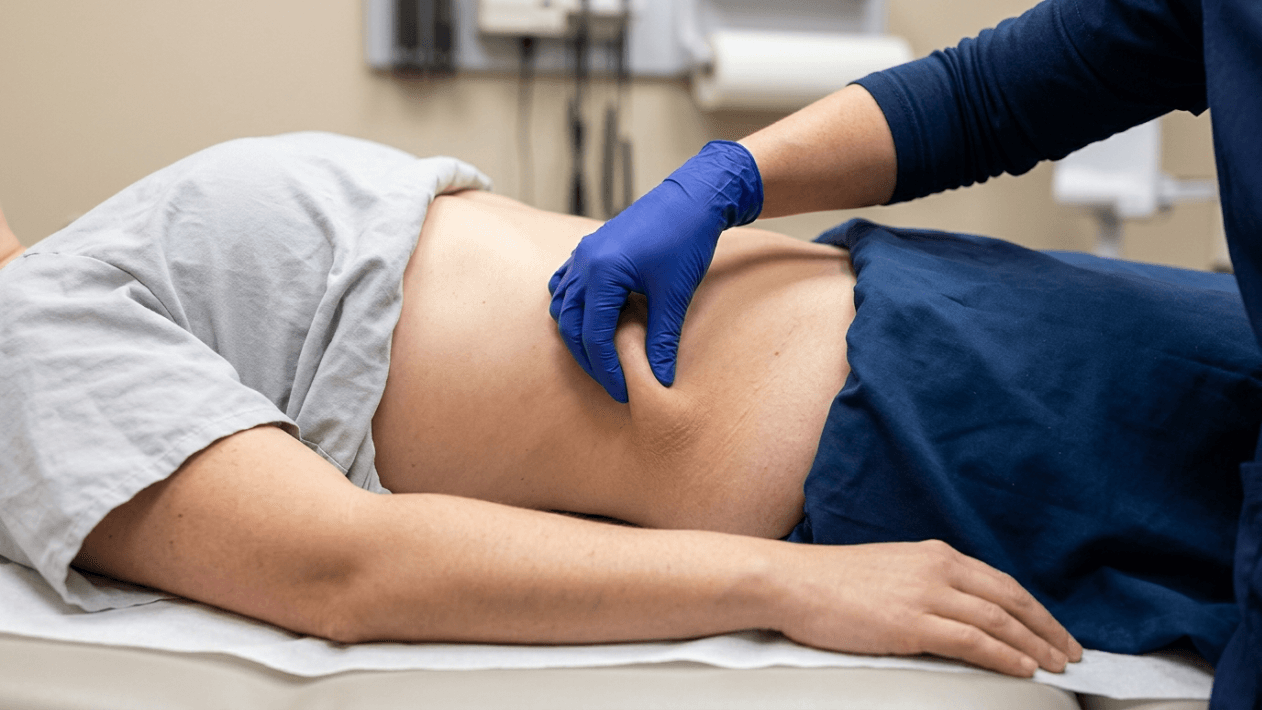
Skin that has been stretched by massive weight gain, partially retracted after loss, then stretched again by pregnancy exists in a compromised state. Collagen and elastin fibers have undergone repeated micro-trauma. The blood supply to the advancing abdominal flap during abdominoplasty must traverse this damaged tissue to reach the distal incision. Assessing tissue viability before surgery is not optional—it is the primary determinant of whether the procedure heals primarily or dehisces catastrophically.
Clinical Indicators of Flap Risk
- Cigarette-smoking history: Nicotine-induced vasoconstriction reduces capillary perfusion by up to forty percent, even weeks after cessation. A minimum four-week abstinence period before surgery is mandatory.
- Previous abdominal surgery scars: Midline laparoscopy ports or open bariatric incisions divide perforating vessels that supply the abdominal flap. Previous scars dictate safe design of flap advancement limits.
- BMI at time of contouring: Even after massive weight loss, if the current BMI exceeds 32, the abdominal panniculus carries a heavy gravitational load that increases seroma and dehiscence risk.
- Dermal thickness on assessment: Dermal thickness below 1.5 millimeters at the planned incision line signals poor holding power for sutures and elevated wound separation risk.
Op. Dr. Sibel Atalay evaluates each indicator during in-person or virtual consultation. When multiple risk factors converge, she modifies staging intervals, adjusts incision placement, or adds acellular dermal matrix reinforcement to the abdominal wall—techniques that routine mommy makeover surgeons rarely deploy because they rarely encounter the post-bariatric population.

Anatomy of a Dual-Transformation Procedure: What Happens in the Operating Room
Understanding the physical sequence of a staged post-bariatric mommy makeover demystifies the experience and empowers you to prepare mentally and logistically. Below is the step-by-step progression for the most common dual-transformation strategy.
Stage One: Abdomen and Mons Reconstruction
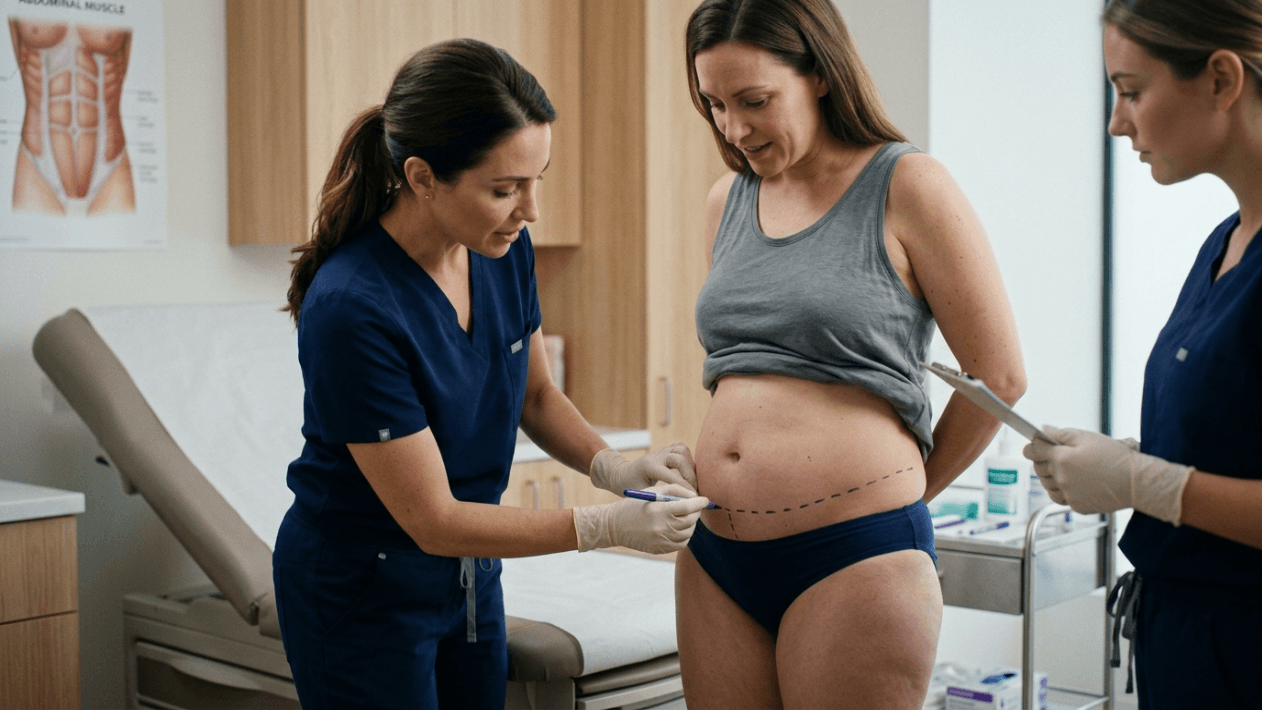
Stage one prioritizes the area of greatest functional and anatomic deficit—the abdomen and mons pubis. Under general anesthesia, Op. Dr. Sibel Atalay marks the fleur-de-lis incision while the patient stands to Gravity reveals the true vertical and horizontal skin excess. The transverse lower abdominal incision extends to the posterior axillary line bilaterally. The vertical midline excision removes the epigastric skin roll from xiphoid to umbilicus. Diastasis recti repair reapproximates the rectus muscles with permanent figure-of-eight sutures. Monsplasty resects the descended pubic tissue and anchors the remaining flap to the pubic symphysis. Progressive tension sutures secure the advancing flap in layers. Drains exit through separate stab incisions. A structured closure distributes tension across the deep fascia rather than the skin edge.
Stage Two: Breast and Flank Contouring
Four to six weeks later, after the abdominal incisions have sealed and thepatient’s hemoglobin has normalized, stage two addresses the breasts and residual fat. Post-bariatric breast deflation requires volume restoration plus skin envelope reduction. Op. Dr. Sibel Atalay places subpectoral silicone implants through an inframammary approach, then tailors the skin envelope with a suspension mastopexy that anchors the nipple-areola complex to the pectoral fascia. Liposuction sculpts the flanks, lateral thighs, or bra roll using tumescent technique with micro-cannulas for precision. This stage typically lasts three to four hours—well within safe anesthesia limits for a nutritionally optimized patient.
Recovery Architecture: What the First Twelve Weeks Demand
Recovery from a dual-transformation surgery differs from standard mommy makeover recovery in duration, wound care complexity, and activity restrictions. The fleur-de-lis closure adds a vertical scar that crosses multiple tension zones. Each zone heals at a different rate depending on local blood supply, making wound monitoring essential during the first six weeks.
- Weeks 1–2 post Stage One: The patient stays in the monitored recovery suite for forty-eight hours. SCDs remain on the legs until full ambulation. Drains record output daily. The patient walks flexed at the waist to protect the transverse closure. Pain is managed with a multimodal protocol combining regional blocks, acetaminophen, and short-acting opioids only as needed.
- Weeks 3–4: Drain removal occurs once output falls below 30 mL per drain per day. The patient begins standing upright progressively. Light walking is permitted. The abdominal binder reduces seroma formation. Suture lines are assessed for early dehiscence, particularly at the T-junction near the umbilicus.
- Weeks 5–6: Stage Two surgery takes place. This second procedure is shorter and less physically demanding. Recovery from stage two follows typical mastopexy timelines—limited arm elevation for two weeks, no underwire bras for six weeks.
- Weeks 7–12: Both surgical sites continue maturation. Silicone sheeting or gel applied to the vertical abdominal scar beginning at week three reduces hypertrophy risk. The patient gradually returns to core exercise commencing at week eight under physiotherapist guidance.
- Months 3–12: Scars fade and flatten. Final breast shape settles as implants drop and soft tissue relaxes over the reconstructed mound. Abdominal contour stabilizes as residual edema resolves and the fleur-de-lis closure settles into its permanent position.

Who Qualifies for the 2026 Dual-Transformation Surgical Strategy
Not every mother who has lost weight needs a dual-transformation approach. Some weight loss is modest enough that a standard mommy makeover suffices. The 2026 strategy is designed for patients who meet specific criteria reflecting both the severity of tissue excess and the physiological demands of a corrected bariatric anatomy.
- Massive weight loss exceeding 50 kilograms (or BMI reduction exceeding 15 points) achieved via bariatic surgery, GLP-1 medications, or diet and exercise programs.
- Subsequent pregnancy that restretched the previously lax abdominal wall and breast tissue after weight stabilization.
- Weight stability for at least twelve months with no more than two kilograms fluctuation.
- Completed family planning—future pregnancy would undo the muscle repair and skin resection.
- Nutritional clearance demonstrating adequate albumin, iron, B12, and zinc for wound healing.
- Non-smoking status for a minimum of four weeks prior to surgery.
- Realistic expectations regarding scarring—the fleur-de-lis produces a visible vertical line that no surgical skill can eliminate.
If you meet these criteria, a post-bariatric mommy makeover at Dr. Sibel Atalay International Clinic in Antalya can resolve deformities that no single-direction procedure will ever correct. The next section provides the actionable steps to begin.
Your Step-by-Step Action Plan for the Dual-Transformation Procedure
- Calculate your weight stability. Track your weight weekly for three consecutive months. If any reading varies by more than two kilograms, postpone surgical consultation until stability is achieved.
- Obtain bariatric nutritional labs. Request your bariatric surgeon or primary care physician order a panel including serum albumin, ferritin, vitamin B12, zinc, and complete blood count. Bring these results to your consultation.
- Schedule a virtual consultation with Op. Dr. Sibel Atalay through the clinic website. During this session, she evaluates your photographs, reviews your nutritional labs, and discusses whether a single-stage or staged approach suits your anatomy and health profile.
- Begin supplementation if indicated. If your labs reveal deficiencies, follow the prescribed supplementation protocol for a minimum of six weeks before booking your surgical date.
- Plan your travel and recovery logistics. Antalya international health tourism packages include VIP airport transfer, hotel coordination, and clinical follow-up. Arrange a minimum of ten days in Antalya after each surgical stage.
- Quit nicotine in all forms at least four weeks before surgery. This includes cigarettes, patches, gum, and vaping. Nicotine constricts the microvasculature that must supply healing tissue.
- Book your procedure date once nutritional optimization, weight stability, and smoking cessation are confirmed. Secure your appointment through the online scheduling page and begin the pre-operative preparation protocol provided by the clinical team.
The dual-transformation journey—massive weight loss followed by motherhood—deserves a surgical strategy built for both realities. A standard mommy makeover addresses pregnancy. A post-bariatric body lift addresses weight loss. Only the 2026 dual-transformation protocol addresses both in one coordinated, safety-staged plan. Take the first step today and schedule your consultation with Op. Dr. Sibel Atalay at the appointment page.
How does a post-bariatric mommy makeover differ from a standard mommy makeover?
A post-bariatric mommy makeover addresses dual-etiology skin laxity caused by both massive weight loss and pregnancy. It uses a fleur-de-lis abdominoplasty for multi-vector skin removal, includes mandatory monsplasty, and requires bariatric-specific nutritional clearance before surgery.
Why are the procedures staged instead of performed in one session?
Staging combined procedures limits each anesthesia session to under five hours, significantly reducing thromboembolic and wound-healing risks in post-bariatric patients who may have nutritional deficiencies and compromised tissue perfusion.
What is a fleur-de-lis abdominoplasty and when is it necessary?
A fleur-de-lis abdominoplasty adds a vertical midline skin excision to the standard horizontal tummy tuck. It becomes necessary when the patient has both vertical and horizontal skin excess, which is typical after massive weight loss combined with pregnancy.
How should I prepare nutritionally before a post-bariatric mommy makeover?
Request a bariatric-specific lab panel including albumin, ferritin, vitamin B12, and zinc. If any values are deficient, begin targeted supplementation at least six weeks before your surgical date to ensure adequate wound-healing reserves.
Will the vertical scar from a fleur-de-lis be visible in swimwear?
The vertical component runs from the xiphoid to the umbilicus and will be visible above certain two-piece swimwear styles. Patients choose this technique because the contour improvement outweighs the scar visibility trade-off.
How long is the recovery between staged procedures?
The typical interval between stage one abdomen and mons reconstruction and stage two breast and liposuction procedures is four to six weeks. This allows initial wound healing and hemoglobin recovery before the second anesthesia exposure.
Why choose Antalya for a post-bariatric mommy makeover?
Antalya offers JCI-accredited facilities at lower cost than Western Europe, a Mediterranean climate that supports comfortable early ambulation, and established international health tourism infrastructure including VIP transfers and bilingual clinical follow-up.