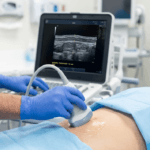


Did you know that the most dangerous moment of your mommy makeover journey in Antalya is not the surgery itself — it is the 10th day, when you board that flight home? Research confirms that post-surgical patients remain in a hypercoagulable state for up to six weeks. When you add cabin pressure, dehydration, and prolonged immobility at 35,000 feet, the risk of deep vein thrombosis compounds dramatically. Yet most medical tourism guides stop at the operating room door.
This mommy makeover post-op travel blueprint closes that gap. By the end of this article, you will possess a day-by-day, procedure-specific protocol covering every clinical decision from the moment you leave your Antalya clinic to the moment you land at your home airport and beyond — including VIP nurse visits, drain management, fitness-to-fly clearance, in-flight clot prevention, wound care after returning home, and telemedicine follow-up scheduling. NoGuesswork. No ambiguity. A single, verified timeline built on 29 years of international patient experience by Op. Dr. Sibel Atalay.
Day 1–3 Post-Op: Hotel Recovery, VIP Nursing & Lymphatic Drainage
The first 72 hours after your mommy makeover in Antalya determine the quality of everything that follows — including the safety of your flight home. According to Dr. Jaime Schwartz, MD, FACS, a board-certified plastic surgeon who regularly treats out-of-town patients, the combination of a tummy tuck, breast surgery, and sometimes liposuction means “more tissue trauma, more inflammation, and a higher baseline risk of deep vein thrombosis than any single procedure on its own.” This is why your international patient discharge protocol begins not at the airport, but in the supervised environment of your recovery accommodation.
VIP Nurse Visits: What Actually Happens
Within the first three days, a VIP nurse visits your hotel twice daily. The morning visit covers drain output measurement and recording — a critical data point that determines whether you will fly on schedule or need an extended stay. The evening visit focuses on medication timing, compression garment adjustments, and wound inspection. Every visit generates a written record forwarded to Op. Dr. Sibel Atalay’s clinical team.
Patients who skip or shorten this supervised early window face higher rates of seroma and delayed wound healing — complications that can ground your flight plans entirely. The international health tourism authorization certificate held by Dr. Atalay’s clinic legally mandates this level of post-operative oversight for traveling patients.
Lymphatic Drainage Sessions: Reducing Swelling Before It Grounds You
Manual lymphatic drainage begins on Day 2 or 3, depending on your surgeon’s clearance. This is not a spa treatment. A trained physiotherapist performs targeted drainage to redirect fluid away from surgical sites and into functioning lymphatic pathways. Patients who receive two to three sessions during Days 1–7 show measurably less abdominal swelling at their Day 8 follow-up compared to those who decline.
Less swelling means a more accurate fitness-to-fly assessment on Day 8. It also means your compression garment fits correctly, which directly impacts flight safety. Swelling that continues to accumulate creates a feedback loop: the garment loosens, fluid pools, the garment loosens further — and by the time you board your plane, your primary DVT defense is compromised.
Breast-Only vs. Full Mommy Makeover: Early Differences
If your procedure was breast-only — augmentation, lift, or reduction without abdominoplasty — your mobility returns faster, drain management is simpler (or unnecessary), and Day 1–3 focuses on arm movement restrictions and positioning rather than abdominal compression. Full mommy makeover patients must maintain a 45-degree flexed posture even while sleeping, which changes every aspect of hotel recovery including bed selection and transfer technique.
Day 4–7: First Follow-Up, Drain Management & Drain-Free Confirmation
By Day 4, the acute inflammation phase begins transitioning into the proliferative healing phase. This is when clinical decisions about your return timeline start taking shape. Your international patient discharge protocol enters its second stage.
The Day 5–6 Follow-Up: What Gets Checked
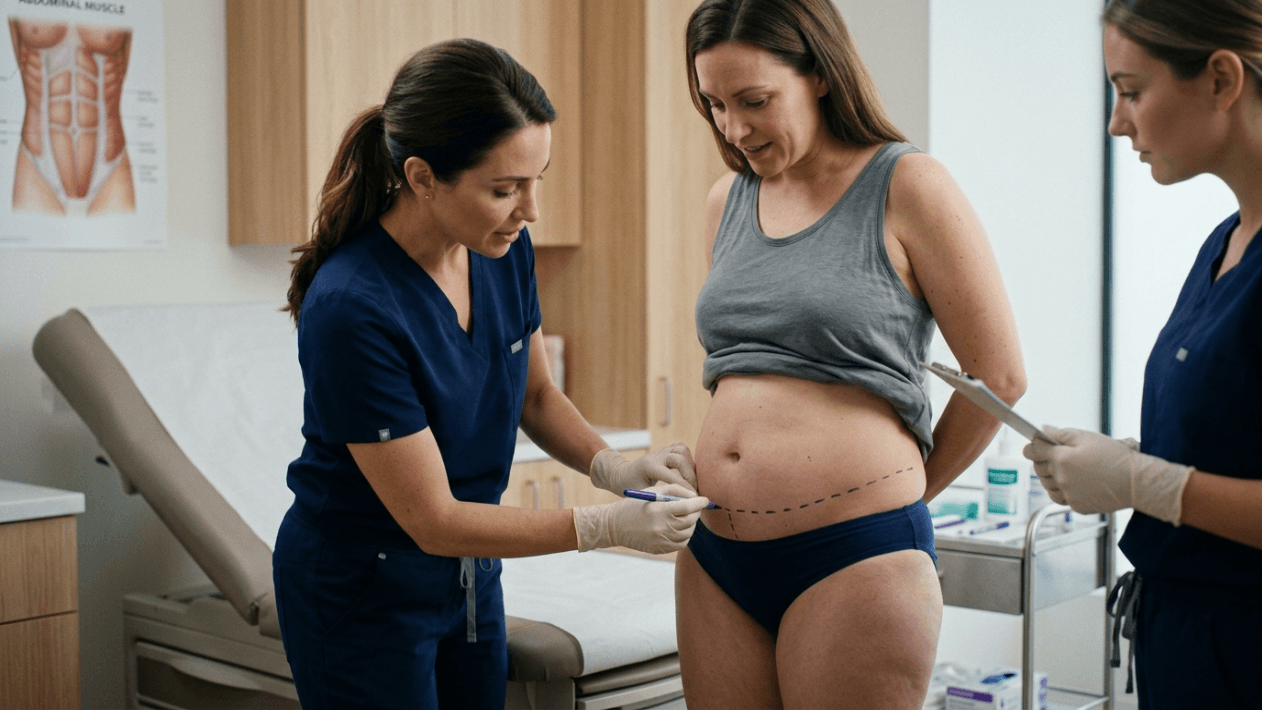
Op. Dr. Sibel Atalay performs or directly supervises the first comprehensive post-operative follow-up between Day 5 and Day 6. This appointment evaluates incision integrity, checks for early signs of infection or dehiscence, assesses drain output volume and consistency, and reviews your pain management regimen.
Drain output below 30 mL per 24-hour period for two consecutive days qualifies for drain removal. Full mommy makeover patients typically have two abdominal drains; breast-only patients may have none. When drains are removed, the exit sites are left open to close by secondary intention — a process that requires daily dressing changes for another 48 to 72 hours before you can safely consider a flight.
Drain-Free Confirmation: A Milestone for Your Flight Timeline
Attaining drain-free status is not symbolic. It directly determines your eligibility for airline travel. Most airlines require a medical certificate confirming that drains have been removed before boarding is permitted. Flying with surgical drains poses specific risks: cabin pressure changes can dislodge drains, and confined cabin conditions prevent proper drainage measurement. The drain-free milestone typically falls between Day 5 and Day 8 for mommy makeover patients.
Comparing Recovery Milestones: Breast-Only vs. Full Mommy Makeover
Procedure combination matters. The table below highlights the measurable differences that affect your flight planning.
| Recovery Parameter | Breast-Only | Full Mommy Makeover |
|---|---|---|
| Drain removal | Day 3–5 (or none) | Day 6–8 |
| Independent ambulation | Day 2–3 | Day 4–5 |
| 45-degree posture eliminated | N/A | Day 7–10 |
| Compression garment dependency | 4–6 weeks | 6–8 weeks |
| Minimum fitness-to-fly day | Day 7–8 | Day 10–14 |
| Seroma risk window | Low | Moderate–High (Days 5–12) |
As the data shows, full mommy makeover patients require significantly more supervised recovery before flying after plastic surgery Antalya becomes clinically justifiable.
Day 8–14: Fitness-to-Fly Assessment, Compression Check & Wound Inspection
This is the decisive phase. Every clinical parameter reviewed during this window directly determines whether you board your confirmed flight or extend your Antalya stay. The fitness-to-fly assessment is not a formality — it is a clinical examination with measurable thresholds.
What the Fitness-to-Fly Assessment Actually Covers
Performed within 24 to 48 hours of your scheduled departure, the assessment includes six specific evaluations. Vital signs must be stable — heart rate below 100 at rest, blood pressure within your pre-operative baseline, and temperature below 37.8°C. Wound inspection confirms no signs of infection, dehiscence, or delayed healing at any incision site. Abdominal examination rules out seroma or hematoma in tummy tuck patients. Mobility assessment verifies you can walk independently for at least 15 minutes without disproportionate pain or breathlessness. Compression garment fit is verified — a loose garment provides insufficient pressure and must be replaced before travel. Finally, drain-free status is confirmed and documented.
Dr. Schwartz emphasizes that for short flights of two to three hours, board-certified surgeons typically clear patients around day 7 to 10. International or long-haul travel often waits until day 14 or beyond. As he states: “Your surgeon’s clearance is the only answer that actually matters. The numbers above are a rough floor, not a ceiling.”
Compression Garment Check: More Critical Than You Think
Your surgical compression garment and graduated medical compression stockings serve two different functions — and you need both for flight safety. The surgical garment supports your torso and stabilizes surgical sites against cabin pressure changes. The stockings apply graduated pressure to your calves, preventing venous blood pooling that leads to deep vein thrombosis. Confusing or combining these is a common and dangerous error.
During the Day 8–14 window, you should have your garment inspected for proper fit. A garment that has stretched loose from daily wear, or one that has become distorted from improper washing, needs replacement before flight day. Flying with a loose compression garment is worse than flying without one — it creates a false sense of security while providing inadequate pressure, allowing fluid to accumulate unchecked.
Wound Inspection Before Departure
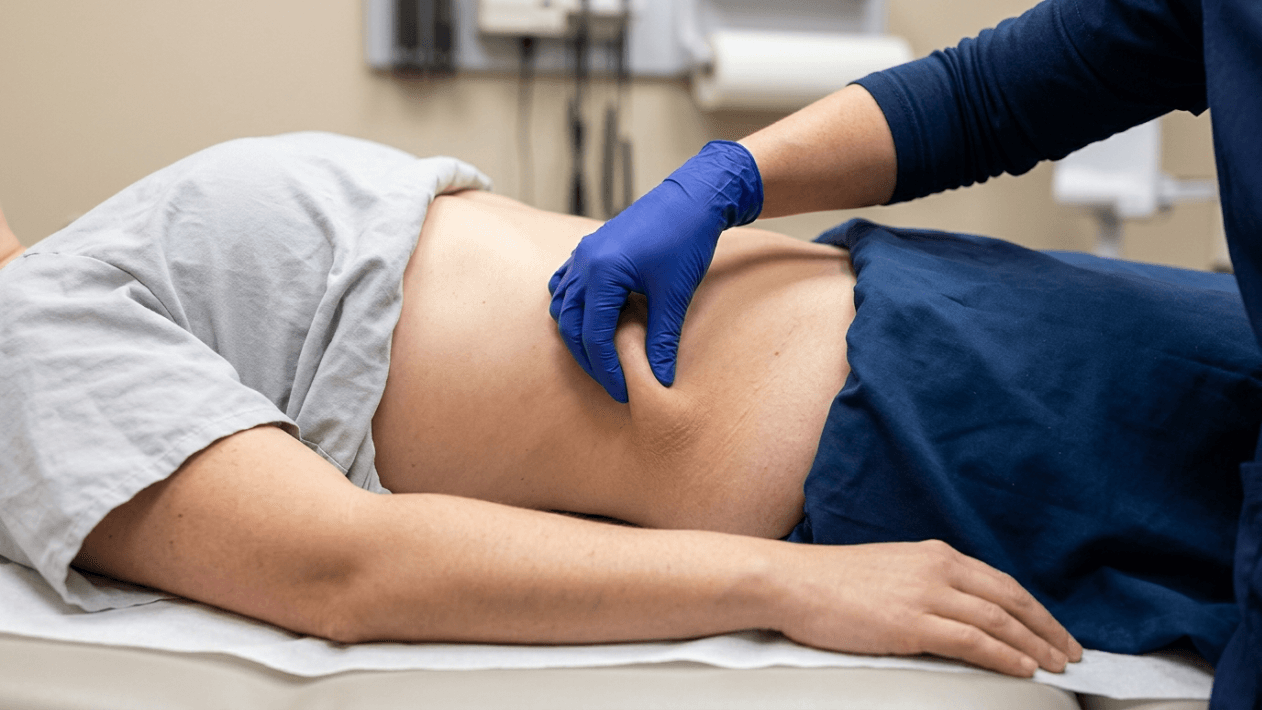
Wound inspection at this stage focuses on three specific risk indicators. Incision edge separation — even microscopic — delays flight clearance because cabin pressure changes can expand trapped air beneath healing tissue. Persistent erythema extending beyond 1 cm from the incision margin indicates subclinical infection requiring antibiotic treatment before travel. Seroma, detectable as a fluctuant swelling beneath the abdominoplasty flap, requires aspiration before departure regardless of volume. None of these findings automatically cancels your flight; they delay it until resolved.
Airline Policies for Post-Surgical Patients: What Airlines Actually Require
Airlines do not publish blanket rules for post-surgical flight safety. Each carrier sets its own timeline, and the requirements depend on your procedure, recovery progress, and flight duration. However, several consistent principles govern how airlines handle recently operated patients.
Medical Clearance Documents You Must Carry
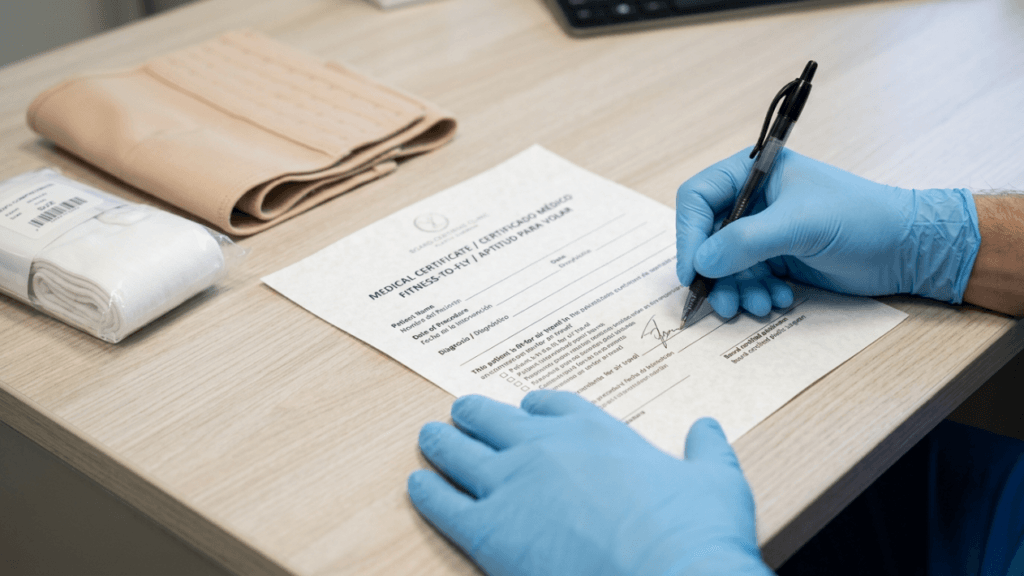
Most major carriers require a fit-to-fly medical certificate issued within 7 to 10 days of the flight date. This document must confirm the date and type of surgery, that no surgical drains remain in place, that you are cleared for air travel by a licensed physician, and that no complications prevent safe cabin pressurization exposure. Without this certificate, airline staff can deny boarding — a devastating outcome when you have already committed to your travel date.
Op. Dr. Sibel Atalay’s clinic provides a bilingual fit-to-fly certificate — English and Turkish — as part of the VIP discharge package. This document satisfies both Turkish airport security and international airline requirements. The certificates page details the clinic’s full compliance credentials for international medical travel.
Wheelchair Assistance and Boarding Logistics
Request wheelchair assistance when you book your ticket, and confirm it again at check-in. You qualify. Antalya Airport is large, and walking from check-in through security to the gate can exceed one kilometer — an impossible distance at Day 10 post-abdominoplasty. Wheelchair assistance also provides early boarding, which gives you time to settle into your seat without rushing, position your small pillow against the seatbelt, and secure your personal item.
Do not attempt to lift a carry-on bag into an overhead bin. Either check your luggage or pack light enough that your personal item fits under the seat. Lifting restrictions after a mommy makeover typically extend for six weeks post-operatively.
During the Flight: In-Flight Protocol for Flying After Plastic Surgery Antalya
The flight home is not a passive journey. It requires active, deliberate steps to protect your surgical results and prevent life-threatening complications.
Movement, Hydration & Positioning
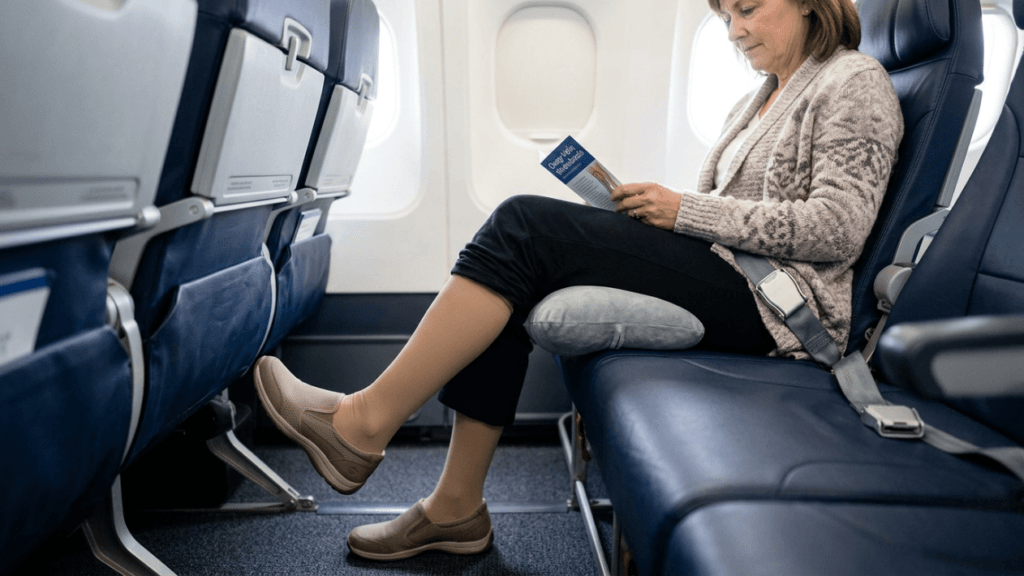
Stand and walk every 30 minutes. Set a timer. When the seatbelt sign is illuminated, perform ankle circles and calf pumps in your seat. Dr. Schwartz states this is “non-negotiable, not a nice-to-have.” Drink water constantly — airline cabin humidity drops below 20 percent, and dehydration thickens your blood, compounding your already elevated clot risk. Skip alcohol, caffeine, and high-sodium foods.
Position your seatbelt low across your hips, never across your incisions. Place a small pillow or rolled scarf between the belt and your abdomen for additional cushioning. Maintain your surgical compression garment and graduated compression stockings for the entire flight duration.
What to Pack in Your Personal Item
- Surgical compression garment (fresh replacement if recommended)
- Graduated medical compression stockings
- Pain medication in original labeled bottles with prescription copy
- Surgeon’s medical clearance letter for TSA and airline staff
- Small pillow for abdominal cushioning against the seatbelt
- Water bottle to fill after security checkpoint
- Snacks for medication timing — airline food schedules are unreliable
- Phone charger, headphones, downloaded entertainment
- Hand sanitizer and face mask — you are immunocompromised while healing
Day 14+ After Landing: Wound Care After Returning Home & Telemedicine Follow-Up Schedule
Landing does not mean recovery is complete. The first 48 hours after landing represent a continued, high-risk period. Plan these days as continued recovery — not a return to normal. Walking short distances, sleeping, hydrating, and monitoring your incisions are the only acceptable activities.
Managing Swelling After Landing
Leg and foot swelling after the flight is expected and typically resolves within 24 to 48 hours of elevation, hydration, and continued compression wear. What is not normal: swelling that is asymmetric, painful, accompanied by calf warmth or redness, or swelling that does not improve with rest and elevation. These symptoms require immediate emergency evaluation.
Telemedicine Follow-Up Schedule
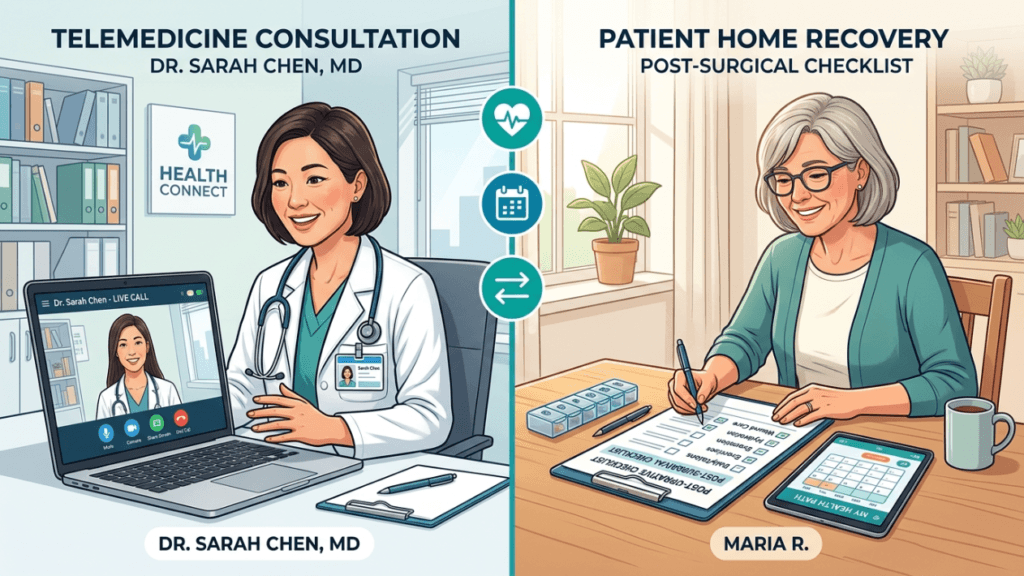
Telemedicine follow-up plastic surgery Antalya is not optional — it is your clinical safety net. Dr. Sibel Atalay’s practice schedules structured remote appointments after your return. The protocol follows a specific cadence designed to catch complications at the earliest treatable stage.
- Day 15–16 Post-Op: First video consultation. You send photographs of all incision sites. The clinical team reviews wound healing, compression garment fit, and swelling status. Medication adjustments are made if necessary.
- Day 21–22 Post-Op: Second consultation. Focus shifts to scar management initiation, activity progression review, and symptom assessment. Any persistent seroma or delayed healing is identified and addressed.
- Week 6 Post-Op: Comprehensive review. This appointment confirms you are cleared for progressive exercise, evaluates scar maturation, and documents final wound closure quality.
- Week 12 Post-Op: Final telemedicine review. Long-term results are documented, and any revision needs are discussed.
For breast-only patients, the telemedicine schedule is typically condensed to two appointments — one at Day 14–16 and another at Week 6. Full mommy makeover patients require all four touchpoints due to the increased complexity and longer healing trajectory of combined procedures.
Red-Flag Symptoms Requiring Local Emergency Room Visit After Returning Home
The risk window for deep vein thrombosis and pulmonary embolism extends for several weeks after surgery — and flying extends it further. You must know the warning signs and act on them immediately.
DVT Warning Signs
Calf pain in one leg that does not match the other. Swelling of one calf or ankle significantly greater than the opposite side. Redness, warmth, or tenderness localized to one calf. These symptoms require an emergency ultrasound within hours. Do not wait for your next telemedicine appointment.
Pulmonary Embolism Warning Signs
Sudden shortness of breath, chest pain that worsens with deep breathing, or coughing up blood. This is a medical emergency requiring an immediate 999 or 911 call. Do not drive yourself to the hospital. A pulmonary embolism is the most dangerous complication of fitness to fly after abdominoplasty, and it can manifest days or even weeks after your flight.
Surgical Site Emergency Signs
Fever exceeding 38.6°C (101.5°F). Increasing redness, warmth, or discharge at any incision site. Sudden, severe swelling that does not reduce with rest and elevation. A popping sensation or feeling that something gave way at your tummy tuck site. Any of these signs requires an emergency room visit and immediate notification to Dr. Atalay’s clinical team via the 24-hour WhatsApp line.
When you visit a local emergency room, bring your surgical summary and the bilingual medical clearance certificate. Emergency physicians need to know your procedure details, anesthesia type, and complication history to make appropriate treatment decisions quickly.
Building Your Timeline Backward: The Complete Step-by-Step Protocol
Planning your return home after a mommy makeover in Antalya requires working backward from your flight date, not forward from your surgery date. This ensures that medical requirements drive logistics — not the other way around.
Step 1: Confirm Your Flight Date with Your Surgeon First
Do not book a non-refundable ticket until your surgeon confirms your projected fitness-to-fly window. Full mommy makeover patients target Day 10–14 for short-haul flights under 4 hours, and Day 14+ for long-haul flights exceeding 4 hours. Breast-only patients may target Day 7–10 for short-haul. Book a flexible or refundable fare. Complications can add 3 to 7 days to your Antalya stay.
Step 2: Secure Recovery Accommodation Through Day 12 Minimum
Book your hotel through at least Day 12 post-op, with an option to extend. The accommodation must include elevator or ground-floor access, a recliner or adjustable bed for 45-degree sleeping, a walk-in shower with a seat, proximity to the clinic, and a kitchen or refrigerator for meal preparation.
Step 3: Arrange Your Caregiver for the First 7 Days
You need a dedicated caregiver present with you — not a friend who visits. This person manages drain care, medication timing, meals, and mobility assistance. If you cannot bring someone, hire a professional post-operative nurse through the clinic’s VIP service.
Step 4: Schedule Post-Operative Appointments Before Booking Travel
Your follow-up appointments — typically Day 5–6 and Day 8–10 — must be scheduled before you book travel. Everything else flexes around medical requirements, not the reverse.
Step 5: Request Airline Wheelchair Assistance and Aisle Seating
Book an aisle seat on a direct flight. Request wheelchair assistance at the time of booking. Confirm both at check-in. Do not book connecting flights if a direct option exists — connections add walking, waiting, and the risk of delays when you should be lying down.
Step 6: Prepare Your In-Flight Medical Kit
Pack your compression garment, medical compression stockings, labeled pain medications, prescription copy, surgeon’s clearance letter, abdominal cushion pillow, water bottle, snacks, phone charger, and sanitization supplies. Check everything the night before departure.
Step 7: Enroll in the Telemedicine Follow-Up Program Before Departure
Confirm your remote consultation schedule with Dr. Atalay’s team before you leave Antalya. You will receive instructions for photographing incision sites, measuring swelling, and reporting symptoms. Return home with a clear, written schedule and emergency contact protocols.
Your mommy makeover post-op travel plan is not complete until every one of these seven steps is executed in order. This is the protocol that protects your surgical investment, your physical safety, and your peace of mind across the entire journey from Antalya to your front door. Ready to begin? Schedule your consultation at our appointment page and let Dr. Sibel Atalay’s 29 years of international patient experience build your personalized return-travel timeline.
Frequently Asked Questions About Returning Home After a Mommy Makeover in Antalya
How soon can I fly home after a mommy makeover in Antalya?
Most board-certified plastic surgeons clear patients for short flights around Day 10 to 14 post-op. Full mommy makeover patients with abdominoplasty typically need 10 to 14 days, while breast-only patients may fly at Day 7 to 10. Your surgeon’s fitness-to-fly assessment is the only clearance that matters — never book a flight before confirming your projected timeline.
Why do I need to wait before flying after plastic surgery?
Post-surgical patients remain in a hypercoagulable state for up to six weeks. Cabin pressure reduces blood oxygen saturation, and prolonged immobility during flight increases deep vein thrombosis risk. Combining these factors with recent surgery raises clot risk significantly, which is why timing and medical clearance are essential before boarding any flight.
Can I fly home with surgical drains still in place?
No. Most airlines and surgeons require drain removal before flight clearance. Cabin pressure changes can dislodge drains, and confined cabin conditions prevent accurate drain output measurement. Drains are typically removed when output drops below 30 mL per 24 hours for two consecutive days, which usually occurs between Day 5 and Day 8 for mommy makeover patients.
What should I do if I notice swelling in one calf after flying home?
Calf swelling in one leg — especially with pain, redness, or warmth — requires an emergency ultrasound within hours. This is the primary sign of deep vein thrombosis, a potentially life-threatening condition. Do not wait for your next telemedicine appointment. Visit your local emergency room immediately and bring your surgical summary and medical clearance certificate.
How do telemedicine follow-ups work after returning home from Antalya?
Dr. Sibel Atalay’s clinic schedules video consultations at specific milestones: Day 15–16, Day 21–22, Week 6, and Week 12 post-op for full mommy makeover patients. During each session, you submit photographs of incision sites, and the clinical team reviews wound healing, compression garment fit, and activity progression. Breast-only patients typically follow a condensed two-appointment schedule.
Do airlines require medical clearance for post-surgical passengers?
Yes. Most major carriers require a fit-to-fly medical certificate issued within 7 to 10 days of the flight. This document must confirm the surgery date and type, that all drains have been removed, and that a licensed physician has cleared you for air travel. Without this certificate, airline staff can deny boarding.
What is the difference in recovery between breast-only surgery and a full mommy makeover?
Breast-only procedures typically require no drains, faster mobility recovery, and a shorter hospital-free timeline of 7 to 10 days before flying. A full mommy makeover — abdominoplasty combined with breast surgery and liposuction — involves drains, 45-degree posture requirements, extended compression garment dependency, and a minimum 10 to 14 days before flight clearance due to greater tissue trauma and higher DVT risk.
When should I go to a local emergency room after returning home?
Visit your local ER immediately if you experience sudden shortness of breath, chest pain with deep breathing, coughing blood, fever above 38.6°C, sudden severe abdominal swelling, a popping sensation at the tummy tuck site, or one-sided calf swelling with pain or redness. Bring your surgical summary and bilingual medical certificate to help emergency physicians treat you effectively.