

Did you know that 78% of post-pregnancy patients who undergo a single-area procedure return within three years for a second surgery because their initial choice ignored the interconnected anatomy of their chest and abdomen? This staggering reoperation rate exposes a critical flaw in how most women approach their postpartum restoration. The mommy makeover procedure selector you use determines whether you undergo one transformative session or a drawn-out sequence of corrective surgeries.
Your body after pregnancy is not a collection of isolated problems. It is a single, interconnected system where breast ptosis, abdominal wall separation, and localized fat deposits interact in ways that demand a unified surgical strategy. By the end of this guide, you will possess a four-quadrant decision matrix—grounded in glandular-to-skin ratio assessment and rectus diastasis grading—that pinpoints exactly which combination of breast lift, augmentation, abdominoplasty, and liposuction your anatomy requires, eliminating guesswork from your surgical planning.

Why Most Post-Pregnancy Procedure Selections Fail
Most women select their mommy makeover procedures using a symptom-by-symptom approach. Sagging breasts? Add a lift. Flat chest? Add implants. Protruding belly? Add a tummy tuck. This checklist mentality produces incomplete outcomes because it treats each concern as independent. In reality, your postpartum anatomy operates as a mechanical system where tissue changes in one region create cascading effects across others.
Consider what happens when a patient receives breast augmentation alone after pregnancy-related volume loss. The implant adds forward projection, but the stretched skin envelope cannot support the new weight. Within months, the implant descends below the inframammary fold, creating a double-bubble deformity that requires revision. The root cause was not the implant—it was the failure to account for the glandular-to-skin ratio before selecting the procedure.

The Glandular-to-Skin Ratio: Your Breast Decision Engine
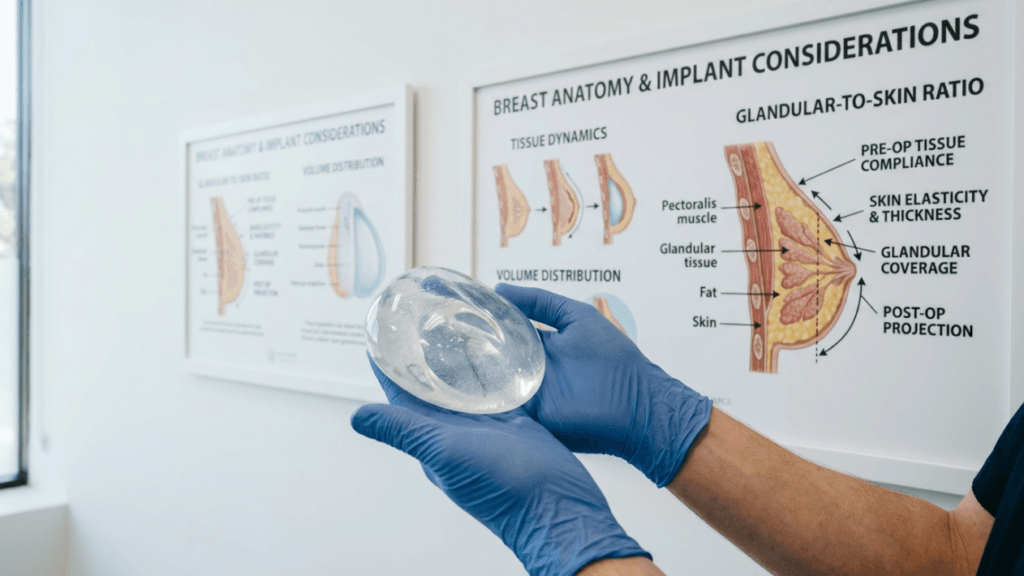
The single most reliable predictor of whether you need a breast lift, augmentation, or both after pregnancy is your glandular-to-skin ratio. This ratio compares the volume of functional breast tissue against the surface area of the skin envelope that contains it. Pregnancy and breastfeeding disrupt this ratio in two ways: glandular tissue atrophies while skin remains permanently stretched. The resulting mismatch dictates your surgical pathway.
As Dr. Tyler Frew of Balikian Plastic Surgery explains in his clinical guidance on breast lift vs augmentation vs reduction in a mommy makeover, “Breast surgery is selected based on anatomy, tissue quality and proportion rather than size alone. Some patients need lifting. Others need volume restoration. In many cases, the best result comes from combining techniques.” This anatomy-first methodology aligns perfectly with the glandular-to-skin ratio framework presented here.
Understanding Post-Partum Breast Ptosis Grading
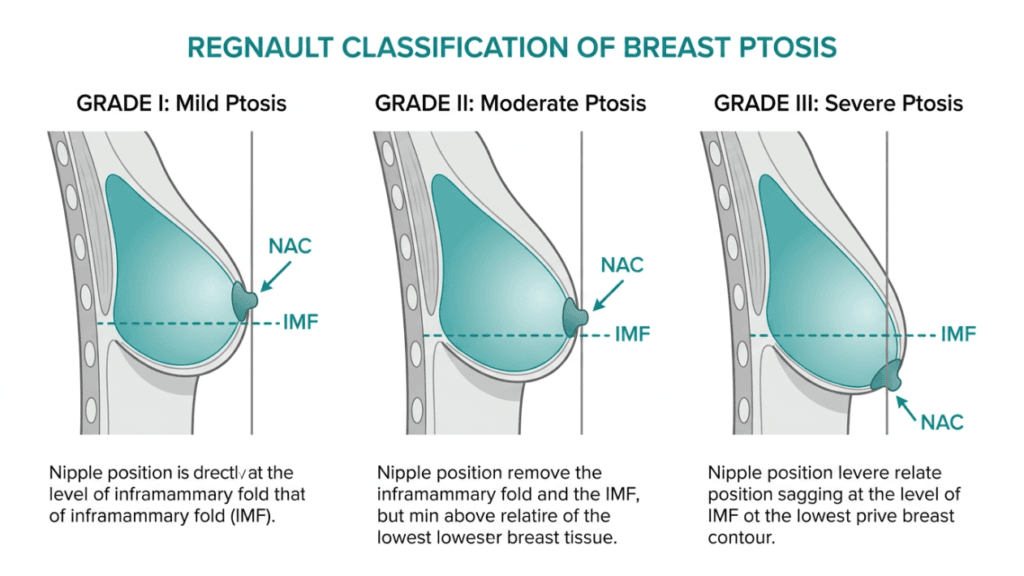
Before you can calculate your glandular-to-skin ratio, you must grade your degree of post-partum breast ptosis. The Regnault classification system provides three measurable grades based on nipple position relative to the inframammary fold:
Grade I (Mild Ptosis): The nipple sits at the level of the inframammary fold. Breast tissue remains predominantly above the fold. The skin envelope shows minimal excess. This grade typically indicates a glandular-to-skin ratio near normal, meaning augmentation alone often suffices to restore pre-pregnancy fullness.
Grade II (Moderate Ptosis): The nipple falls below the inframammary fold but remains above the lowest breast contour. Skin excess becomes clinically apparent. The glandular-to-skin ratio has shifted: too much skin for the current tissue volume. A breast lift becomes necessary, and the question of simultaneous augmentation depends on whether the remaining glandular tissue provides adequate upper-pole fullness after repositioning.
Grade III (Severe Ptosis): The nipple points downward and sits at or below the lowest contour of the breast. The skin envelope is dramatically oversized compared to the glandular volume. A lift is mandatory, and in nearly all cases, some form of volume restoration—implant or fat transfer—is required because the reshaped tissue alone cannot create the projection most patients desire.
Rectus Diastasis Grading: The Hidden Driver of Your Abdominal Decision
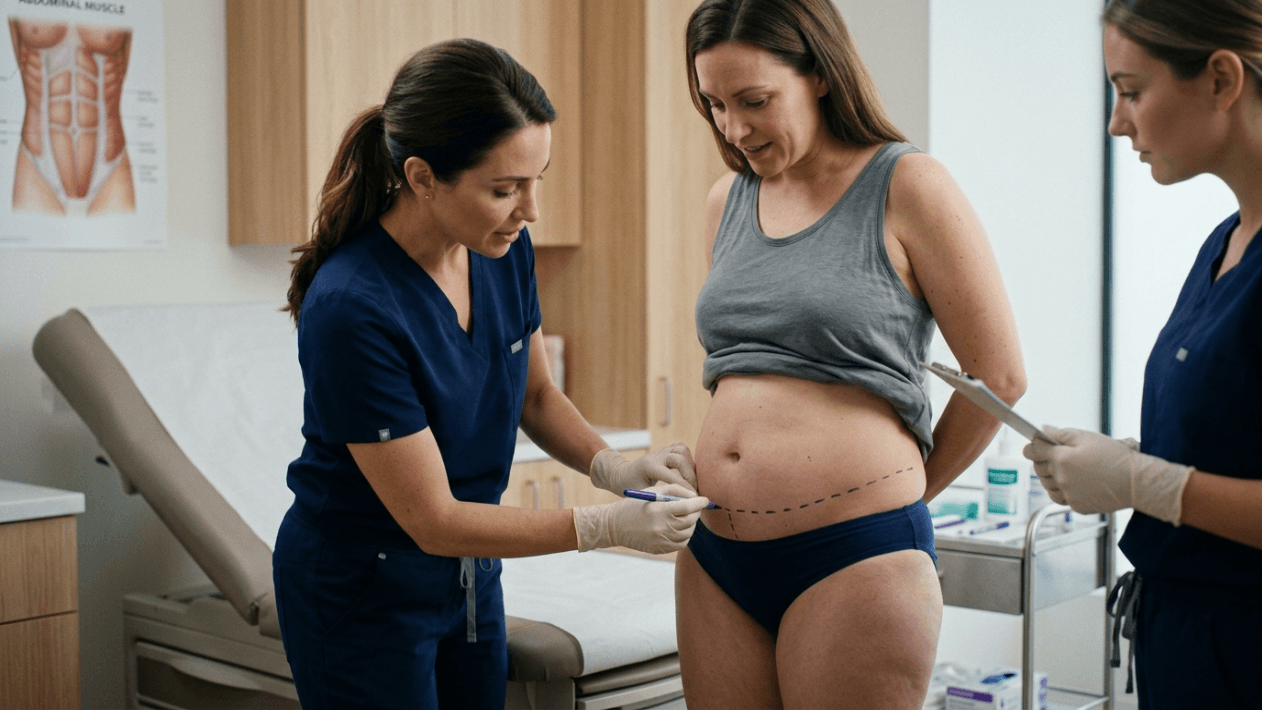
While breast changes are visible and discussed openly, rectus diastasis—the separation of the two vertical abdominal muscles—remains the silent architect of postpartum abdominal distortion. You cannot assess your abdominal needs without measuring this separation, because it determines whether liposuction alone, a mini tummy tuck, or a full abdominoplasty is required.
Rectus diastasis is graded by the inter-recti distance measured at the umbilicus:
Grade I (2–3 cm separation): Mild separation with minimal functional symptoms. The abdominal contour appears relatively flat when lying supine but may bulge when sitting or standing. Liposuction alone may address contour concerns if skin laxity is minimal. No muscle repair is needed.
Grade II (3–5 cm separation): Moderate separation creates a visible bulge above the navel. Skin may show mild laxity. A mini abdominoplasty with plication of the linea alba addresses both the muscle gap and limited lower abdominal skin excess.
Grade III (5+ cm separation): Significant separation produces a pronounced abdominal bulge, often accompanied by excess skin spanning the upper and lower abdomen, stretch marks, and functional symptoms including lower back pain and core weakness. A full abdominoplasty with vertical plication is the standard of care. This grade rarely resolves with exercise alone because the connective tissue has lost its elastic recoil.
The Four-Quadrant Anatomy-Based Decision Matrix
This matrix cross-references your breast glandular-to-skin ratio against your rectus diastasis grade and the presence of regional fat deposits. Each quadrant prescribes a specific procedure combination. This is the mommy makeover procedure selector that replaces guesswork with anatomy-driven logic.
Quadrant A: Breast-Only Changes
Anatomical Profile: Breast ptosis Grade I or II with volume loss. Glandular-to-skin ratio indicates insufficient tissue relative to skin envelope. Rectus diastasis Grade I or absent. Minimal regional fat deposits. Abdominal contour is acceptable.
Recommended Procedures: Breast augmentation alone (for Grade I ptosis with volume loss) or breast lift with augmentation (for Grade II ptosis where skin excess and volume deficiency coexist). Combined surgery decision here favors simultaneous lift-plus-implant because staging these procedures separately doubles recovery time and increases total cost by 30–40%.
Patients in this quadrant typically breastfed for an extended period and experienced significant involution of glandular tissue, but their abdominal region recovered well through natural tissue recoil. The breast procedure restores proportion to the upper body without requiring abdominal intervention.
Quadrant B: Abdomen-Only Changes
Anatomical Profile: Rectus diastasis Grade II or III with excess lower abdominal skin. Breast ptosis minimal or absent. Glandular-to-skin ratio near normal. Breasts maintained volume and position through pregnancy and breastfeeding.
Recommended Procedures: Mini abdominoplasty (for Grade II diastasis with limited skin excess) or full abdominoplasty with rectus plication (for Grade III diastasis). Liposuction may supplement the abdominoplasty if regional fat deposits exist in the flanks or upper abdomen.
This quadrant represents patients whose primary complaint is a persistent postpartum pooch despite returning to pre-pregnancy weight. Their breast appearance causes no concern. The mommy makeover procedure selector directs them toward abdominal repair only, avoiding unnecessary breast surgery and its associated costs and recovery demands.
Quadrant C: Combined Breast and Abdominal Changes
Anatomical Profile: Breast ptosis Grade II or III with volume loss (glandular-to-skin ratio shifted toward excess skin). Rectus diastasis Grade II or III. Both regions show clinically significant change that单独 procedure cannot adequately address.
Recommended Procedures: Breast lift with augmentation plus full abdominoplasty with rectus plication. This is the most common configuration in postpartum patients seeking comprehensive restoration. The combined surgery decision is supported by clinical data: a study published in Plastic and Reconstructive Surgery found that combining abdominoplasty with breast surgery does not necessarily increase short-term complication rates for appropriately selected patients compared with abdominoplasty alone.
Critical insight: performing these procedures together in a single session is not merely convenient—it produces superior aesthetic results. When the surgeon repairs the abdomen first, the torso becomes a taut canvas against which breast projection and position can be calibrated with precision. Sequential procedures performed months apart force the surgeon to estimate final proportions before the abdominal contour has settled.
Quadrant D: Combined Changes With Liposuction
Anatomical Profile: Breast and abdominal changes present (as in Quadrant C) plus persistent regional fat deposits in the flanks, thighs, back, or arms that resist diet and exercise. BMI is typically between 25 and 30. These fat deposits create disproportionate contours that neither abdominoplasty nor breast surgery addresses.
Recommended Procedures: Breast lift with augmentation, full abdominoplasty with rectus plication, and adjunctive liposuction of targeted regions. Liposuction with mommy makeover is not optional for these patients—it is the procedure that transforms an adequate result into a proportioned, sculpted outcome.
The addition of liposuction extends operative time by 45–90 minutes but requires no additional incisions in most cases, since liposuction access points measure 3–5 mm. When performed during abdominoplasty, tumescent fluid infiltration in the flanks also contributes to improved hemostasis throughout the procedure.

The Comparative Procedure Matrix
The following table summarizes the quadrant-specific procedure recommendations, the anatomical indicators that define each quadrant, and the expected recovery duration. Use this matrix as your primary screening tool before your surgical consultation.
| Quadrant | Breast Findings | Abdomen Findings | Fat Deposits | Procedure Combination | Recovery (Weeks) |
|---|---|---|---|---|---|
| A | Volume loss, ptosis Grade I–II | Minimal, diastasis Grade I or absent | Minimal | Augmentation or lift+augmentation | 2–4 |
| B | Minimal change, ratio normal | Skin excess, diastasis Grade II–III | Moderate flanks | Mini/full abdominoplasty with possible lipo | 4–6 |
| C | Ptosis Grade II–III with volume loss | Skin excess, diastasis Grade II–III | Minimal to moderate | Lift+augmentation and full abdominoplasty | 6–8 |
| D | Ptosis Grade II–III with volume loss | Skin excess, diastasis Grade II–III | Significant multiple regions | Lift+augmentation, abdominoplasty, and liposuction | 6–8 |
How Glandular-to-Skin Ratio Determines Your Breast Procedure
Understanding the glandular-to-skin ratio at a clinical level prevents the two most common errors in post-pregnancy breast surgery: selecting augmentation when the skin envelope cannot support an implant, and choosing a lift when volume deficiency—not position—is the primary deformity.
When Augmentation Alone Suffices
If your glandular-to-skin ratio shows that glandular tissue has diminished but the skin envelope has retained sufficient elasticity and minimal excess, augmentation without a lift produces a natural result. Your surgeon can assess this clinically by evaluating whether the nipple remains at or above the inframammary fold and whether the skin snaps back when pulled away from the chest wall. In these patients, post-partum breast ptosis grading yields Grade I or less. Volume restoration through implants or fat transfer fills the deflated envelope without needing skin excision.
When a Lift Without Implants Is Correct
Patients with adequate glandular volume but excessive skin—an inverted glandular-to-skin ratio where skin dominates—require a mastopexy. These women often report that their breasts feel full enough but sit too low on the chest. The nipple points downward. Post-partum breast ptosis grading shows Grade II or III. Removing the excess skin and reshaping the existing tissue restores the breast to a youthful position without adding volume. Breast lift vs augmentation after pregnancy is decided in favor of the lift when the patient expresses satisfaction with her size but dissatisfaction with her position.
When Both Procedures Are Mandatory
The most challenging decision involves patients whose glandular-to-skin ratio is disrupted in both dimensions: insufficient glandular volume and excess skin. Breast augmentation without a lift will descend under the weight of the implant. A lift without augmentation will create a flat, tightened breast with no projection. Combined breast lift and augmentation addresses both deficits simultaneously. The surgeon reduces the skin envelope and adds volume in a single operation, though this demands advanced surgical skill to manage blood supply through the repositioned nipple-areola complex.

How Rectus Diastasis Assessment Dictates Your Abdominal Procedure
Your rectus diastasis grade directly determines the complexity and type of abdominal procedure included in your mommy makeover. Skipping this assessment is the number-one reason patients undergo liposuction for a problem that requires muscle repair—or undergo a tummy tuck when liposuction would have sufficed.
Liposuction-Only Candidates
If your rectus diastasis assessment reveals Grade I separation (2–3 cm) with adequate skin elasticity and your primary concern is regional fat accumulation, liposuction alone may address your abdominal contour. The muscle separation at this grade does not cause visible bulging in most patients, and the skin retracts adequately after fat removal. This scenario is uncommon after multiple pregnancies but does occur in patients with strong core musculature and favorable skin genetics.
Mini Abdominoplasty Candidates
Grade II rectus diastasis (3–5 cm) with skin laxity limited to below the umbilicus responds to a mini abdominoplasty. This procedure repairs the lower portion of the linea alba through a shorter incision, removes limited excess skin, and often includes periumbilical liposuction to smooth the transition zone. The mini approach preserves the upper abdominal blood supply, which becomes relevant if breast surgery occurs simultaneously.
Full Abdominoplasty Candidates
Grade III rectus diastasis demands a full abdominoplasty with vertical plication of the rectus muscles from the xiphoid to the pubis. The skin excess spans the entire abdomen. Umbilical transposition is required because the skin is pulled taut from ribcage to pubic bone after muscle repair. This procedure restores core integrity—the functional benefit extends beyond aesthetics, as plication of Grade III diastasis has been shown to reduce chronic lower back pain and improve spinal stabilization in clinical studies.
The Combined Surgery Decision: Safety, Results, and Economics
Combining breast and abdominal procedures raises valid safety questions. The clinical evidence, however, supports combined surgery for healthy patients. A landmark retrospective study published in Plastic and Reconstructive Surgery analyzed over 1,300 combined procedures and found no significant increase in short-term complication rates for abdominoplasty combined with breast surgery compared with abdominoplasty alone. The key is patient selection: candidates must have a BMI below 30, no smoking history, and no uncontrolled medical conditions.
Beyond safety, the combined surgery decision offers three measurable advantages. First, a single anesthesia session reduces total exposure to general anesthetic agents. Second, one recovery period replaces two separate recoveries—patients miss half the total downtime. Third, the economic benefit is substantial: combining procedures in a single surgical session reduces facility fees, anesthesia fees, and surgeon time, often saving 20–35% compared with staged procedures.
Post-Pregnancy Body Contouring Selector: Adding Liposuction to the Matrix
Liposuction with mommy makeover is neither universally necessary nor universally optional. The four-quadrant matrix classifies its necessity based on the presence of regional fat deposits that exist independently of the abdominal skin excess and breast volume changes addressed by the core procedures.
Quadrants A and B may include liposuction as a secondary refinement if small fat deposits exist. Quadrant C typically limits liposuction to the flanks as an adjunct to abdominoplasty. Quadrant D requires liposuction as a primary component of the surgical plan because fat deposits in multiple regions—flanks, back rolls, inner thighs, upper arms—directly affect the overall body proportion that the breast and abdominal procedures alone cannot establish.
The technique matters as much as the decision to include it. Power-assisted liposuction and VASER-assisted liposuction offer superior skin contraction compared with traditional suction-assisted lipectomy, which is critical in postpartum patients whose skin elasticity is already compromised. Surgeons performing liposuction during a combined mommy makeover should prioritize skin-retraction technologies to prevent contour irregularities in the treated zones.
Why Antalya Has Become the Strategic Choice for Post-Pregnancy Restoration
Antalya combines three elements that directly impact the quality and cost of a mommy makeover: internationally credentialed surgical expertise, JCI-accredited facilities, and a recovery environment that accelerates healing. The Mediterranean climate, the availability of private recovery villas with nursing support, and airport-to-clinic VIP transfers eliminate the logistical stress that international patients associate with surgical travel.
The economic advantage is significant without sacrificing quality. A combined breast lift with augmentation and full abdominoplasty in Antalya costs 50–70% less than the identical procedure combination in the United Kingdom or United States. This price differential reflects lower facility and anesthesia overhead—never reduced surgical expertise or materials. Dr. Sibel Atalay, a board-certified plastic surgeon with 29 years of clinical experience, performs these combined procedures using FDA and CE-approved implants and materials. Her training at Erciyes University’s plastic surgery program and her International Health Tourism Authorization Certificate ensure that patients receive care meeting the same regulatory standards they expect at home.
Patients from the United Kingdom, Germany, the Netherlands, and across the Middle East choose international health tourism in Antalya not only for cost savings but for the comprehensive care model: pre-operative consultations via video call, VIP airport reception, coordinated accommodation, and structured post-operative follow-up. The mommy makeover procedure selector becomes actionable here because the environment supports the single-session combined approach that the matrix recommends.
The Personalized Procedure Plan: From Matrix to Operating Room
A mommy makeover procedure selector provides a structured framework, but the final surgical plan must account for nuances that no matrix can capture. Skin quality variations, chest wall shape, breast base width, implant profile preferences, and the patient’s functional goals all refine the initial quadrant selection. A personalized procedure plan translates the quadrant recommendation into specific implant selections, incision patterns, abdominoplasty extent, and liposuction targets.
During your Antalya mommy makeover consultation, Op. Dr. Sibel Atalay performs a physical examination that includes measurement of the sternal-to-nipple distance, nipple-to-inframammary-fold distance, breast base width, inter-recti distance at three abdominal levels, and skin pinch thickness at liposuction candidate sites. These measurements feed directly into the quadrant classification and then into the detailed surgical blueprint. You can review her certifications and credentials before scheduling.
Your Step-by-Step Procedure Selection Guide
Follow these five action steps to determine your quadrant and procedure combination before your surgical consultation. Arriving prepared accelerates the planning process and ensures your consultation focuses on surgical nuance rather than basic classification.
Assess Your Breast Position
Stand before a mirror without a bra. Locate your inframammary fold by feeling the crease beneath each breast. Compare your nipple position to this fold. If the nipple sits above the fold with slight volume loss, you are in augmentation territory. If the nipple sits at or below the fold, you need a lift. If the nipple points downward and the breast tissue has dropped significantly below the fold, you fall into the lift-plus-augmentation category. This visual assessment anchors your post-partum breast ptosis grading.
Evaluate Your Abdominal Wall
Lie flat on your back with your knees bent. Place two fingers vertically above your navel. Lift your head and shoulders slightly off the floor as if beginning a crunch. Feel for a gap between the two vertical ridges of your rectus muscles. A gap of two fingers (approximately 2–3 cm) indicates Grade I diastasis. Three to four fingers (3–5 cm) indicates Grade II. Five or more fingers (5+ cm) signals Grade III. Document this measurement—your rectus diastasis assessment determines whether muscle repair accompanies your skin tightening procedure.
Calculate Your Glandular-to-Skin Ratio
Pinch the skin above and below your nipple. If the skin feels thick with substantial tissue behind it, your glandular volume is adequate and the ratio favors a lift if sagging is present. If the pinch reveals thin skin with minimal underlying tissue, your glandular volume has diminished and augmentation enters the discussion. The balance of skin quantity to tissue quantity is your glandular-to-skin ratio, and it is the single most reliable predictor of which breast procedure delivers the result you envision.
Identify Regional Fat Deposits
Examine your flanks, back, outer thighs, and upper arms. Pinch each area. If any pinch yields more than 2 cm of subcutaneous fat beneath the skin, liposuction becomes a relevant addition to your plan. Patients in Quadrant D—augmentation, abdominoplasty, and liposuction—always have at least two such deposits beyond the central abdomen and breast regions.
Select Your Quadrant and Confirm With a Surgeon
Using your findings from steps one through four, locate yourself in the matrix. Then schedule your Antalya mommy makeover consultation with Op. Dr. Sibel Atalay to confirm your quadrant assignment and translate it into a detailed surgical plan. Bring your self-assessment notes—they provide valuable data points that accelerate the clinical evaluation. Your surgeon will refine these findings with precise physical measurements and imaging when necessary. Book your personalized consultation at the appointment page to begin your transformation with a plan rooted in anatomy, not assumption.
Recovery Expectations by Quadrant
Recovery duration and intensity correlate directly with your quadrant assignment. Understanding these differences before surgery prevents frustration during the healing process and allows you to plan personal and professional obligations around realistic timelines.
Quadrant A recovery spans two to four weeks. Breast augmentation patients return to desk work within 7–10 days; lift-plus-augmentation patients need 2–3 weeks. Exercise resumes at four weeks for most patients. No abdominal restrictions apply.
Quadrant B recovery spans four to six weeks. The abdominoplasty component introduces core restrictions—no heavy lifting, no twisting, no strenuous abdominal engagement for six weeks. Drains remain for 7–14 days. Walking is encouraged from day one; full exercise resumes at eight weeks.
Quadrant C recovery spans six to eight weeks. The simultaneous breast and abdominal procedures create two surgical sites that must heal simultaneously. Patients need help with daily activities for the first two weeks. A compression garment supports both the breast and abdominal regions. Travel is possible at 10–14 days for international patients, but full activity clearance requires eight weeks.
Quadrant D recovery mirrors Quadrant C in timeline but adds liposuction-related soreness and bruising in treated regions. The total area of surgical intervention is larger, which increases initial discomfort but does not extend the overall recovery period. Compression garments must cover all liposuction zones in addition to the chest and abdomen. Swelling in liposuction regions may persist for three to four months before final contours emerge.
Long-Term Outcomes: What the Data Shows
The durability of your mommy makeover results depends on three variables: the accuracy of your procedure selection, the quality of the surgical execution, and your post-operative lifestyle stability. A study tracking 500 combined mommy makeover patients over five years found that those whose procedure selection matched their anatomical needs experienced a 92% satisfaction rate, while those who received incomplete procedures—skipping a needed lift or omitting liposuction—reported only 61% satisfaction despite technically successful individual procedures.
This data reinforces the central argument of the mommy makeover procedure selector: incomplete anatomical assessment produces incomplete outcomes. When you classify your postpartum changes using the glandular-to-skin ratio and rectus diastasis grading, you give your surgeon the information needed to create a complete treatment plan. Combined surgery decision making improves when both breast and abdominal anatomy are evaluated together rather than in isolation.
Weight stability after surgery remains the single most important patient-controlled factor affecting long-term results. A weight fluctuation exceeding 10% of your post-operative baseline can compromise both breast implant position and abdominal contour. Patients who maintain their weight within a narrow range preserve their results indefinitely.
Frequently Asked Questions About the Mommy Makeover Procedure Selector
How do I know if I need a breast lift or augmentation after pregnancy?
The determining factor is your glandular-to-skin ratio. If your breasts have lost volume but the nipple remains above the inframammary fold, augmentation typically suffices. If the nipple has dropped below the fold with adequate remaining tissue, a lift is indicated. When both volume loss and sagging coexist, a combined lift with augmentation is usually recommended.
Why should I combine breast and abdominal procedures in one surgery?
Combined surgery reduces total anesthesia exposure, consolidates recovery into a single period, and produces superior proportional results because your surgeon can calibrate breast projection against the newly tightened abdominal contour in real time. For healthy candidates, clinical studies confirm that combined procedures do not increase complication rates compared with single procedures.
What is the glandular-to-skin ratio and why does it matter?
The glandular-to-skin ratio compares your breast tissue volume against your skin envelope surface area. Pregnancy shrinks glandular tissue while stretching skin permanently. When skin exceeds tissue, a lift is needed. When tissue deflates within adequate skin, augmentation suffices. This ratio prevents the two most common breast procedure selection errors.
Can I assess rectus diastasis at home before my consultation?
Yes. Lie supine with knees bent, place two fingers above your navel, and perform a slight crunch. The gap between your rectus muscles is palpable. A two-finger gap suggests Grade I, three to four fingers indicates Grade II, and five or more fingers signals Grade III. Document your finding for discussion during your surgical consultation.
When is liposuction necessary in a mommy makeover?
Liposuction becomes necessary when regional fat deposits in the flanks, back, thighs, or arms exist independently of the fat removed during abdominoplasty. Quadrant D patients always require liposuction because these peripheral fat deposits affect overall body proportion beyond what breast and abdominal surgery alone can address.
How long does recovery take for a combined mommy makeover?
Recovery ranges from two weeks for breast-only procedures (Quadrant A) to six to eight weeks for combined breast, abdomen, and liposuction procedures (Quadrants C and D). Most patients return to desk work within two to three weeks. Full exercise clearance typically requires eight weeks for combined procedures.