
Did you know that approximately one in three births worldwide now occurs via cesarean delivery, yet fewer than 8% of those patients ever receive accurate guidance on when — or how — to safely transition from obstetric recovery to aesthetic abdominal surgery? The gap between childbirth and body contouring is where misinformation thrives, mistakes accumulate, and preventable complications arise. A tummy tuck after C-section is not simply a cosmetic add-on; it is a structurally complex procedure that demands an entirely different surgical logic than standard abdominoplasty performed on patients with no prior abdominal surgery.
This guide delivers exactly what post-cesarean patients need: a clear, evidence-based timeline for safe intervention, a comparison of scar revision versus scar incorporation techniques, an honest assessment of how C-section nerve damage alters tummy tuck outcomes, and a framework for combined hernia repair during abdominoplasty. By the end, you will possess the clinical knowledge required to make a confident, medically sound decision — whether you are planning your procedure locally or considering international health tourism in Antalya.

The Minimum Safe Interval: Why Post-Cesarean Abdominoplasty Timing Is Non-Negotiable
The single most critical variable in post-cesarean abdominoplasty timing is tissue readiness — not calendar dates. However, clinical data consistently demonstrates that waiting fewer than six months after a C-section correlates with significantly elevated complication rates. According to published medical studies evaluating abdominoplasty performed at the time of Cesarean delivery, wound complication rates — including infection, wound separation, and skin breakdown — are substantially higher when the procedures are combined or spaced too closely together (Williams Center, 2026). The body requires uninterrupted time to rebuild collagen architecture along the uterine and abdominal wall incisions, restore hormonal equilibrium, and re-establish reliable blood flow to the lower abdominal skin.
What Happens Inside Your Abdomen During Those First 12 Months
After a C-section, the uterine incision undergoes a three-phase healing sequence. During the inflammatory phase (days 1 through 7), the body floods the wound region with macrophages and fibroblasts. The proliferative phase (weeks 2 through 6) introduces new collagen, but this collagen is disorganized and weak. Only during the remodeling phase — which spans months 6 through 18 — does collagen reorganize along lines of tension, gaining structural integrity. Performing an abdominoplasty before remodeling completes risks operating on tissue that cannot hold sutures reliably.
Beyond uterine healing, post-cesarean abdominoplasty timing must account for three additional physiological factors. First, postpartum hormonal shifts — particularly elevated relaxin levels — maintain ligamentous and skin laxity for several months after delivery. Second, weight instability during the first postpartum year means your abdominal contour will continue shifting, making pre-surgical planning unreliable. Third, breastfeeding further delays hormonal normalization. A patient who nurses for twelve months may not reach tissue stability until fourteen or fifteen months postpartum.
Six, Nine, or Twelve Months: Which Timeline Applies to You?
Board-certified plastic surgeons do not apply a single waiting period to every patient. The minimum acceptable interval depends on individual healing variables. The following table outlines the three primary post-cesarean abdominoplasty timing categories and their corresponding readiness criteria.
| Timing Category | Post-Delivery Interval | Required Readiness Criteria | Risk Profile If Proceeding Earlier |
|---|---|---|---|
| Early Clearance | 6–8 months | Non-breastfeeding, weight stable ±5 lbs for 3 months, no C-section complications, scar flat and non-tender | Residual tissue laxity may affect skin retraction; minor wound tension elevation |
| Standard Clearance | 9–12 months | Breastfeeding completed, weight stable, scar maturation visible, hormonal levels normalized | Lower risk; most surgeons prefer this window for predictable outcomes |
| Extended Wait | 12–18 months | Prior C-section infection or dehiscence, multiple C-sections, significant weight still shifting, complex scar presentation | Safest; allows full remodeling of both uterine and abdominal wall scar tissue |
Dr. Sibel Atalay evaluates each post-cesarean patient against these criteria during the initial consultation, rather than relying on any arbitrary timeline. Her 29 years of clinical experience — including extensive work with internationally certified medical tourism patients — confirm that readiness always supersedes the number of months on a calendar.
Scar Revision vs. Scar Incorporation: Two Distinct Surgical Logics
Patients frequently assume a tummy tuck will simply erase their C-section scar. That assumption is incorrect. What actually happens to the scar depends on which of two surgical approaches your surgeon selects: C-section scar revision or scar incorporation abdominoplasty. These are not interchangeable techniques — they follow different design principles, produce different aesthetic outcomes, and apply to different clinical scenarios.
When Scar Revision Is the Correct Choice
C-section scar revision applies when the existing scar sits unusually high on the abdomen — above the typical bikini-line position — and when there is limited excess skin available for resection below the scar. In this scenario, the surgeon makes a separate incision directly around the old scar, excises the poorly healed tissue, and re-closes the wound with precise suturing under reduced tension.
The limitation of revision alone is that it cannot address diastasis recti, loose skin above the navel, or residual fat deposits. It is strictly a surface intervention. Patients who choose revision alone often return within two years requesting a full abdominoplasty because the underlying structural defects remained uncorrected.
How Scar Incorporation Abdominoplasty Works
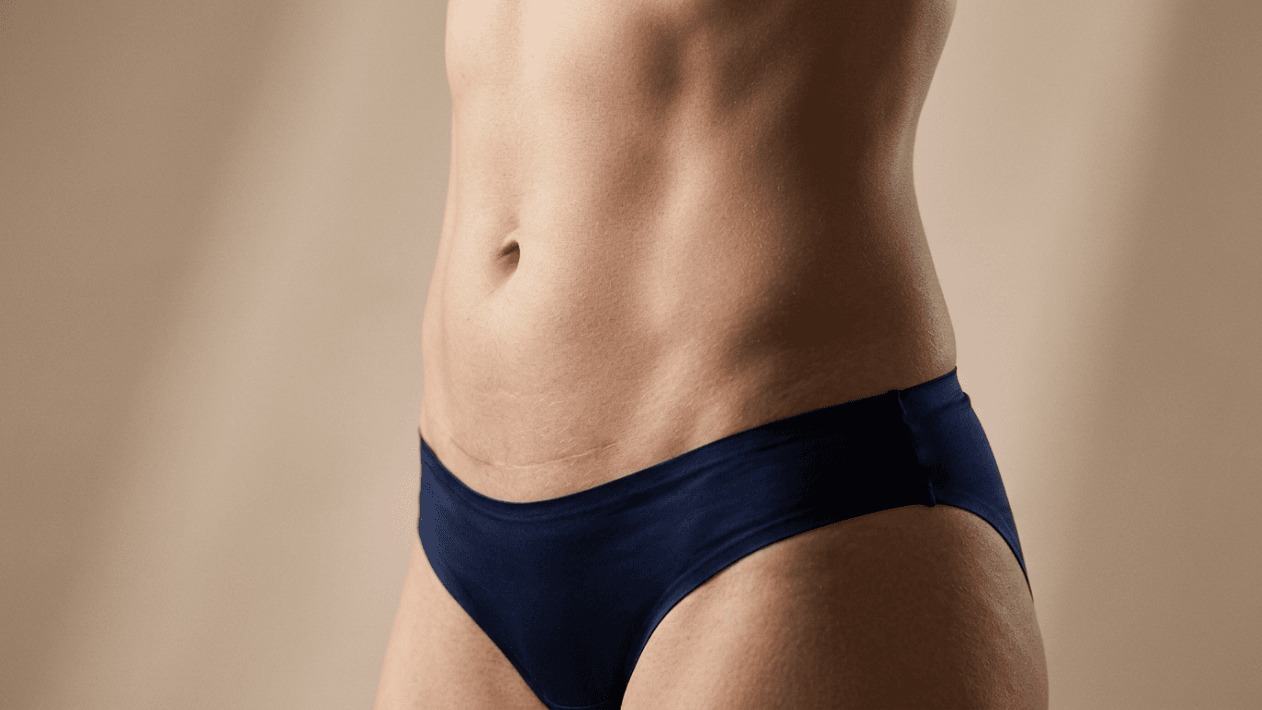
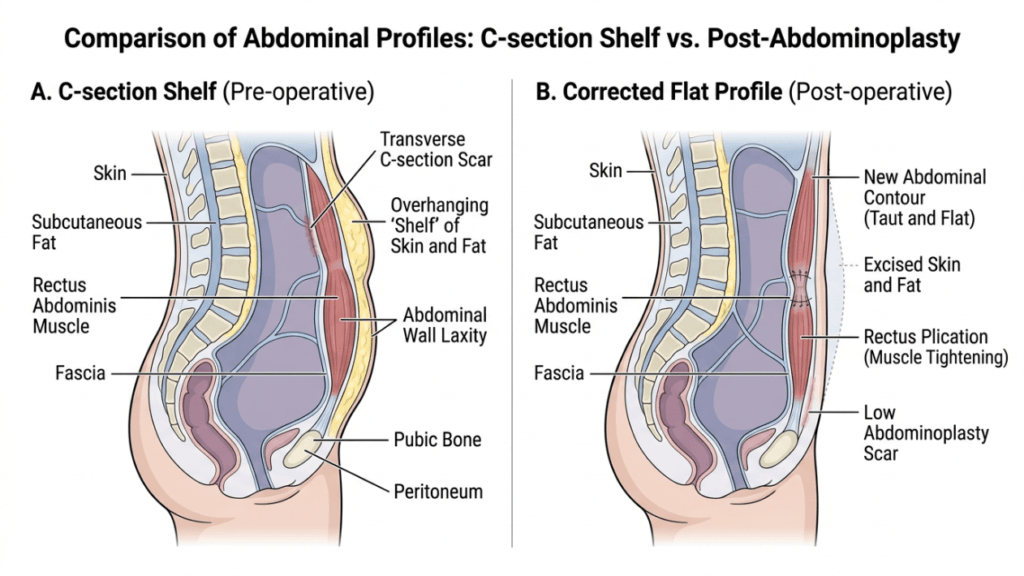
Scar incorporation abdominoplasty is the more common and more effective approach. The surgeon designs the abdominoplasty incision so that the old C-section scar falls within the segment of skin scheduled for removal. The new abdominoplasty incision replaces the C-section scar entirely — positioned lower, placed with even tension, and closed using layered techniques that reduce widening and hypertrophy.
When the C-section scar sits too low — near the pubic bone — the surgeon may place the abdominoplasty incision directly above the existing scar. The segment between the two incisions is removed. The result is a single, clean horizontal line rather than two parallel scars. This technique demands precise preoperative marking and an understanding of how skin tension vectors will redistribute once the flap is advanced.
Patient preference also plays a role. Patients from warmer climates — including Antalya’s medical tourism demographic who prioritize swimwear-friendly results — often request the lowest possible incision placement. Dr. Atalay customizes incision positioning for each patient’s anatomy, existing scar location, and lifestyle requirements.
Dr. Atalay’s Approach to C-Section Scar Management During Abdominoplasty
Dr. Sibel Atalay applies a decision matrix that evaluates four variables before selecting revision versus incorporation: scar height relative to the pubic crease, scar quality (flat, hypertrophic, or keloid), the volume of excess skin below the scar, and the patient’s skin type. Patients with darker skin tones face higher keloid recurrence risk, which influences whether the surgeon resects aggressively or conservatively. Her approach prioritizes single-scar outcomes whenever anatomically possible, avoiding the parallel-scar deformity that plagues poorly planned post-cesarean abdominoplasties.
Nerve Damage After C-Section: The Hidden Variable in Tummy Tuck Outcomes
Most consultations for post-pregnancy tummy tuck Antalya patients skip one critical topic entirely: nerve damage. A cesarean delivery transects small sensory nerves — branches of the iliohypogastric and ilioinguinal nerves — that cross the lower abdominal wall. This nerve disruption is not a complication; it is an inherent consequence of the transverse incision technique used in virtually all C-sections.
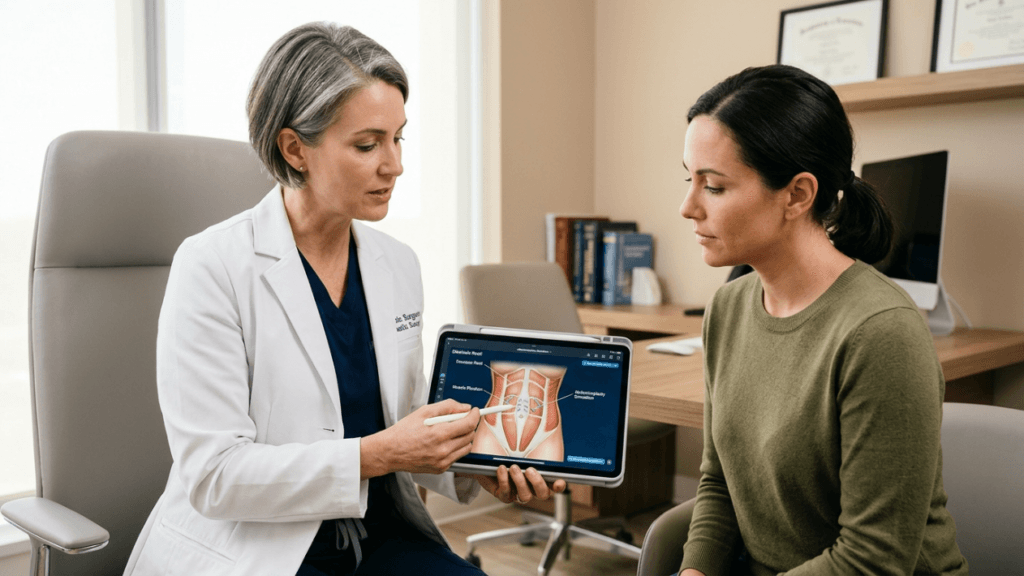
The result is a zone of numbness or altered sensation below the C-section scar. Some patients notice it immediately. Others do not recognize the deficit until it is tested during a physical examination. This nerve damage directly impacts tummy tuck planning in three ways that most patients — and many surgeons — overlook.
Impact on Intraoperative Dissection Safety
When the iliohypogastric and ilioinguinal nerve branches have been previously transected, the scar tissue surrounding these nerve stumps creates a denser adhesion plane in the lower abdomen. During abdominoplasty, the surgeon must elevate the abdominal skin flap from the underlying fascia. If the dissection plane passes directly through the scarred nerve bed, bleeding risk increases and the dissection becomes technically more demanding. An experienced surgeon anticipates this altered anatomy and adjusts the dissection depth accordingly.
Postoperative Sensation Recovery: Setting Realistic Expectations
Patients with pre-existing C-section nerve damage typically experience a larger sensory deficit after abdominoplasty than patients without prior abdominal surgery. The tummy tuck itself further disrupts sensory nerves in the abdominal flap, creating a cumulative effect. Patients must understand that permanent numbness between the navel and the pubic incision line is a common — not rare — outcome after combined cesarean delivery and abdominoplasty. While some sensation may return over 12 to 24 months as nerve endings regenerate slowly, complete restoration is uncommon.
Nerve Injury Risk During Abdominoplasty in Previously Operated Abdomens
In rare cases, the lateral dissection during abdominoplasty can compress or further injure the ilioinguinal nerve, which runs near the anterior superior iliac spine. Symptoms include burning groin pain or radiating thigh discomfort. This risk escalates in patients with multiple prior C-sections because each operation deposits additional scar tissue near the nerve pathway. Surgeons who routinely operate on post-cesarean patients — such as Dr. Atalay — use lateral dissection techniques that avoid the neurovascular corridors where these nerves travel, reducing the additional injury probability below one percent.
Combined Hernia Assessment: Why Every Post-Cesarean Tummy Tuck Requires It
Incisional hernias after C-section are more common than most obstetricians disclose. A 2024 meta-analysis published in the British Journal of Surgery reported an incisional hernia incidence of 6.2 percent at five years following cesarean delivery — a figure that climbs to 9.8 percent after two or more C-sections. Yet many patients arrive at their abdominoplasty consultation completely unaware that a hernia exists.
This is not a minor oversight. Performing an abdominoplasty without recognizing and addressing a concurrent incisional hernia creates two serious problems. First, the muscle repair (plication) performed during abdominoplasty will fail if the hernia defect is ignored, because the tension generated by muscle tightening places direct force on the unaddressed fascial gap. Second, bowel can become trapped in the hernia sac during flap elevation, converting a routine aesthetic case into an intraoperative emergency.
How Combined Hernia and Abdominoplasty Is Performed
When Dr. Atalay identifies an incisional hernia during the preoperative assessment, she integrates the hernia repair directly into the abdominoplasty. The same incision provides access to both the aesthetic skin excision and the functional fascial repair. The hernia defect is closed with reinforced suturing — and, when the gap exceeds two centimeters, a surgical mesh is placed to eliminate recurrence risk. Only after the fascial layer is restored does the aesthetic portion of the procedure proceed: muscle plication, skin advancement, and closure.
Combining these repairs in a single operation offers measurable advantages. Recovery requires only one period instead of two. The overall anesthesia exposure decreases. The abdominal wall achieves both functional integrity and aesthetic contour simultaneously. For medical tourism patients, this combined approach also means a single trip to Antalya rather than two separate visits — a logistical and financial advantage that carries meaningful weight in treatment decisions.
Uterine Scar Integrity: The Assessment Most Surgeons Omit
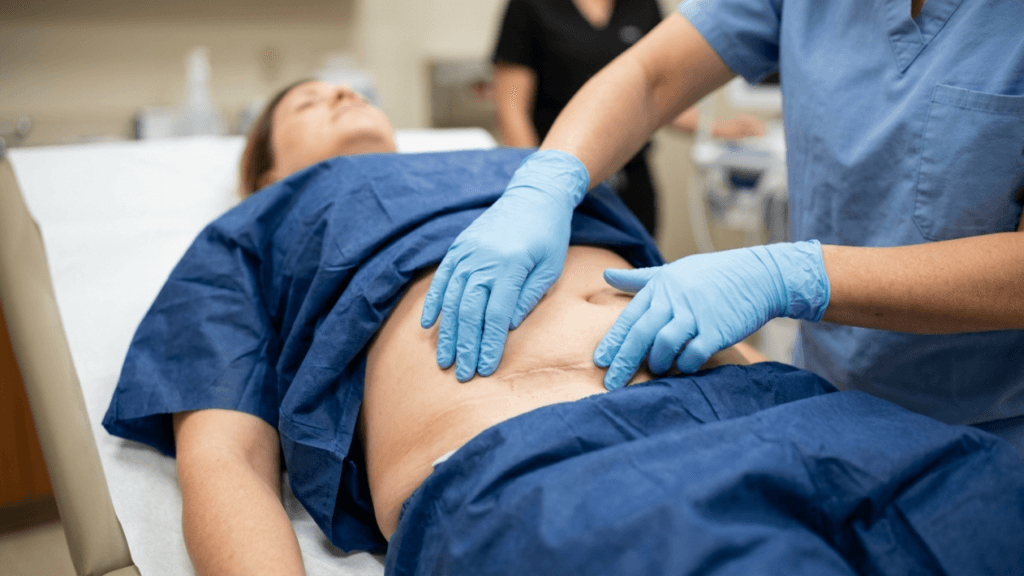
A board-certified plastic surgeon qualified to assess uterine scar integrity pre-abdominoplasty adds a layer of safety that separate specialist consultations cannot match. During abdominoplasty, the abdominal wall is placed under significant tension through muscle plication. If the uterine scar from a previous C-section is weak — a condition known as incomplete uterine scar healing — this tension can theoretically stress the uterine wall, particularly in patients who may carry future pregnancies. Dr. Atalay includes a uterine scar assessment in her preoperative evaluation protocol, ensuring that the functional repair does not compromise reproductive safety.
Antalya as a Destination for Post-Cesarean Body Contouring
Antalya has emerged as one of the most strategically advantageous locations for post-cesarean abdominoplasty patients. The medical infrastructure equals Western European standards, yet the cost structure allows patients to access combined procedures — abdominoplasty, hernia repair, liposuction, breast surgery — at a fraction of the price charged in the United Kingdom or the United States. The Mediterranean climate accelerates postoperative morale and mobility during the recovery window, while the city’s established international health tourism ecosystem provides end-to-end logistical support: VIP airport transfers, coordinated accommodation, and multilingual clinical coordination.
Patients who combine post-pregnancy procedures — for instance, abdominoplasty with breast lift and liposuction — benefit from a single recovery period, reduced total anesthesia exposure, and lower cumulative costs. Dr. Atalay’s practice at the Dr. Sibel Atalay International Clinic is built around this combined-procedure philosophy, offering personalized treatment plans that address both aesthetic goals and functional repair requirements simultaneously.
Understanding the Core Anatomy of Post-Cesarean Abdominal Changes
Before any surgical plan is constructed, a post-cesarean patient must understand the three structural changes that pregnancy and C-section delivery inflict on the abdominal wall. These changes define what a tummy tuck after C-section actually addresses — and what it cannot.
- Diastasis Recti: The left and right rectus abdominis muscles separate along the linea alba during pregnancy. They do not always reapproximate spontaneously after delivery. A gap wider than two finger-breadths constitutes clinically significant diastasis, which weakens core strength and creates a persistent lower-abdominal bulge.
- Scar Tethering and Skin Laxity: The C-section scar anchors the lower abdominal skin to the underlying fascia. Above the scar, skin stretches. Below it, skin remains fixed. This differential creates the characteristic C-section shelf — a fold of overhanging tissue that no amount of exercise resolves.
- Subcutaneous Fat Redistribution: Postpartum hormonal shifts alter fat deposition patterns. Many patients develop concentrated fat in the lower abdomen and flanks that resists dietary intervention. Surgical excision during abdominoplasty — often supplemented with liposuction — addresses this localized accumulation directly.
A tummy tuck after C-section attacks all three problems simultaneously: it reapproximates the separated muscles, releases and excises the scar-tethered skin, and removes the resistant fat deposits. Understanding this triple mechanism allows patients to set accurate expectations for their outcome.
What Happens During the Procedure: A Step-by-Step Overview
Knowing the surgical sequence reduces anxiety and reveals why the surgeon’s experience with post-cesarean anatomy matters so significantly. Here is how Dr. Atalay performs a tummy tuck after C-section.
1. Preoperative Evaluation and Marking
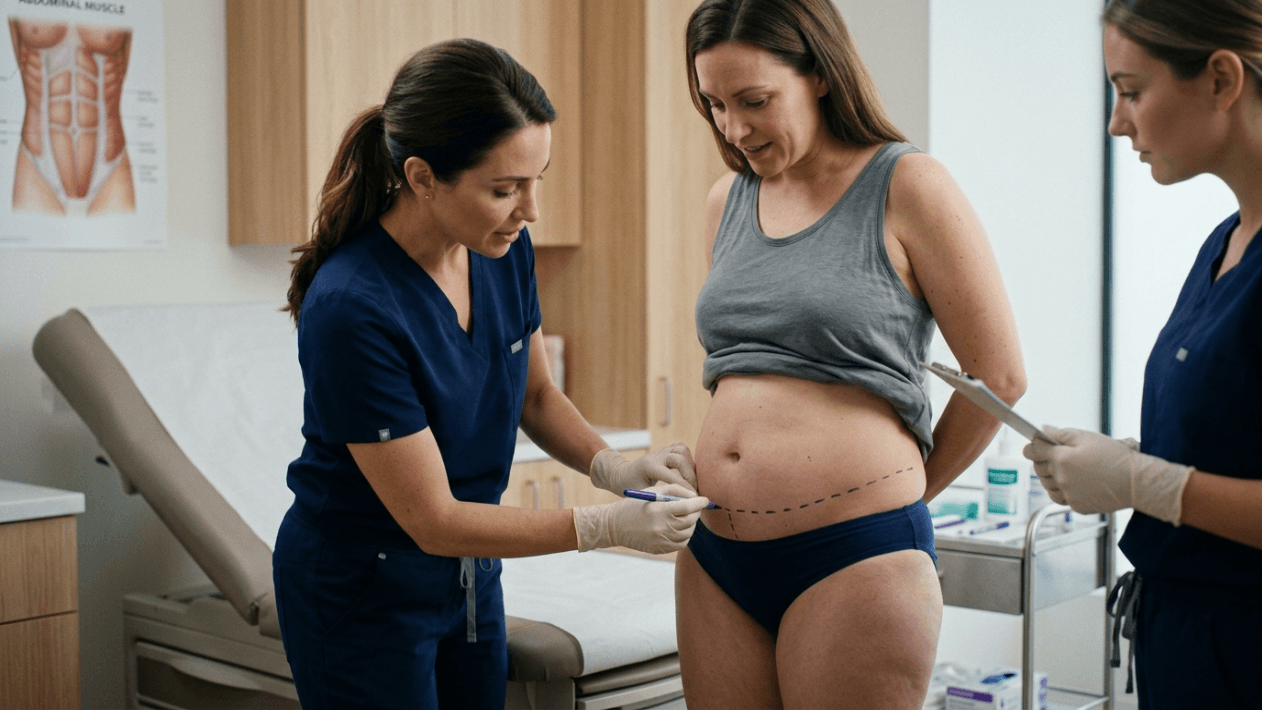
The consultation begins with standing and supine examination. Dr. Atalay marks the C-section scar, maps the zone of skin excess, identifies muscle separation, and checks for incisional hernia by asking the patient to bear down. Incision lines are drawn while the patient stands, because skin laxity shifts with gravity and the marking must account for that movement.
2. Anesthesia and Incision Placement
Under general anesthesia, the initial incision follows the preoperative markings. If the C-section scar is being incorporated, the incision connects directly to the existing scar line. If the scar sits too high, a new lower incision is created and the segment between the two is excised. The precision of this first incision determines the final scar position.
3. Flap Elevation and Adhesiolysis
The abdominal skin flap is raised from the underlying fascia up to the rib margin. In post-cesarean patients, dense adhesions — scar tissue binding skin to fascia — are encountered near the old incision. These adhesions must be released sharply and carefully to avoid creating buttonhole injuries in the skin flap. This step is where novice surgeons encounter difficulty; experienced hands navigate the adhesion plane efficiently.
4. Muscle Repair and Hernia Closure
Diastasis recti is corrected by suturing the rectus muscles together along the midline. If a hernia is present, the fascial defect is closed and reinforced before muscle plication begins. The muscle repair establishes functional abdominal wall integrity — the structural foundation upon which the aesthetic skin redraping depends.
5. Skin Excision and Navel Reconstruction
The patient is flexed at the waist. Excess skin is pulled downward and marked for excision. The segment containing the old C-section scar — if incorporating — is removed. The navel is repositioned through a newly created opening at the anatomically correct height, with the opening shaped to create a natural inward contour rather than a round hole.
6. Layered Closure and Dressing
Deep dermal sutures bear the tension. Superficial skin edges are approximated without tension to minimize visible scarring. Drains are placed to prevent fluid accumulation. A compression garment is applied before the patient leaves the operating room. Layered closure is the technical difference between a scar that heals as a thin line and one that widens into a visible band.
Recovery After a Post-Cesarean Tummy Tuck: What Differs
Recovery from abdominoplasty after a C-section shares similarities with standard tummy tuck recovery, but several distinctions matter. Post-cesarean patients have already experienced one major abdominal surgery, and their tissues carry the memory of that intervention.
- Days 1–7: Maximum swelling and discomfort occur. Drains remain in place. Walking should resume within the first 24 hours — short, bent-over walks that reduce clot risk. Pain medication controls the acute phase. The abdominal area feels tight, and standing fully upright is not yet possible.
- Weeks 2–4: Drains are removed. Swelling begins declining. Light walking extends. The compression garment is worn 24 hours daily. Strenuous activity, driving, and lifting remain prohibited.
- Weeks 6–8: Most patients return to desk-based employment. Gentle core exercises commence under surgeon guidance. The incision line transitions from red to pink.
- Months 3–12: The scar fades and flattens. Sensation gradually returns in patches — though some numbness may be permanent, particularly between the navel and pubic incision. Final contour becomes visible as internal swelling resolves completely.
For international patients traveling to Antalya, the recommended minimum stay after surgery is 10 to 14 days. This window allows drain removal, the first postoperative check, and initial wound assessment before clearance to fly. Dr. Atalay’s clinic coordinates this timeline with each patient’s travel schedule and provides remote follow-up protocols for the months that follow.
Candidate Criteria: Who Qualifies for a Tummy Tuck After C-Section
Not every post-cesarean patient is a candidate. The following criteria define the minimum requirements for safe intervention.
- Weight stable within 5 kilograms for at least three months prior to surgery.
- Completed family planning — pregnancy after abdominoplasty reverses muscle repair.
- Non-smoker or willing to cease all nicotine intake for six weeks before and after surgery.
- C-section incision fully healed with no ongoing infection, drainage, or tenderness.
- No uncontrolled chronic conditions such as diabetes with hemoglobin A1c above 7.0.
- Realistic expectations regarding scarring, sensation changes, and recovery duration.
Patients who do not meet every criterion should not be forced into a surgical timeline. Delaying until readiness is complete always produces superior results compared to rushing into surgery on a self-imposed deadline.
Potential Complications Specific to Post-Cesarean Patients
All abdominoplasty procedures carry general surgical risks — infection, bleeding, and anesthesia complications. Post-cesarean patients face additional risks tied specifically to their surgical history.
- Delayed Wound Healing: Compromised blood supply from a previous C-section incision increases the risk of wound edge necrosis in the lower abdominal flap.
- Increased Seroma Formation: Larger dissection planes in patients with extensive internal scar tissue elevate seroma risk. Meticulous technique and drain management reduce this probability.
- Widened or Hypertrophic Scarring: Patients with a history of keloid or hypertrophic C-section scars face elevated recurrence risk. Preventive corticosteroid taping protocols begin on postoperative day 14.
- Asymmetrical Contour: Dense, unilateral adhesions from the C-section can cause uneven skin redraping if not fully released intraoperatively.
- Sensory Disturbance: Cumulative nerve disruption from both the C-section and abdominoplasty produces a wider and more persistent sensory deficit than abdominoplasty alone.

Selecting a surgeon with direct experience in post-cesarean abdominoplasty — not merely general cosmetic surgery — reduces every risk listed above. Dr. Atalay’s practice focuses on these cases daily, and her technique modifications account for the altered anatomy that prior cesarean delivery creates.
Your Step-by-Step Decision Guide
- Assess your timeline. Count the months since your last C-section delivery. If fewer than six months have passed, document this date and return to reassess at the nine-month mark. Your body is still remodeling collagen internally.
- Evaluate weight stability. Track your weight weekly for eight consecutive weeks. If the range exceeds 2.5 kilograms, surgery timing is premature. Wait until your weight holds steady.
- Examine your C-section scar. Note its height, width, color, and any areas of numbness. Photograph it from three angles. This documentation assists your surgeon in selecting between revision and incorporation.
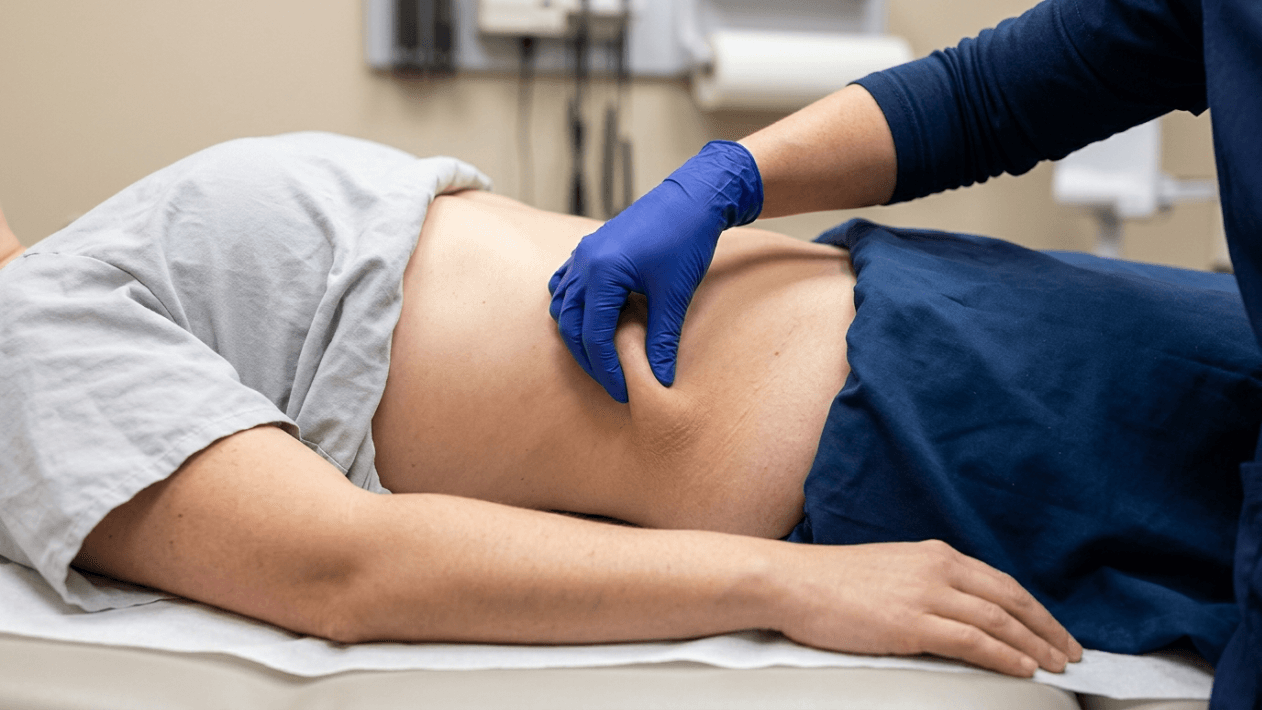
- Check for hernia symptoms. Lie flat and bear down. If you feel a bulge near or above your C-section scar, an incisional hernia may be present. Report this finding during your surgical consultation.
- Confirm family planning status. If future pregnancies are possible, delay abdominoplasty. Pregnancy after muscle repair stretches the plication and reverses the aesthetic result.
- Schedule a surgical consultation. An in-person or virtual evaluation with a board-certified plastic surgeon experienced in post-cesarean cases determines your readiness better than any timeline article. Book your consultation directly.
- Plan your medical tourism logistics. If traveling to Antalya, coordinate your consultation 10 to 14 days before your intended return travel date. This allows drain removal and initial wound assessment before you fly home.
Frequently Asked Questions About Tummy Tuck After C-Section

How long after a C-section can I safely have a tummy tuck?
Most board-certified plastic surgeons recommend waiting 9 to 12 months after a C-section. This interval allows uterine and abdominal wall scar tissue to complete remodeling, hormones to stabilize, and weight to settle. Patients with complicated C-section recoveries may need 12 to 18 months before surgical clearance.
Will my C-section scar be removed during a tummy tuck?
In most cases, the C-section scar is incorporated into the abdominoplasty incision and removed with the excised skin. The new scar replaces the old one at a lower, more concealed position. However, when the original scar sits unusually high, a separate revision strategy may be required.
Why should I not combine a tummy tuck with my C-section delivery?
Published studies report significantly higher wound complication rates when abdominoplasty is performed during Cesarean delivery. Postpartum tissue swelling, hormonal shifts, and incomplete uterine involution make outcomes unpredictable. Separating the procedures allows full healing first.
Can nerve damage from my C-section affect my tummy tuck result?
Yes. C-section incisions transect sensory nerve branches in the lower abdomen, creating zones of numbness. Abdominoplasty adds further nerve disruption to the same region. Patients should expect a larger and potentially permanent sensory deficit between the navel and incision line.
How is an incisional hernia detected before abdominoplasty?
A physical examination while the patient bears down typically reveals a fascial bulge. In some cases, ultrasound imaging confirms the diagnosis. Dr. Atalay includes hernia assessment in every post-cesarean abdominoplasty consultation to prevent intraoperative surprises and enable combined repair.
Is a tummy tuck after C-section safe for medical tourism patients?
Yes, when performed by a board-certified plastic surgeon with specific post-cesarean experience. Antalya clinics equipped with international health tourism certification meet the same safety standards as Western European facilities. Patients should plan a 10 to 14 day postoperative stay before flying home.
Does insurance cover combined hernia repair during abdominoplasty?
The hernia repair portion may qualify for insurance coverage if documented as a functional necessity, separate from the cosmetic abdominoplasty. Coverage varies by provider and country. Patients should request a detailed procedural breakdown that separates functional and aesthetic components for insurance submission.
What happens if I get pregnant after a post-cesarean tummy tuck?
Pregnancy stretches the repaired abdominal muscles and skin, reversing both the functional and aesthetic outcomes of abdominoplasty. While a subsequent pregnancy carries no inherent danger, the surgical results will likely require revision. Completing family planning before abdominoplasty is strongly recommended.