

What if the surgery that was supposed to transform your abdomen instead left you with a distorted scar, a ballooning belly, or skin that feels numb to the touch—thousands of miles from home? Secondary abdominoplasty after failed surgery is one of the most technically demanding procedures in reconstructive body contouring, yet thousands of patients who traveled abroad for their initial operation find themselves exactly in this position, searching for a surgeon willing to correct what another clinic could not.
By the end of this article, you will understand why a revision tummy tuck is fundamentally different from a primary procedure, how healed scar distortion, vascular compromise, and altered lymphatic pathways transform the surgical landscape, and precisely how Dr. Sibel Atalay’s secondary reconstruction philosophy at her Antalya international clinic addresses each of these hidden dangers. You will also gain a clear, step-by-step pathway to determine your candidacy and initiate a virtual consultation.

Why Secondary Abdominoplasty After Failed Surgery Demands a Reconstructive Mindset
A primary tummy tuck is performed on tissue that has never been surgically altered. The blood vessels follow predictable anatomical paths. The lymphatic channels drain without obstruction. The skin retains its natural elasticity and thickness. A revision surgeon inherits none of these advantages. Every layer of the abdominal wall has been cut, repositioned, and healed in a new configuration. The rules that governed the first surgery no longer apply, and this single reality separates a revision tummy tuck international patient case from anything a standard cosmetic approach can handle.
According to a published literature review on managing abdominoplasty complications in Archives of Plastic Surgery, local complications occur in 10 to 20 percent of abdominoplasty patients, with seroma, wound dehiscence, and flap necrosis representing the most frequent challenges that eventually require revision intervention. What the data does not capture, however, is the emotional toll on patients who received their primary surgery in another country, often with limited post-operative access to their original surgeon, and who now face the prospect of trusting a second physician with an abdomen already scarred by disappointment.
The Invisible Architecture That a First Surgery Rewrites
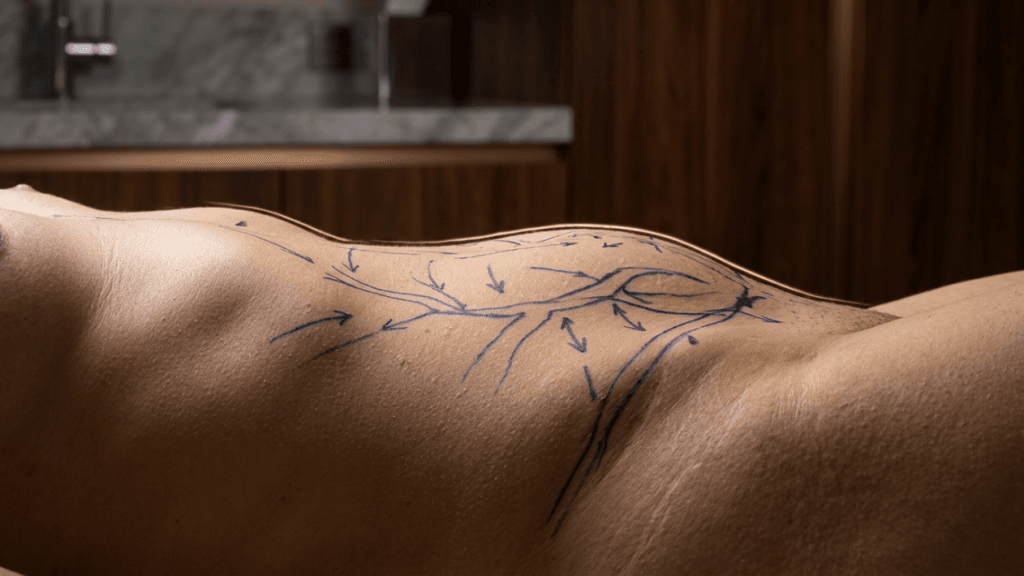
During your initial abdominoplasty, the surgeon elevated an abdominal flap from the underlying fascia. This act alone severed perforating blood vessels that once supplied the skin and subcutaneous tissue from deep within the abdomen. The body compensated by developing collateral circulation—small, fragile pathways that now sustain the flap. A revision surgeon must map these new pathways before making a single incision, because severing a dominant collateral vessel can cause flap necrosis, a complication far more devastating than any cosmetic imperfection.
Lymphatic vessels suffered a similar fate. Superficial lymphatic channels that once drained fluid from the abdominal wall toward the inguinal nodes were transected during the primary elevation. The body attempts to re-establish drainage through delicate neolymphatic channels, but these are inefficient, prone to obstruction, and easily disrupted. This is why revision patients frequently develop persistent seromas—fluid collections that resist aspiration because the underlying drainage architecture remains compromised. Post-surgical lymphatic obstruction reconstruction is not a term you will hear in a standard cosmetic surgery consultation, but it is the cornerstone of any successful revision.
The Three Hidden Challenges of Vascular Compromise Revision Abdominoplasty
When Dr. Sibel Atalay evaluates an international revision patient at her Antalya clinic, she does not begin with what is visible on the surface. She begins with what the first surgery irreversibly changed beneath it. Understanding these three hidden challenges explains why a revision tummy tuck carried out without a reconstructive framework fails at alarming rates.
1. Healed Scar Distortion and Tethered Tissue Planes
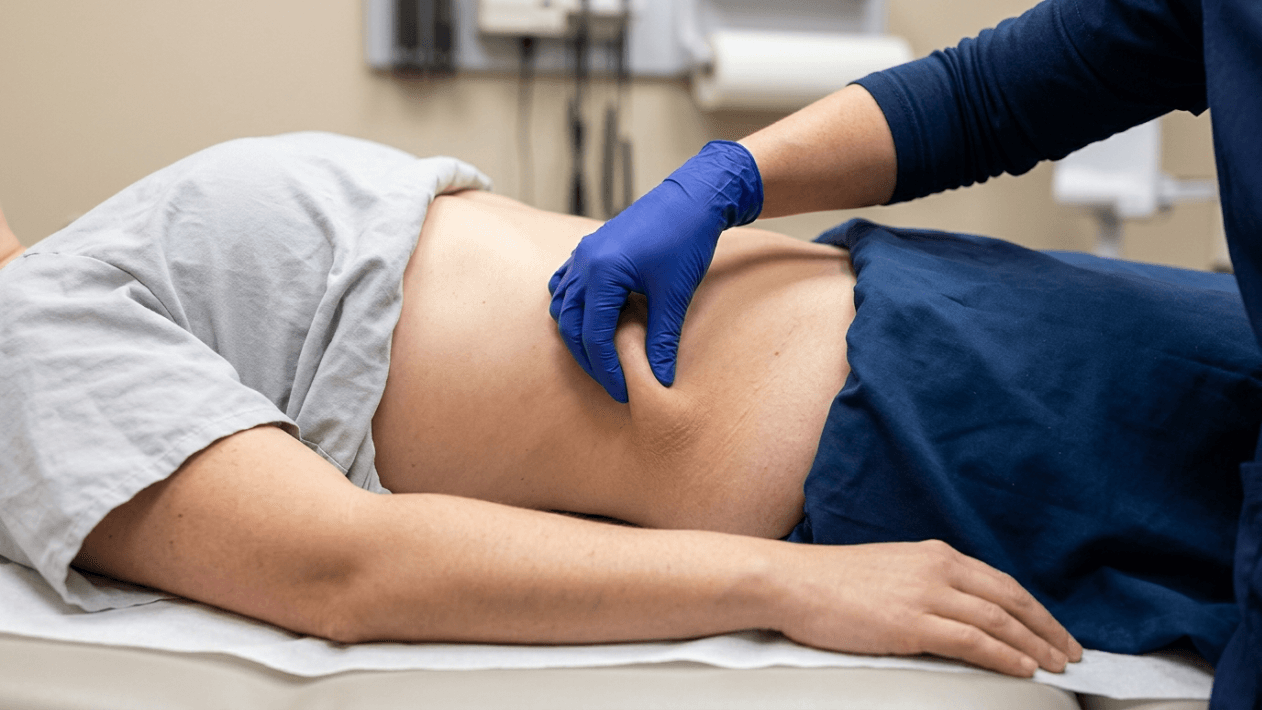
A healed abdominoplasty scar is not merely a line on the skin. It represents a zone where the dermis, subcutaneous fat, and sometimes the muscular fascia have fused into a single, fibrotic plane. This scar adherence restricts skin mobility, which means the revision surgeon cannot simply pull the tissue downward as in a primary case. Attempting to do so creates tension at the incision line, leading to widened scars, wound separation, and tissue ischemia. Dr. Atalay addresses this by performing meticulous scar release—separating the adherent layers and, when necessary, using fat grafting to restore a gliding plane between the skin and the fascia. This technique, documented in reconstructive literature as a method for improving both contour and tissue viability, re-establishes the natural mobility that the first surgery destroyed.
2. Unpredictable Blood Supply and the Dominant Collateral
The vascular anatomy of a previously operated abdomen bears no resemblance to textbook illustrations. Standard abdominoplasty relies on Huger’s vascular zones—well-defined territories supplied by the superior and inferior epigastric arteries and the intercostal perforators. After a primary surgery, these zones are remapped. Certain zones that were once well-perfused may now be entirely dependent on a single collateral vessel. Preoperative vascular assessment using handheld Doppler ultrasonography is mandatory in every vascular compromise revision abdominoplasty case Dr. Atalay treats. Without this mapping, elevating the flap for a second time risks cutting the only remaining blood supply to large areas of tissue, resulting in partial or total flap loss—a catastrophic outcome that requires months of wound care and may leave permanent disfigurement.
3. Altered Lymphatic Pathways and Seroma Susceptibility
Lymphatic disruption is the most underestimated consequence of primary abdominoplasty failure. When superficial lymphatic channels are severed, the body struggles to re-establish efficient drainage. Even patients whose primary surgery healed without an obvious seroma may develop recurrent fluid collections during a revision because the second elevation further disrupts the neolymphatic channels that formed after the first procedure. Dr. Atalay employs progressive tension suturing—a technique that eliminates dead space by quilting the flap to the fascia at multiple points—and targeted lymphatic reconstruction where drainage pathways are identified and preserved. This approach dramatically reduces seroma incidence in revision cases, which otherwise carry recurrence rates far exceeding those of primary surgery.

Abdominal Scar Revision Health Tourism: Why Antalya Is the Definitive Destination
Patients who experienced a failed tummy tuck abroad face a unique psychological barrier. They trusted a foreign clinic once and that trust was broken. Convincing them to travel again—for corrective surgery that is inherently more complex—requires more than competitive pricing. It demands verifiable credentials, a transparent surgical philosophy, and an infrastructure designed for international patients who need end-to-end support before, during, and after their revision procedure.
Dr. Sibel Atalay’s Antalya clinic was built specifically for this patient population. With 29 years of surgical practice, board certification in plastic, reconstructive, and aesthetic surgery, and an International Health Tourism Authorization Certificate, she meets the institutional and professional benchmarks that medical tourism patients should demand. Her certifications and professional accreditations are available for direct review, providing the transparency that revision patients require after a prior disappointing experience.
What Separates a Medical Tourist’s Revision From a Local Patient’s Revision
A local patient can visit their surgeon’s office at the first sign of a complication. An international patient cannot. When a revision abdominoplasty is performed on a patient who traveled from the United Kingdom, Europe, or North America, the surgeon must account for the fact that any minor complication occurring after the patient returns home becomes magnified by distance. This means the revision strategy must prioritize tissue viability above aesthetic ambition. A slightly looper contour that heals without complication is superior to a dramatic contour that dehisces on day eight while the patient sits in a hotel room 2,000 miles from the operating surgeon.
Dr. Atalay addresses this by building a mandatory post-operative monitoring window into every revision tummy tuck international patient protocol. Patients remain in Antalya under clinical observation for a specified period before receiving clearance to travel. Her VIP infrastructure—airport transfers, coordinated accommodation, and dedicated patient liaison—eliminates the logistical burdens that make medical tourism stressful, allowing the patient to focus entirely on recovery. This end-to-end model is precisely what distinguishes Dr. Atalay’s practice from clinics that perform surgery and discharge patients to manage their own recovery in an unfamiliar city.

Dr. Atalay’s Secondary Reconstruction Philosophy: Reconstruct First, Refine Second
Most failed tummy tucks share a common origin: the primary surgeon prioritized aesthetic tension over vascular safety. They pulled the skin too tight, removed too much tissue, or designed an incision that placed excessive tension on a flap with marginal blood supply. The result is a cascade of problems—widened scars, skin necrosis, contour irregularities, and dog ears—that worsen over time as scar tissue matures and contracts.
Dr. Atalay’s philosophy inverts this hierarchy. In every secondary abdominoplasty after failed surgery case, the first objective is to re-establish a viable, well-vascularized abdominal flap. Only after tissue safety is confirmed does she address contour refinement. This reconstruct-first, refine-second approach means that some revision procedures are staged—a first surgery to restore blood supply and release scar tissue, followed by a second, smaller procedure to complete the aesthetic correction once the tissue has healed and stabilized.
The Staging Decision: When One Surgery Is Not Enough
Staging is not a sign of surgical limitation. It is a sign of surgical judgment. A surgeon who attempts to correct every problem in a single operation on a compromised abdomen takes an unacceptable risk with tissue that has already proven it cannot tolerate aggressive intervention. Dr. Atalay recommends staging when any of the following conditions exist:
- The original flap demonstrates marginal perfusion on Doppler assessment, meaning any additional elevation threatens viability.
- Extensive scar release is required across multiple tissue planes, creating large dead spaces prone to seroma formation.
- The patient has a history of wound dehiscence or delayed healing after the primary procedure, indicating compromised healing capacity.
- Significant liposuction is needed for contour correction, which must be performed conservatively in revision cases to protect already-tenuous blood supply.
Staging extends the total treatment timeline but dramatically reduces the risk of major complications. For international patients, this means a planned second visit rather than an emergency return for a problem that could have been prevented by conservative staging.
Comparing Primary Versus Revision Abdominoplasty: What Changes, What Complicates, What Requires a Reconstructive Approach
The table below illustrates the fundamental differences between a primary and a revision abdominoplasty. Understanding these distinctions is essential for any patient considering corrective surgery, because they explain why revision procedures take longer, carry different risks, and require a surgeon with reconstructive training rather than purely cosmetic experience.
| Surgical Parameter | Primary Abdominoplasty | Revision Abdominoplasty |
|---|---|---|
| Blood supply predictability | Anatomically standard; follows Huger zones | Variable; depends on collateral vessels formed after first surgery |
| Lymphatic drainage | Intact superficial channels drain to inguinal nodes | Disrupted; neolymphatic channels are fragile and easily obstructed |
| Scar tissue presence | Minimal; no prior surgical planes | Extensive; fibrosis tethered across multiple tissue layers |
| Skin mobility | Normal elasticity allows predictable redraping | Restricted; scar adhesion limits tissue shift |
| Seroma risk | 5–10% with progressive tension sutures | 15–30% due to compromised lymphatic drainage |
| Umbilicus handling | Standard repositioning through new opening | Requires scar release and sometimes reconstruction |
| Anesthesia duration | 2–4 hours for full abdominoplasty | 3–6 hours depending on complexity of scar release |
| Surgical philosophy | Aesthetic-first; maximize contour | Reconstruct-first; preserve tissue viability |
| Staging requirement | Rarely needed | Common when vascular or scar issues are severe |
This comparison reveals a critical insight: a revision tummy tuck is not simply a repeat of the original procedure. It is a reconstructive operation performed on tissue that has been permanently altered, and it demands a surgeon whose training and instinct prioritize preservation over aggressive resection.

Post-Surgical Lymphatic Obstruction Reconstruction: The Overlooked Key to Revision Success
The lymphatic system has no pump. Unlike the cardiovascular system, which relies on the heart to circulate blood, lymphatic fluid moves through peristaltic contractions of vessel walls and the compression of surrounding muscles. When abdominal lymphatic channels are severed during surgery, the resulting obstruction causes fluid to accumulate in the dead space between the skin flap and the underlying fascia. This fluid collection—seroma—is the most common complication of abdominoplasty, and it occurs at significantly higher rates in revision cases precisely because the neolymphatic channels formed after the first surgery are twice as vulnerable.
Dr. Atalay’s protocol for post-surgical lymphatic obstruction reconstruction combines three techniques that work together to re-establish drainage while preventing fluid accumulation:
- Progressive tension suturing: Multiple quilting sutures anchor the flap to the fascia, eliminating dead space where fluid can collect. This technique has been shown in clinical studies to reduce seroma rates by up to 90 percent compared to conventional closure.
- Preservation of identified drainage pathways: During flap elevation, Dr. Atalay preserves any functional lymphatic channels identified through careful dissection in the lateral abdominal regions, where drainage remains most efficient after primary surgery.
- Strategic drain placement and extended drainage protocol: Closed-suction drains remain in place until output falls below threshold levels, which in revision cases often requires a longer duration than primary procedures. Premature drain removal is one of the most common errors in revision surgery, and Dr. Atalay’s conservative approach prioritizes complete resolution over patient convenience.
Patients who have lived with persistent seromas after a failed primary surgery understand the frustration of repeated needle aspirations, compression garment dependency, and the constant fear of infection. Dr. Atalay’s lymphatic-focused approach directly addresses the root cause rather than merely managing the symptom, and this is the difference between a revision that heals and one that perpetuates the same cycle of complications.
Revision Tummy Tuck International Patient: Understanding Your Unique Risk Profile
Not every dissatisfied tummy tuck patient is a candidate for revision surgery. The decision depends on the nature of the original complication, the quality of the tissue available for reconstruction, the time elapsed since the primary procedure, and the patient’s overall health. Dr. Atalay evaluates these factors systematically during the virtual consultation process, ensuring that every patient who travels to Antalya for a revision has a realistic understanding of what surgery can and cannot achieve.
Factors That Determine Revision Candidacy
- Tissue quality and vascular sufficiency: Doppler assessment must confirm adequate blood supply to the existing flap. If perfusion is marginal, staging or conservative scar release may be recommended instead of a full redo.
- Time since primary surgery: A minimum of six months must pass before revision is considered. Scar tissue needs time to mature and become manageable, and performing a second surgery too early increases the risk of further wound healing problems.
- Smoking status: Active smokers face substantially higher risks of flap necrosis and wound complications. Dr. Atalay requires all revision patients to quit smoking for a minimum of four weeks before surgery and throughout the recovery period.
- BMI stability: Significant weight fluctuations after the primary surgery alter the abdominal anatomy and compromise the reliability of revision outcomes. Ideal candidates maintain a stable weight within five pounds for at least three months before surgery.
- Realistic expectations: A revision tummy tuck improves upon a failed primary result, but it cannot deliver the same outcome as a flawlessly executed first surgery. Scars will remain—though they can be repositioned and refined—and some contour irregularities may persist due to the underlying tissue damage.
Patients who meet these criteria can expect meaningful improvement in abdominal contour, scar appearance, and functional comfort. Those who do not meet the criteria are counseled honestly about their alternatives, which may include non-surgical scar management, targeted liposuction, or a staged approach that progressively restores tissue quality before a definitive revision.
The Umbilicus in Revision Surgery: The Belly Button No One Discusses Honestly
The umbilicus is the single most visible landmark of an abdominoplasty, and it is also the most frequently botched element in failed surgeries performed abroad. Poor umbilical repositioning results in a circular scar that contracts into a dot, an umbilicus that sits too high or too low on the abdomen, or a stalk that is tethered to the fascia in a way that creates a permanent, unnatural dimple when the patient stands. Revision of the umbilicus requires releasing the existing scar around the naval opening, freeing the stalk from surrounding fibrotic tissue, and recreating a natural-looking inset with incisions that follow the natural skin contours.
Dr. Atalay pays particular attention to umbilical reconstruction because it is the one element that patients see every time they look in the mirror, and it is the flaw most likely to prompt a revision consultation. In cases where the original umbilical stalk was poorly positioned or destroyed by necrosis, she recreates the umbilicus using local tissue flaps designed to produce a natural depth and shape—a technically demanding procedure that requires intimate knowledge of the vascular supply to the periumbilical region, which in revision cases may be substantially different from the standard anatomy.
Vascular Compromise Revision Abdominoplasty: How Dr. Atalay Maps the Unseen
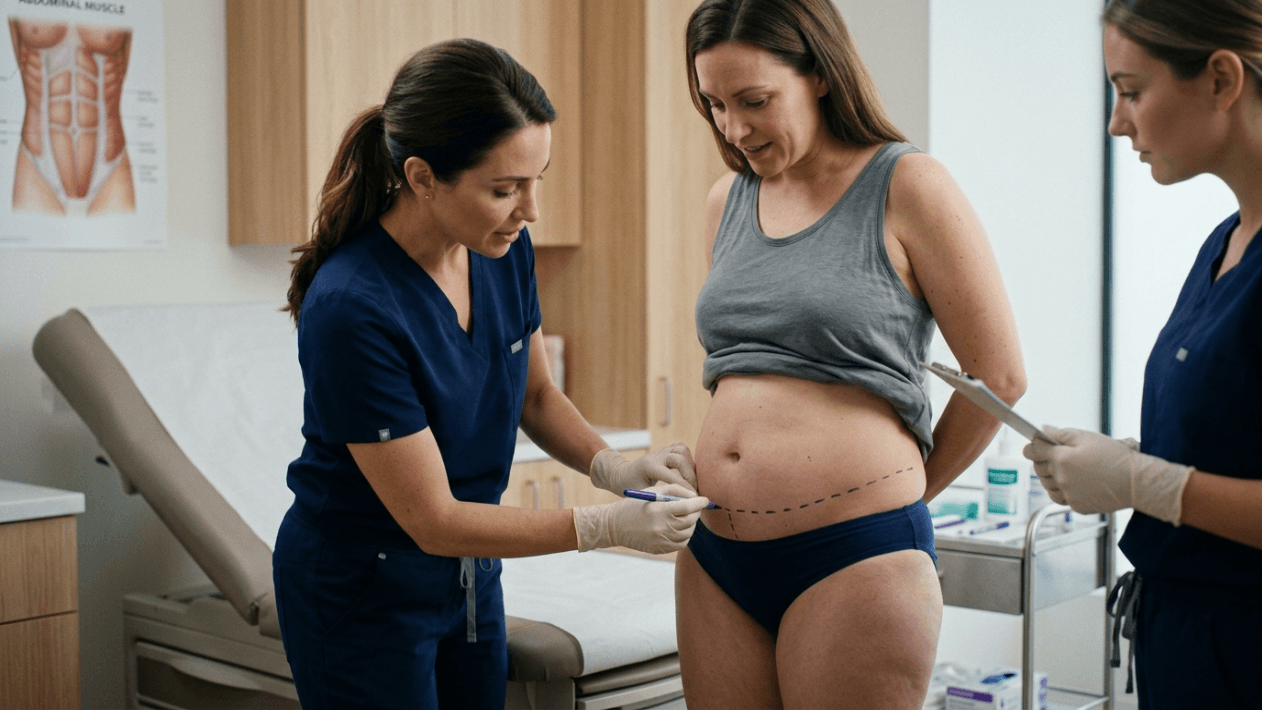
Before any incision is made for a revision abdominoplasty, Dr. Atalay performs a comprehensive vascular assessment using handheld Doppler ultrasonography. This non-invasive mapping identifies the dominant perforating vessels that sustain the abdominal flap after the primary surgery’s disruption. The locations of these vessels are marked on the skin with surgical ink, and the planned incision and dissection corridors are designed to preserve each identified vessel.
In cases where the vascular supply is severely compromised—typically in patients who experienced partial flap necrosis after their primary procedure—Dr. Atalay may employ a delayed reconstruction strategy. A delay procedure involves making strategic incisions that stimulate the development of additional collateral circulation before the definitive revision. This technique, borrowed from reconstructive microsurgery, increases flap vascularity in the areas that will be most stressed during the subsequent surgery, reducing the risk of ischemic complications to levels that make a safe revision possible.
This meticulous vascular mapping is what separates revision surgery performed by a plastic and reconstructive surgeon from revision surgery performed by a practitioner whose training is limited to aesthetic procedures. The latter may know how to contour an abdomen, but when the blood supply is unpredictable, only a reconstructive-trained surgeon understands how to preserve, enhance, and protect it.
Abdominal Scar Revision Health Tourism: The Emotional Dimension of Correction
The technical challenges of abdominal scar revision health tourism are matched by the emotional complexity. Patients who return home after a failed surgery abroad carry more than physical scars. They carry the weight of regret, the embarrassment of a visible surgical failure, and the fear of making the same mistake twice. This emotional burden affects decision-making—it can cause patients to delay revision for years, accept an unsatisfactory result rather than face another surgery, or choose the cheapest available option out of resignation rather than hope.
Dr. Atalay addresses this emotional dimension directly during the consultation. She explains what went wrong in the primary surgery in clear, non-judgmental terms. She identifies which complications were technical errors and which were simply the inherent risks of an abdominoplasty performed under less-than-ideal circumstances. This honest explanation restores the patient’s sense of agency—the understanding that the failure was not their fault and that a qualified reconstructive surgeon can navigate the altered anatomy to deliver a meaningful improvement.
Her Turkish Plastic Reconstructive and Aesthetic Surgery Association membership and decades of clinical experience managing complex revision cases from international patients provide the professional credibility that these patients need before they can place their trust in a second surgical team. Every aspect of her practice, from the initial virtual consultation to the final post-operative check, is designed to demonstrate that a revision abroad does not have to repeat the pattern of the first experience.
Your 2026 Antalya Secondary Reconstruction Pathway: Step-by-Step
If you are considering a revision after a tummy tuck performed elsewhere, the path forward must be deliberate, well-informed, and physician-guided. Rushing into a second surgery without proper evaluation replicates the conditions that led to your first disappointment. Follow these seven steps to navigate your secondary reconstruction with clarity and confidence:
- Gather your primary surgical records. Request your operative report, pathology results, and discharge summary from the clinic that performed your initial surgery. This documentation reveals the specific technique used, the extent of dissection, and any complications documented intraoperatively—information that is critical for planning your revision.
- Wait the recommended minimum interval. Allow at least six months from the date of your primary surgery before pursuing revision. Early intervention on immature scar tissue increases the risk of poor healing and recurrent complications. Patience during this interval gives your tissues the best chance of developing stable collateral circulation.
- Document your current condition thoroughly. Take standardized photographs of your abdomen from front, side, and angled views. Note any areas of numbness, persistent swelling, or skin discoloration. Compile a written list of every concern—functional, aesthetic, and emotional—that you want addressed during your consultation.
- Schedule a virtual consultation with Dr. Atalay. Submit your surgical records, photographs, and concern list through the clinic’s secure online portal. Dr. Atalay conducts a one-on-one video evaluation during which she assesses your tissue quality, discusses your concerns in detail, and provides an initial determination of whether you are a candidate for revision surgery.
- Receive your personalized surgical plan. Based on your virtual consultation, Dr. Atalay develops a detailed plan that specifies whether your revision can be performed in a single stage or requires staging. The plan includes the proposed technique, anticipated recovery timeline, and a transparent cost breakdown covering all surgical, anesthesia, facility, and post-operative care components.
- Travel to Antalya with VIP coordination. Upon accepting your surgical plan, the clinic’s coordination team arranges your airport transfer, accommodation, and local logistics. You arrive focused on your procedure and recovery rather than navigating an unfamiliar city. Dr. Atalay performs a final in-person assessment before surgery to confirm the plan and address any last questions.
- Complete your monitored post-operative recovery. After surgery, you remain under clinical supervision for the specified duration. Dr. Atalay monitors flap viability, seroma formation, and wound healing daily before granting travel clearance. A structured remote follow-up program continues after you return home, ensuring that your recovery progresses safely even at a distance.
Your abdomen deserves more than a second gamble—it deserves a reconstructive strategy grounded in vascular science, lymphatic preservation, and surgical restraint. Schedule your virtual consultation with Dr. Atalay today and take the first step toward a revision that finally heals.
Frequently Asked Questions About Secondary Reconstruction After a Failed Tummy Tuck
How long should I wait after a failed tummy tuck before seeking revision surgery?
A minimum of six months is required for scar tissue to mature and collateral blood vessels to stabilize. Attempting revision too early increases wound healing complications and may compromise the result of the secondary procedure.
Why is a revision tummy tuck more expensive than my primary surgery was?
Revision surgery demands additional operative time for vascular mapping, scar release, and lymphatic reconstruction. The procedure is technically complex, requires reconstructive training, and carries higher inherent risks that necessitate extended post-operative monitoring.
Can a revision tummy tuck completely remove my existing abdominal scar?
No revision can erase all evidence of prior surgery. However, Dr. Atalay repositions, refines, and releases tethered scars to create a thinner, better-placed scar that sits natural within the underwear line. Fat grafting can improve depressed scars significantly.
How does the virtual consultation work for international revision patients?
You submit your surgical records and standardized photographs through the secure portal. Dr. Atalay then conducts a live video evaluation to assess your candidacy, discuss your concerns, and outline a preliminary surgical plan before you commit to traveling to Antalya.
What happens if my blood supply is too compromised for a full revision?
Dr. Atalay may recommend a staged approach. A delay procedure stimulates collateral vessel development, and a subsequent revision is performed once the flap vascularity has improved sufficiently. Staging extends the timeline but protects tissue viability.
Will I need to stay in Antalya after surgery, and for how long?
Yes. Dr. Atalay requires all international revision patients to remain under clinical observation in Antalya until flap viability and wound healing are confirmed. The specific duration depends on the complexity of your case and is determined during preoperative planning.
Is it possible to fix a badly positioned belly button during revision?
Yes. Umbilical reconstruction is a common component of revision abdominoplasty. Dr. Atalay releases the scarred stalk, repositions the umbilicus to an anatomically correct location, and recreates a natural inset using local tissue flaps.
Can liposuction be combined with a revision tummy tuck?
Liposuction can be used conservatively during revision to improve contour, but it must be limited because the vascular supply of a previously operated flap is already compromised. Aggressive liposuction risks necrosis of the overlying skin and subcutaneous tissue.