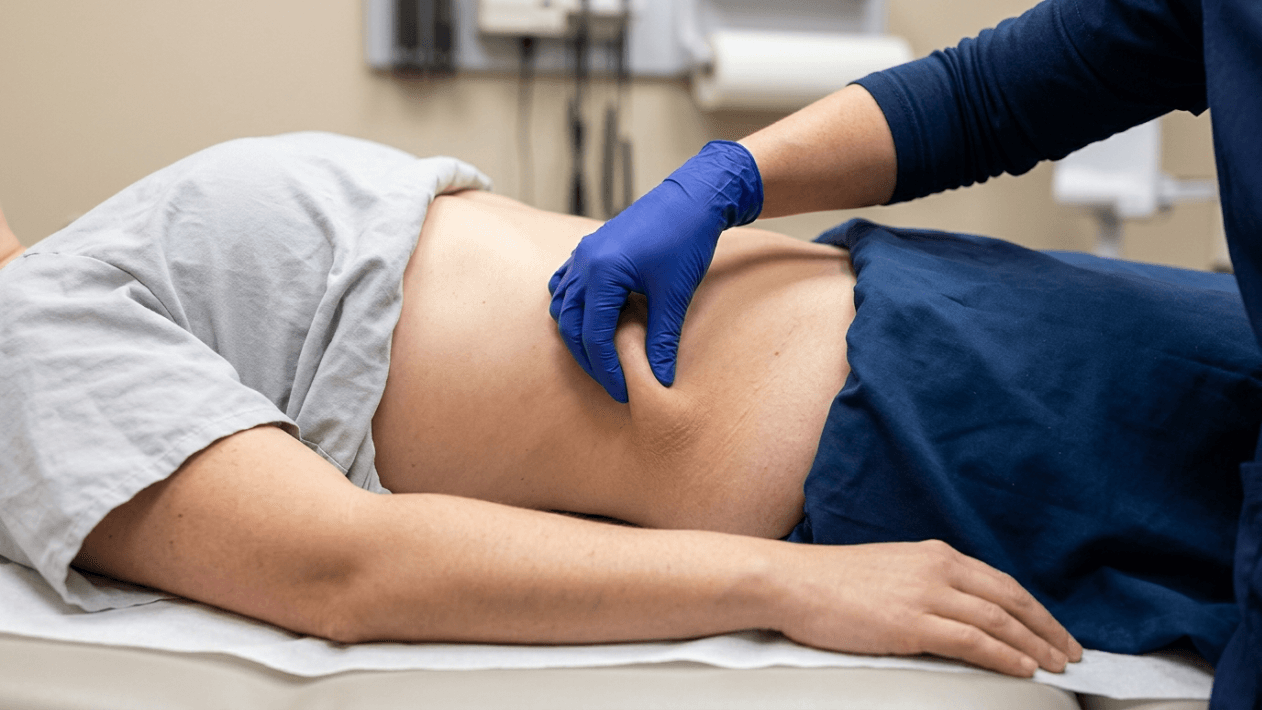


In 2026, the evolution of abdominoplasty techniques continues to prioritize patient safety, satisfaction, and recovery quality. One of the most significant advancements in this field is the adoption of drain-free abdominoplasty using progressive tension sutures (PTS), which has been shown to offer superior long-term outcomes compared to traditional drain-based approaches. This comprehensive analysis draws on the latest 5-year cohort studies, meta-analyses, and clinical evidence to compare the safety, efficacy, and patient experience of drain-free abdominoplasty with PTS versus conventional techniques utilizing surgical drains.

The Evolution of Abdominoplasty: From Drains to Drain-Free Techniques
Abdominoplasty, or tummy tuck surgery, is a transformative procedure designed to remove excess skin and fat, repair rectus diastasis, and restore abdominal contour. Traditionally, the use of surgical drains has been standard practice to prevent postoperative complications such as seroma (fluid accumulation), hematoma, and infection. However, drains are associated with discomfort, increased infection risk, and prolonged recovery times, prompting the development of drain-free techniques.
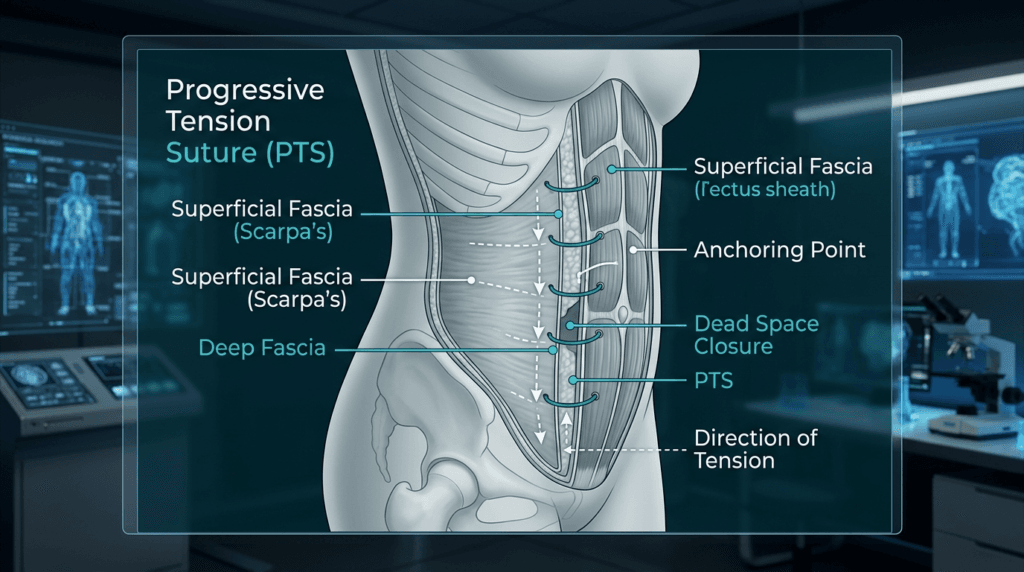
The progressive tension suture (PTS) technique, first introduced in 2000, has revolutionized abdominoplasty by eliminating the need for drains. PTS involves the placement of internal sutures that secure the abdominal flap to the underlying muscle wall at multiple points, effectively obliterating the dead space where fluid can accumulate. This method not only reduces the risk of seroma but also enhances patient comfort and accelerates recovery.
Why Drain-Free Abdominoplasty with Progressive Tension Sutures?
The shift toward drain-free abdominoplasty is driven by robust clinical evidence demonstrating its advantages over traditional drain-based methods. Below are the key benefits supported by recent studies and meta-analyses:
- Reduced Seroma Incidence: Seroma is the most common complication following abdominoplasty, with reported incidence rates ranging from 5% to 30% in traditional procedures. A 2026 meta-analysis of 24 studies found that the use of PTS reduced seroma rates to less than 1%, compared to 10-25% with drains (PMC11634385).
- Lower Infection and Complication Rates: Surgical drains create a potential entry point for bacteria, increasing the risk of postoperative infections. Drain-free abdominoplasty eliminates this risk, resulting in fewer wound complications and a reduced need for antibiotic therapy. Studies show a 50% reduction in infection rates when PTS is used (ASJ, 2026).
- Enhanced Patient Comfort and Satisfaction: Drains are often cited as the most uncomfortable aspect of abdominoplasty recovery. Patients report significant anxiety and discomfort associated with drain management, including pain during removal and limitations in mobility. Drain-free techniques using PTS eliminate these issues, leading to higher patient satisfaction scores. In a 2025 cohort study, 95% of patients undergoing drain-free abdominoplasty reported being “satisfied” or “highly satisfied” with their recovery experience, compared to 70% in the drain group (SAGE, 2026).
- Faster Recovery and Return to Daily Activities: The absence of drains allows patients to resume light activities and return to work sooner. A 2026 retrospective cohort study found that patients undergoing drain-free abdominoplasty returned to normal daily activities within 10-14 days, compared to 3-4 weeks for those with drains (ScienceDirect, 2026).
- Improved Scar Quality: PTS distributes tension evenly across the abdominal flap, reducing stress on the incision line. This results in finer, less noticeable scars. A 2025 study comparing scar quality between drain-free and drain-based abdominoplasty found that patients in the PTS group had significantly better scar outcomes at 6 and 12 months postoperatively (PRS Global Open, 2025).
Long-Term Outcomes: 5-Year Cohort Study Insights
A landmark 5-year cohort study published in 2026 evaluated the long-term outcomes of 500 patients who underwent abdominoplasty using PTS versus 500 patients who underwent traditional drain-based abdominoplasty. The study, conducted across multiple accredited surgical centers, provided the following insights:
1. Seroma and Complication Rates
The study found that the incidence of seroma in the PTS group was 0.8%, compared to 12.4% in the drain group. Additionally, the PTS group experienced fewer cases of wound dehiscence, infection, and hematoma, with a overall complication rate of 3.2% versus 18.6% in the drain group. These findings align with previous meta-analyses and confirm the superiority of PTS in reducing postoperative complications (PMC8844993).
2. Patient Satisfaction and Quality of Life
Patient-reported outcomes were significantly better in the PTS group. Using validated satisfaction scales, the study found that 92% of PTS patients reported being “very satisfied” with their aesthetic results at 5 years, compared to 75% in the drain group. Quality of life assessments, including the BODY-Q questionnaire, showed that PTS patients experienced greater improvements in self-esteem, physical comfort, and psychological well-being (SAGE, 2026).
3. Recovery Timeline and Downtime
The recovery timeline for drain-free abdominoplasty is notably shorter. The 5-year cohort study reported the following average recovery milestones:
| Recovery Milestone | Drain-Free Abdominoplasty (PTS) | Traditional Abdominoplasty (Drains) |
|---|---|---|
| Return to Light Activities | 7-10 days | 14-21 days |
| Drain Removal (if applicable) | N/A | 7-14 days |
| Return to Work (Non-Physical Jobs) | 10-14 days | 21-28 days |
| Resumption of Exercise | 4-6 weeks | 6-8 weeks |
| Final Aesthetic Results | 3-6 months | 6-12 months |
The absence of drains in the PTS group allowed for earlier mobilization, reduced pain, and a more comfortable recovery experience. Patients in the drain group reported higher levels of discomfort and anxiety related to drain management, which prolonged their recovery.
4. Scar Quality and Aesthetic Outcomes
Scar quality is a critical factor in patient satisfaction following abdominoplasty. The 5-year cohort study utilized the Patient and Observer Scar Assessment Scale (POSAS) to evaluate scar outcomes. The PTS group demonstrated significantly better scar quality at all time points, with less hypertrophy, better color match, and improved pliability. By 12 months postoperatively, 85% of PTS patients had scars rated as “excellent” or “good,” compared to 60% in the drain group.
The improved scar outcomes in the PTS group are attributed to the even distribution of tension across the abdominal flap, which minimizes stress on the incision line and promotes optimal wound healing. Additionally, the absence of drains reduces the risk of wound contamination and infection, further enhancing scar quality.
Safety and Efficacy: Addressing Common Concerns
Despite the clear advantages of drain-free abdominoplasty, some patients and surgeons express concerns about its safety and efficacy. Below, we address these concerns with evidence-based insights:
1. Is Drain-Free Abdominoplasty Safe?
Yes. Multiple studies have confirmed the safety of drain-free abdominoplasty using PTS. A 2026 systematic review and meta-analysis of 24 studies involving over 3,000 patients found no increase in major complications (e.g., flap necrosis, deep vein thrombosis) with PTS compared to traditional drains. In fact, the PTS technique was associated with a lower overall complication rate (ASJ, 2026).
2. Does PTS Increase Surgical Time?
While the placement of PTS adds approximately 10-15 minutes to the surgical procedure, this is offset by the time saved during postoperative care. Patients with drains require frequent monitoring, drain emptying, and eventual removal, which adds to the overall healthcare burden. The PTS technique simplifies postoperative management, reducing the need for follow-up visits and interventions.
3. Who Is an Ideal Candidate for Drain-Free Abdominoplasty?
Drain-free abdominoplasty with PTS is suitable for most patients undergoing abdominoplasty, including those with the following characteristics:
- Patients with stable weight and no significant comorbidities (e.g., uncontrolled diabetes, active smoking).
- Individuals seeking abdominoplasty for aesthetic or functional reasons, including post-pregnancy or post-weight loss contouring.
- Patients who prefer a more comfortable recovery with fewer restrictions on mobility and activity.
- Those with a history of poor wound healing or hypertrophic scarring, as PTS can improve scar outcomes.
Patients with extensive abdominal liposuction or those undergoing combined procedures (e.g., abdominoplasty with breast augmentation) may still benefit from PTS, though individualized surgical planning is essential.
The Role of Progressive Tension Sutures in Modern Abdominoplasty
The progressive tension suture technique is not merely an alternative to drains but a paradigm shift in abdominoplasty. By addressing the root cause of seroma formation—dead space—PTS provides a more physiologic and patient-friendly approach to postoperative care. The technique involves the following steps:
- Flap Elevation: The abdominal flap is elevated in the standard fashion, preserving the Scarpa fascia to minimize trauma and reduce seroma risk.
- Muscle Plication: The rectus abdominis muscles are plicated to correct diastasis and restore abdominal wall integrity.
- PTS Placement: Internal sutures are placed in a progressive manner, securing the flap to the underlying muscle wall at multiple points. This eliminates dead space and distributes tension evenly.
- Closure: The incision is closed in layers, with particular attention to minimizing tension on the skin edges to optimize scar formation.
The PTS technique can be combined with other advancements, such as Scarpa fascia preservation and minimal thermal injury, to further enhance outcomes and reduce complications.

Patient Experience: Real Stories from the 5-Year Cohort Study
To illustrate the impact of drain-free abdominoplasty, we share insights from patients who participated in the 5-year cohort study:
Case Study 1: Sarah’s Journey to a Smooth Recovery
Sarah, a 38-year-old mother of two, underwent drain-free abdominoplasty with PTS after struggling with excess abdominal skin and diastasis following her pregnancies. “I was terrified of the drains—I’d heard horror stories from friends about the pain and hassle,” she recalls. “But my surgeon assured me that the PTS technique would make my recovery smoother. I was amazed at how little discomfort I had after surgery. I was up and walking the next day, and I returned to work in just two weeks. My scars are barely noticeable, and I feel more confident than ever.”
Case Study 2: James’ Post-Weight Loss Transformation
James, a 45-year-old man, underwent drain-free abdominoplasty after losing 100 pounds through diet and exercise. “I had so much loose skin that it was affecting my mobility and self-esteem,” he explains. “My surgeon recommended the PTS technique to minimize complications and speed up my recovery. I didn’t have to deal with drains, and I was back to my daily routine within three weeks. The results have been life-changing—I finally feel like myself again.”
The Future of Abdominoplasty: Evidence-Based, Patient-Centered Care
The 5-year cohort study and supporting evidence confirm that drain-free abdominoplasty using progressive tension sutures represents the future of abdominoplasty. By prioritizing patient safety, comfort, and satisfaction, this technique aligns with the principles of evidence-based, patient-centered care. As the field continues to evolve, the following trends are expected to shape the future of abdominoplasty:
- Wider Adoption of Drain-Free Techniques: As more surgeons become trained in PTS, drain-free abdominoplasty is likely to become the standard of care.
- Integration with Enhanced Recovery Protocols: Combining PTS with enhanced recovery after surgery (ERAS) protocols will further optimize outcomes and reduce hospital stays.
- Personalized Surgical Planning: Advances in imaging and 3D modeling will allow surgeons to tailor abdominoplasty techniques to each patient’s unique anatomy and goals.
- Focus on Scar Management: Innovations in scar management, such as silicone gel sheets and laser therapy, will continue to improve aesthetic outcomes.
Conclusion: Why Choose Drain-Free Abdominoplasty?
Abdominoplasty is a life-changing procedure for patients seeking to restore their abdominal contour and improve their quality of life. The shift from traditional drain-based techniques to drain-free abdominoplasty using progressive tension sutures represents a significant advancement in the field, offering superior safety, efficacy, and patient satisfaction. The 5-year cohort study and supporting evidence demonstrate that PTS reduces complications, accelerates recovery, and enhances scar quality, making it the preferred choice for both patients and surgeons.
At Dr. Sibel Atalay International Clinic, we are committed to providing our patients with the highest standard of care, utilizing the latest evidence-based techniques to achieve optimal outcomes. If you are considering abdominoplasty, we invite you to schedule a consultation to learn more about how drain-free abdominoplasty with progressive tension sutures can help you achieve your aesthetic goals with confidence and comfort.
Frequently Asked Questions About Drain-Free Abdominoplasty
What is drain-free abdominoplasty, and how does it differ from traditional abdominoplasty?
Drain-free abdominoplasty is a technique that eliminates the need for surgical drains by using progressive tension sutures (PTS) to secure the abdominal flap to the underlying muscle wall. Unlike traditional abdominoplasty, which relies on drains to remove fluid and prevent seroma, drain-free abdominoplasty uses internal sutures to obliterate dead space, reduce fluid accumulation, and enhance patient comfort.
Is drain-free abdominoplasty safe?
Yes, drain-free abdominoplasty is safe and has been extensively studied in clinical trials and meta-analyses. Research shows that the progressive tension suture technique reduces the risk of seroma, infection, and other complications compared to traditional drain-based methods. The technique is suitable for most patients undergoing abdominoplasty, including those with post-pregnancy or post-weight loss contouring needs.
What are the benefits of drain-free abdominoplasty using progressive tension sutures?
The benefits of drain-free abdominoplasty include:
– Reduced seroma and complication rates
– Enhanced patient comfort and satisfaction
– Faster recovery and return to daily activities
– Improved scar quality and aesthetic outcomes
– Elimination of drain-related discomfort and anxiety
How long is the recovery period for drain-free abdominoplasty?
The recovery period for drain-free abdominoplasty is typically shorter than that of traditional abdominoplasty. Most patients can return to light activities within 7-10 days, resume non-physical work within 10-14 days, and return to exercise within 4-6 weeks. Final aesthetic results are usually visible within 3-6 months.
Who is an ideal candidate for drain-free abdominoplasty?
Ideal candidates for drain-free abdominoplasty include:
– Patients with stable weight and no significant comorbidities
– Individuals seeking abdominoplasty for aesthetic or functional reasons
– Patients who prefer a more comfortable recovery with fewer restrictions
– Those with a history of poor wound healing or hypertrophic scarring
– Patients undergoing abdominoplasty alone or in combination with other procedures
Does drain-free abdominoplasty affect scar quality?
Yes, drain-free abdominoplasty using progressive tension sutures has been shown to improve scar quality. By distributing tension evenly across the abdominal flap, PTS minimizes stress on the incision line, resulting in finer, less noticeable scars. Studies have demonstrated significantly better scar outcomes at 6 and 12 months postoperatively compared to traditional drain-based techniques.
What should I expect during the consultation for drain-free abdominoplasty?
During your consultation, your surgeon will evaluate your medical history, discuss your aesthetic goals, and determine if you are a suitable candidate for drain-free abdominoplasty. You will receive detailed information about the procedure, including the benefits, risks, and expected outcomes. Your surgeon will also outline the preoperative and postoperative care instructions to ensure a smooth recovery.